
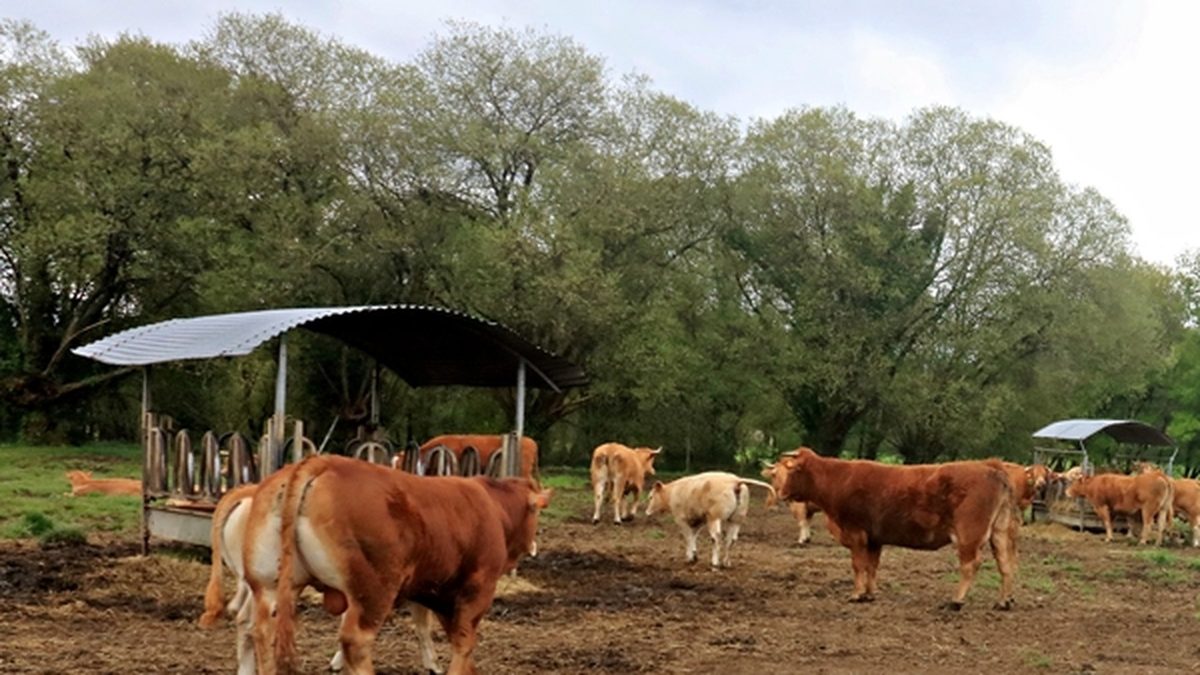
How much slurry comes from a farm, where it is stored, and how it ends up in the field. With those data, Spain calculates livestock emissions. The Government has decided that farmers must submit every year all mandatory data.
This is established by Royal Decree 1004/2026, published on Friday, November 20 in the Official State Gazette. It changes the register of best available techniques on farms. It is the basis on which those emissions are calculated, tracked, and reported.
A declaration every year
Until now, each year farmers only reported the mandatory data that had changed. Under the new wording, everyone will have to submit every year the mandatory data, by March 1.
The reason is explained by the decree’s own text in the BOE. The lack of updates is harming data quality. That lack of quality, it adds, can negatively affect the calculation of emissions for each farm and for the national total.
The regulation will take effect on 2 January 2027. The first submission under the new rules will be that year, using data collected during 2026.
Cattle enter the registry
The annexes of the registry previously only gathered data from pig and poultry farms. The new text also includes certain cattle farms. They were already required to report under the 2022 regulation organizing bovine farms.
The decree notes a difference. For pigs and poultry, the EU approved its list of best techniques in 2003. For cattle, that list was issued in Spain in July 2023, in a joint resolution by the Directors-General of the Ministries of Agriculture and Ecological Transition.
In October we reported that the EU obliges mega-farms to reduce their pollution. Those European rules target large pig and poultry farms, with deadlines through 2030 or 2032.
What each farm will report
Each cattle farm will indicate the average number of cattle places occupied during the year. It will also describe how its stables are laid out, how manure is removed, and how much slurry and solid manure it produces annually.
For cattle, the registry also asks about the grazing area per animal and how long housing lasts in winter. For farms not subject to the Integrated Pollution Prevention and Control (IPPC) law, these data are voluntary.
The registry also questions the waste lagoons and deposits where slurry is stored. It asks whether they are covered and whether they are impermeable. It also asks whether there are months when field application is not allowed and whether biogas is utilized.
With solid manure, the farm will state how it stores it and whether runoff is collected. It also notes how far it is from rivers and streams. In Cantabria, a slurry spill into the Llerana and Pisueña rivers killed more than 2,100 fish.
Dairy farms will also provide production data. Among them, how much milk each cow yields on average per lactation and what its average longevity is in days.
Ammonia, dust, and odors
The questionnaire also asks whether the farm has a plan to manage noise and odors. And, if it has air-cleaning systems, whether it monitors its emissions of ammonia, dust, or odors.
In poultry and pig farms, the LIFE Green Ammonia European project helped capture ammonia emissions and convert them into fertilizer. It is one of the techniques to reduce that gas before it reaches the air.
Farms subject to the Integrated Pollution Prevention and Control law must answer the entire questionnaire. This includes their energy and water consumption. It also asks how they apply slurry to the field, with what technique, and in how many hours they bury it.
For the rest of farms, that final part is voluntary, just like some questions marked in the annex with an asterisk.
Towards the European Emissions Portal
The decree also adapts the registry to Regulation (EU) 2024/1244. This regulation creates an Industrial Emissions Portal and repeals the previous one from 2006. Therefore the decree expands, for example, the list of fuels used on the farm.
Additionally, it corrects some definitions that in practice generated doubts or different interpretations. If a farmer fails to comply, penalties will be applied under three laws: the Integrated Pollution Prevention and Control, the Air Quality, and the management of the Common Agricultural Policy.
Image: Xunta de Galicia
