
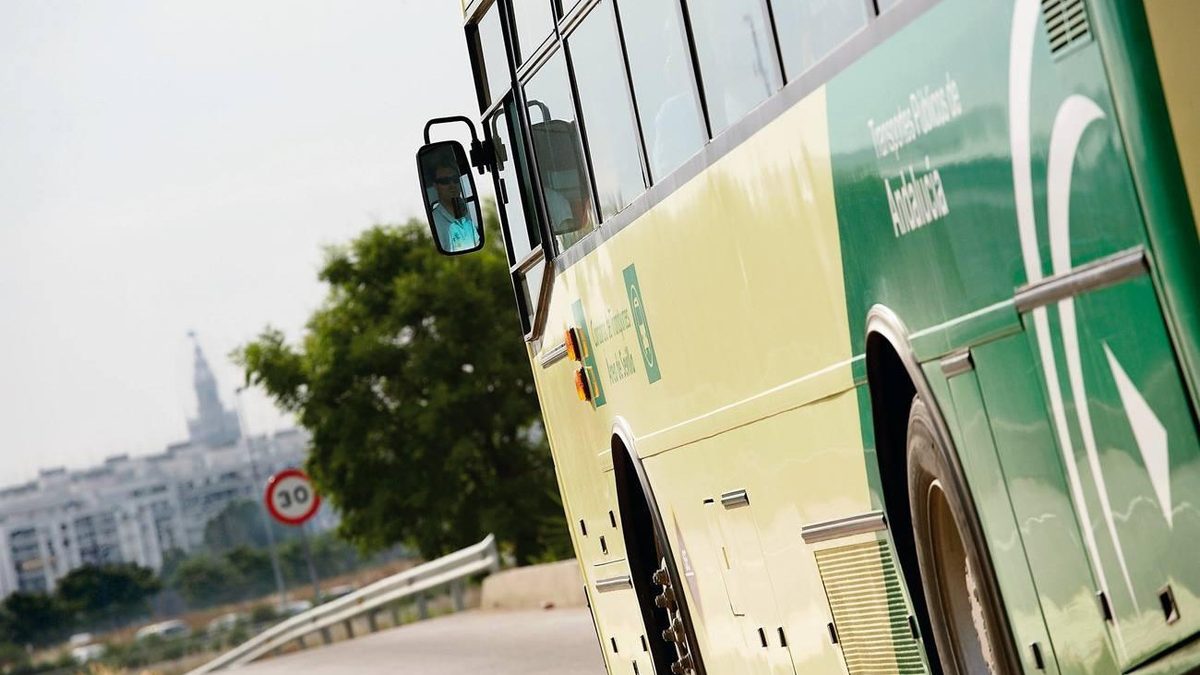
Imagine an electric bus capable of recharging its battery while in service, without any plug or cable. The Junta de Andalucía has put out the contracts to develop “Electromove,” a project designed to achieve precisely that. It will do so with a platform reserved for electric or hybrid buses, featuring wireless induction charging.
It is not yet a service, but an experimental development with prototypes and a final test in a real but closed environment. The principal contract is around six million euros and spans 28 months.
What the Junta Has Announced
The explanation comes from the Ministry of Development and Mobility in a press release issued this Sunday. The project includes the platform and the charging systems, as well as the management and control technologies and the rolling stock itself.
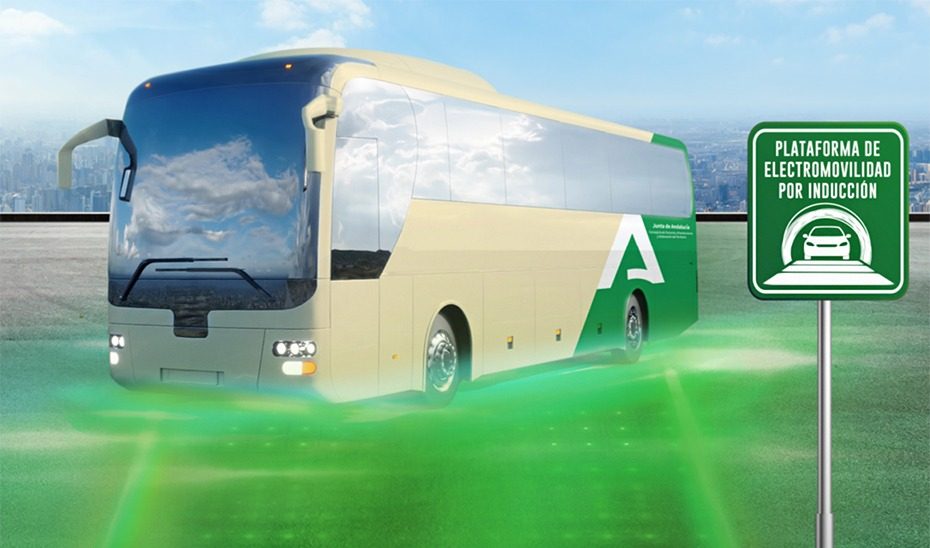
The Junta states that the objective is to achieve more sustainable and energy-efficient mobility. To this end, the project will test charging by induction while in motion. It is also one of the pilot projects through which the Junta intends to expand Public Procurement of Innovation.
The Big Hurdle for Electric Buses
According to the Junta, the project addresses one of the major challenges in electrifying public transport: the need to extend the vehicles’ range.
Electromove will study whether it is viable to transfer energy to buses without cables while they are moving. The infrastructure would be installed on the reserved platform itself. In 2020, the Junta was not aware of any system functioning in a real environment with no charging stops.
According to the Junta, this technology would allow faster recharging and better fleet organization. It would also help reduce energy consumption and decarbonize urban and interurban transport. Madrid’s EMT, for its part, plans to buy 65 electric buses in 2027.
Six Million for a Trial
The most significant contract is an OC/Pre-Commercial Procurement contract, worth €5,926,290.62. It will be used to design both the infrastructure and the rolling stock over 28 months. Companies can submit bids until January 29 of the upcoming year.
With this type of contract, the administration does not purchase something already on the market. It pays for the experimental development of new solutions. On the project website, during the consultation phase of 2020 and 2021, the Junta explained that this charging system was in a prototype stage and that “no solutions are available.”
Three Phases to the Pilot
The work is divided into three stages, beginning with conceptual definition. Next comes development and validation of trial prototypes. Finally, the complete vehicle-and-infrastructure system will be tested in a real, confined environment.
Additionally, a technical support office has been tendered for €537,472, also for 28 months. Four companies submitted proposals: Sami Halawa Ribas, Novadays SL, Evectra Mobility Services SL, and Gamma Solutions SL.
This office will help plan, monitor the work, and supervise prototype testing. It will also provide legal and administrative support to comply with Public Procurement of Innovation regulations and the requirements of European funding.
A Project Rooted in 2020
Electromove did not begin now; its roots lie in a market consultation conducted in 2020. The Junta presented it in September of that year to learn what companies could offer. The decision to use pre-commercial procurement followed from that consultation.
The 2020 consultation report, signed in August 2020, placed the test in Sevilla’s Aljarafe region. It envisioned using the reserved platform for buses on the route between Bormujos and Mairena del Aljarafe, a distance of 4.8 kilometers. It also proposed configuring a roughly one-kilometer section for third-party induction tests.
The press release this Sunday does not specify where the pilot will be conducted. The earlier report justified the Aljarafe location due to the rush-hour congestion in connections to Seville. According to the same document, the congestion at Seville’s access points meant losing more than 30,000 hours per day for over 70,000 users.
How Buses Are Charged Today
The 2020 report reviewed other ways to move electric vehicles, such as catenaries or cable charging in parking lots. It also cited Madrid’s EMT Line 76, a 14-kilometer route with 42 stops, using opportunistic charging. In Calvià, for example, the hybrid buses of the TIB already recharge at stops with fast-charging pantographs.
The report proposed supplying electricity in sections to reduce installation costs. In this way, the bus could operate without induction on roundabouts, intersections, and downhill slopes.
For now, everything remains to be proven. If the prototypes work, the Junta may assess whether charging a bus on the move is technically and economically viable.
Image: Consorcio de Transporte Metropolitano del Área de Sevilla
