
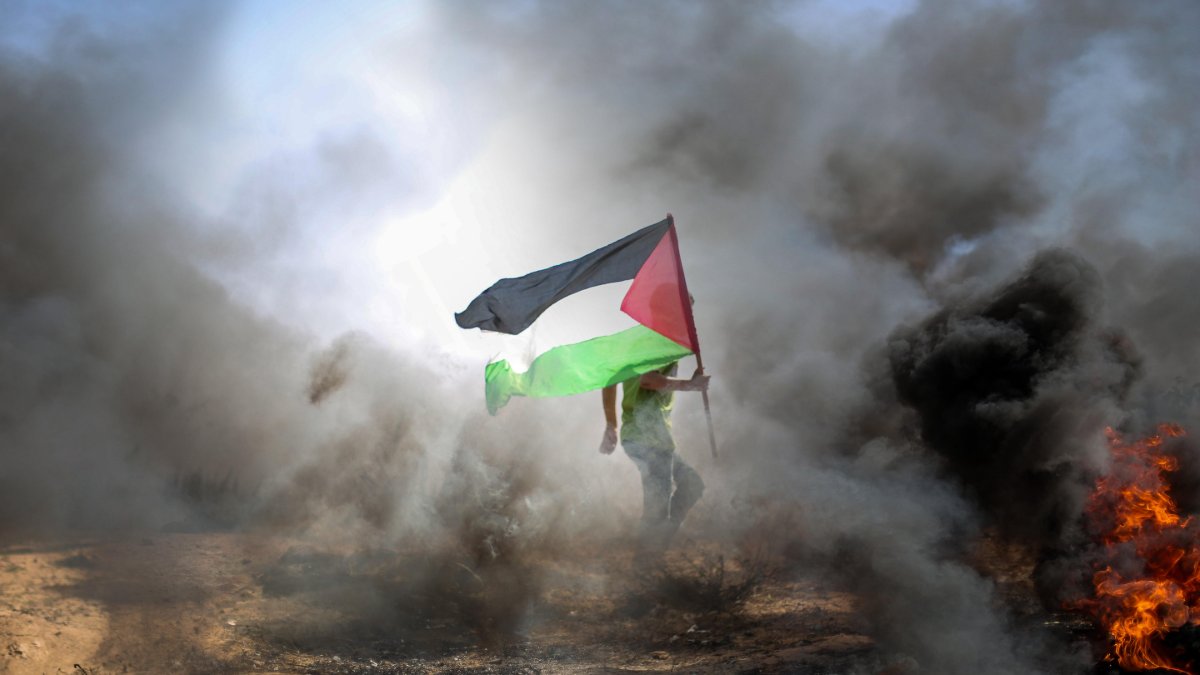
About 99% of the Gaza Strip’s surface shows signs of environmental contamination as a result of the Israeli military offensive, affecting air, soil and water with heavy metals, explosive remnants, asbestos, and biological contaminants, according to a report published this Monday by Oxfam and the Conflict and Environment Observatory (CEOBS).
The analysis, based on satellite imagery, scientific studies, and open-source data, estimates that the military operations have affected roughly 78% of the territory, while indicators of potential contamination extend across 99% of the Strip.
Heavy metals, explosives and toxic residues: pollution threatens the environment in Gaza
The report warns that these substances pose risks to public health and could have consequences for decades to come. It also notes that restrictions on the entry of analytical equipment and independent specialists hinder carrying out a thorough on-the-ground assessment and determining the exact extent of contamination.
Among the data collected, the study notes that fecal coliform bacteria were detected in 19% of the 79 groundwater wells analyzed in July 2026, compared with 2% recorded in 2021.
Moreover, only 19% of wastewater pumping stations remain in operation, and barely 30% of the sanitation network retains any operating capacity, the study says.
As a consequence, around 40,000 cubic meters of untreated wastewater flow daily into the Mediterranean, while about 15,000 cubic meters are lost each day due to leaks and seepage.
Oxfam calls for independent expert access to assess environmental damage and guarantee reconstruction
The areas with the greatest potential contamination risks are the city of Gaza and Yabalia (north), Jan Yunis and Rafah (south), as well as the Salah al-Din road, which runs across the Strip from north to south, according to the analysis.
The report cites a high risk of drinking water contamination in the north and central Gaza, as well as respiratory risks across the territory stemming from dust and the burning of waste, especially for children and pregnant women.
The organization Oxfam calls on Israel to grant access to independent experts to assess the damages, as well as funding for cleanup and safe reconstruction of the territory, which, it maintains, must be led by the Palestinian people themselves.
