
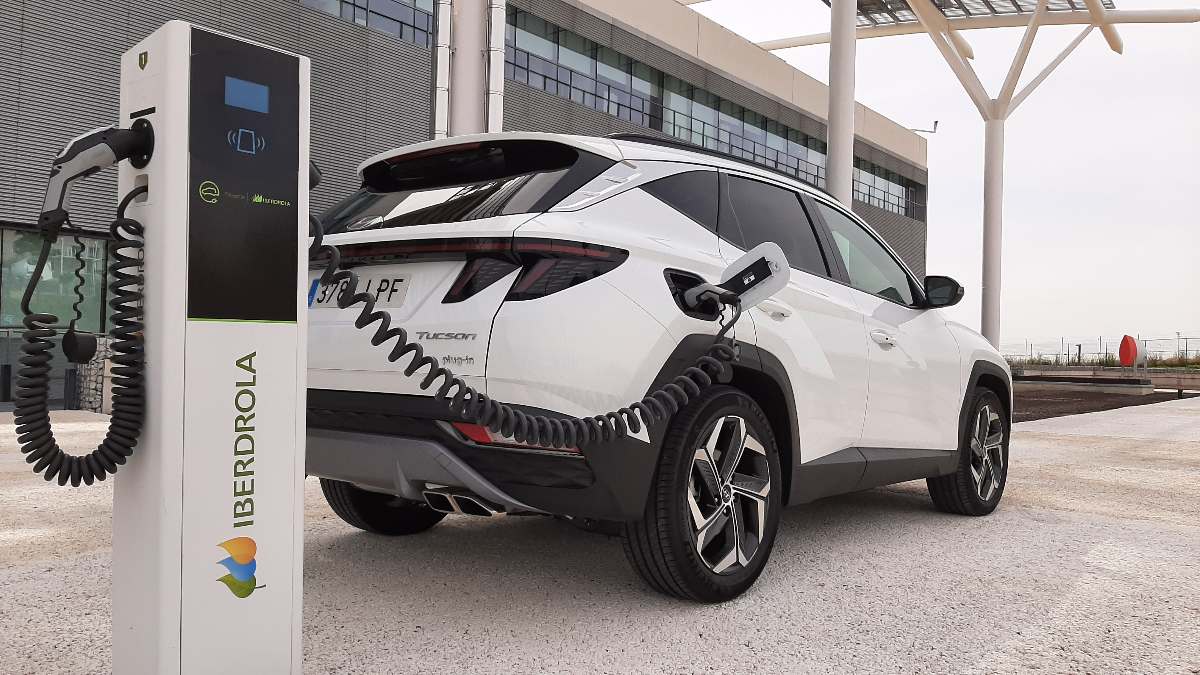
Brussels proposes to delay until 2030 the adjustment of the formula that calculates the CO₂ of plug-in hybrids with at least 80 km of electric range. The Commission acknowledges that its certification figures differ from on-road emissions and that giving manufacturers more time will maintain this gap.
The utility factor estimates how many kilometers plug-in hybrids travel on electricity and shapes their official CO₂
The European Commission (EC) proposed this Saturday to postpone until January 1, 2030 the planned update of the Utility Factors for certain plug-in hybrid electric vehicles (PHEV) to levels that were applicable in 2025 in order to provide «temporary flexibility to manufacturers».
The EU executive consulted today the Technical Committee on Motor Vehicles (CTVM), composed of representatives of the Member States, to postpone the update of the calculation of the proportion of CO2 emissions of these vehicles, a factor established as part of their type-approval procedure, specifically Euro 6 and Euro 7 standards for vehicles with at least 80 kilometers of electric range.
The Commission wants to keep the 2025 factors with retroactive effect from November 29, 2026
The EC thus proposed applying this modification retroactively from November 29, 2026 «to ensure continuity and coherence of the methods for determining CO2 emissions of PHEVs, reduce the administrative burden for the industry and provide business continuity and regulatory clarity,» as explained in a press release.
From 2030, these Utility Factors will be updated «periodically based on the real performance» of this type of vehicle.
The change to Euro 6 will go through Parliament and the Council and Euro 7 requires the technical committee’s opinion
The amendments, according to the Commission, «will provide temporary flexibility to vehicle manufacturers» and thus offer them «the opportunity to invest in improving these vehicles and incentivizing PHEVs with a greater electric range».
«Currently, the CO₂ emissions of PHEVs measured during type approval show discrepancies with the real-world data collected annually by the Commission. Postponing the update of the Utility Factors implies that this discrepancy remains stable,» added the EC.
Now, after the consultation with the CTVM and the launch of the procedures, the Commission will adopt the Euro 7 transposition act following an opinion from the same committee, while the act that amends the Euro 6 standards will be submitted first to the European Parliament and the Council for their examination and, depending on the outcome of that examination, will subsequently be formally adopted by the Commission.
The real CO₂ of plug-in hybrids exceeds the official rating and Brussels wants to delay the adjustment
With data from about 920,000 vehicles, the ICCT found that plug-in hybrids in their 2023 registered sample emitted on average more than five times the certified CO₂. The gap widened despite the increase in electric range.
For a model with 100 km electric range, Transport & Environment estimates that the adjustment would drop from two-thirds to 44 % of the distance the test assumes is traveled on electricity. The postponement would maintain the more optimistic estimate.
In its first report, the European Commission already detected a difference of about 100 g of CO₂ per kilometer between laboratory and road for plug-ins registered in 2021. Brussels has been measuring that gap for years and now proposes to extend it.
