
World Anteater Day 2026 is observed on November 29 to highlight habitat loss and the dangers facing these mammals specialized in feeding on ants and termites.
World Anteater Day 2026 is observed on November 29 to raise visibility for these mammals facing increasing threats in the Americas. The transformation of their habitats and ecosystems, forest fires and the hazards of roads compromise their survival, especially the giant anteater, which needs to travel across wide territories to find food.
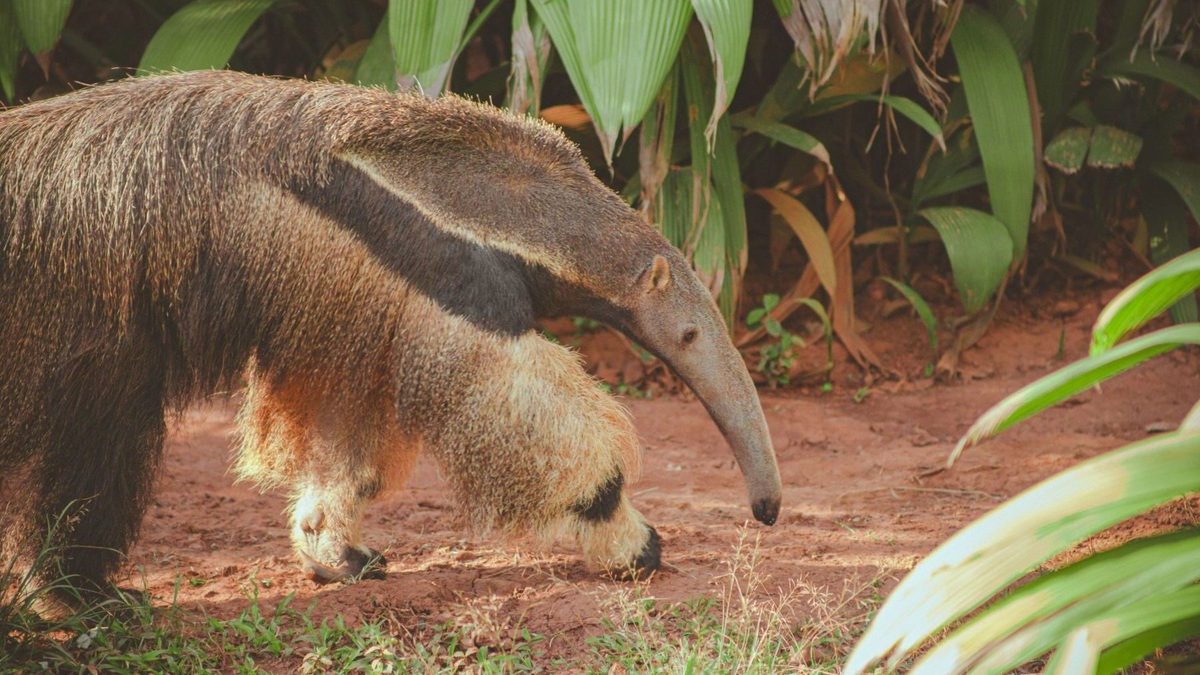
Under the name anteater there are several animals of varying sizes and habits. The giant, Myrmecophaga tridactyla, can exceed 2 meters in length, tail included. Its elongated snout, sticky tongue and powerful claws allow it to access ant nests and termite mounds: these are adaptations of a toothless animal specialized in consuming insects.
Conservation requires keeping habitats connected and reducing threats in the areas where they move. Protecting these spaces also benefits other species sharing their ecosystems. The day invites people to learn about that diversity and to encourage the adoption of measures that prevent roadkill, poaching, and the degradation of forests, savannas and wetlands.
World Anteater Day 2026: vital and threatened
As every year, today 29 November marks World Anteater Day 2026. This is an observance that seeks to remind that even the most unlikely creatures play a vital role in maintaining the balance of nature and that they are necessary in each of the ecosystems where they live.
Most people will never see one of these individuals, but the places where they live depend completely on the silent work the anteater performs daily, since its role is vital for the local ecosystem balance.
The problem facing the anteater is that its habitats are rapidly shrinking and the dangers multiply. And they are not just affected. The consequences are spreading through the forests, jungles and savannas where they live and, in the long run, affect all inhabitants of the planet.
Anteater: why today, on the World Anteater Day 2026, the planet looks to this key species?
The anteaters are true architects of the ecosystems to which they belong. By feeding on enormous quantities of ants and termites, they prevent these insect populations from exploding and destabilizing everything. Moreover, without their intervention, the soil could degrade severely.
In fact, by digging the earth to find food, they aerate it and facilitate the circulation of nutrients. This simple action creates small patches with better soil quality, which benefits the surrounding plants, local microorganisms and smaller animals.
Unique features: an extraordinary tongue, powerful claws and a prodigious sense of smell
The anteater has a characteristic elongated snout that conceals a tongue capable of extending up to 60 centimeters and moves at incredible speed, nearly 150 times per minute. This enables it to gulp thousands of insects daily thanks to its sticky saliva.
Although the anteater has no teeth, it uses the muscular walls of its stomach and some grains of sand that it swallows along the way to break down its food and make it somewhat more digestible, though its highly potent gastric juices do the rest.
The anteater possesses powerful claws capable of piercing even the most resistant termite nests and a thick, hard and long coat that protects it from stings. Its eyesight is not very strong, but they compensate handsomely with an exceptional sense of smell and hearing.
From Giant to Silky: the different anteater species and their habitats
The anteater is a notably solitary creature. They communicate only through soft grunts or sniffs when absolutely necessary. To move around, they walk on their tiptoes, a somewhat odd gait that also serves to protect their precious claws.
A striking fact is the size difference between species: the giant anteater (Myrmecophaga tridactyla), which lives in South and Central America can reach more than two meters in length, including the tail, while the silky or pygmy anteater (Cyclopes didactylus) is found only in the Amazon and is barely larger than a squirrel.
Growing threats: deforestation, poaching, roads, fires and climate change
World Anteater Day 2026 provides an opportunity to talk about the threats looming over these species. Their main adversary is human activity, which destroys their habitats for agriculture, livestock or the construction of various infrastructures, fragmenting their territory and greatly hindering their ability to find food.
Roads are deadly traps, especially for giant anteaters trying to cross them. They are also victims of poaching and the forest fires that sweep everything in their path. Added to this are the dire consequences of climate change, which also complicate their survival.
Each species counts: protecting the anteater is protecting the ecosystems that sustain us
World Anteater Day 2026 serves to educate and raise awareness of the danger posed by habitat loss, such as the Pantanal, the Amazon, or the Atlantic Forest, and to alert that these species are victims of poaching for sale as pets or to exploit their meat and skin.
Protecting anteaters is, at its core, much more than saving an animal. It is preserving the landscapes we all depend on and a small gesture to maintain the planet’s delicate balance.
Very slow reproduction
On the Día Mundial del Oso Hormiguero 2026 we must understand how their reproduction works, which helps explain why preventing every death is important. The females typically have a single offspring after a gestation of about six months, and carry it on their back during its first months of life.
This slow reproductive pace limits how quickly a population can rebound from ongoing losses. Therefore, reducing roadkill and protecting individuals of reproductive age are especially important actions where populations are already isolated or under pressure.