
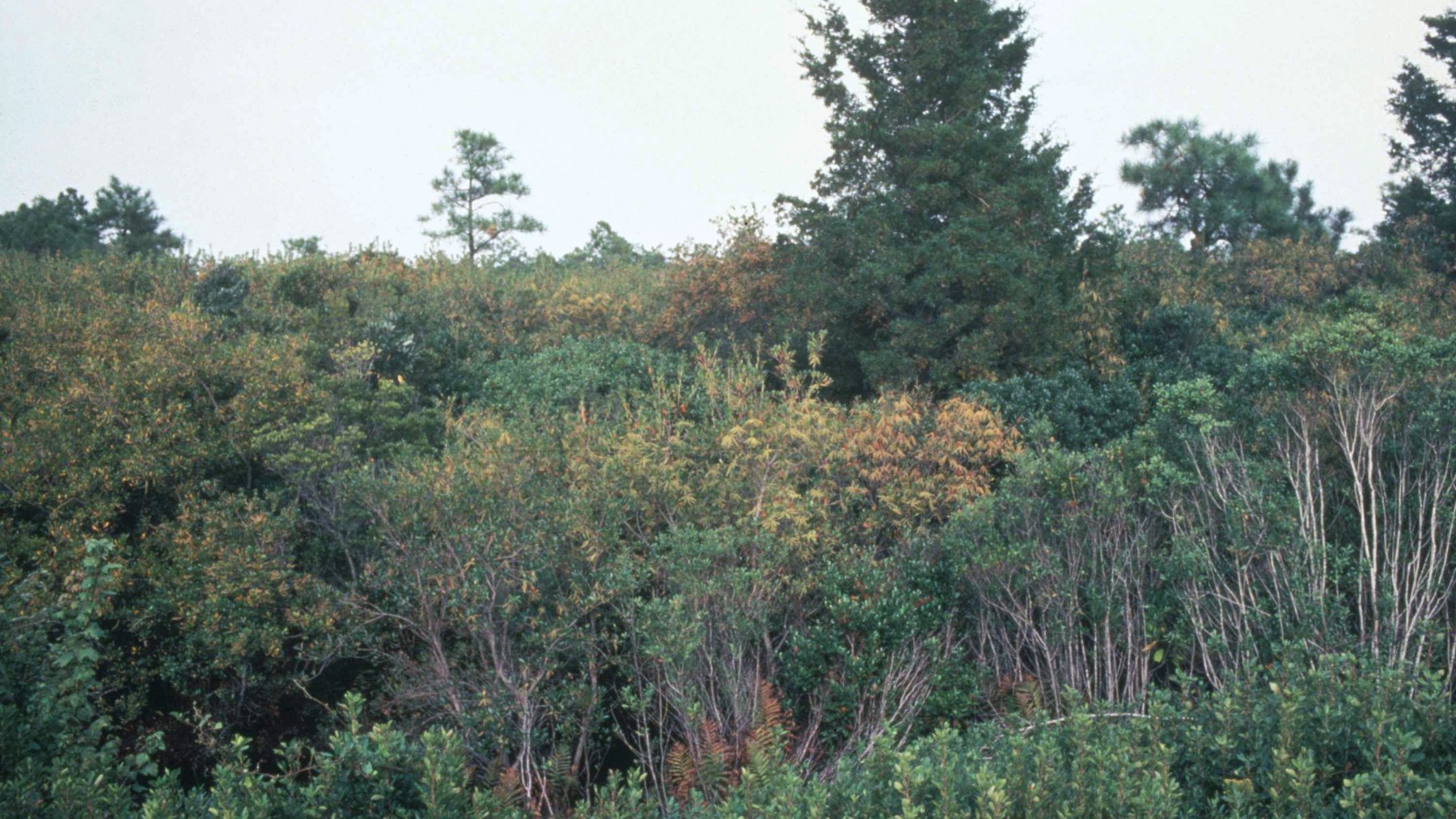
An abandoned agricultural project left around 80 kilometers of trenches in a peatland near Belhaven, North Carolina (United States). The drainage dried parts of the land and turned this natural carbon store into a source of emissions that, according to an Associated Press report published on September 9, releases about 130,000 tonnes of CO₂ per year.
Now, Pantheon Regeneration is working to restore soil moisture and reduce the risk of fires. Its project, Pocosin Ecological Reserve I, covers about 5,900 hectares and involves Duke University. The key lies beneath the feet, where water helps preserve carbon that has accumulated for thousands of years.
The carbon stored in the soil
Peat forms when plant matter accumulates without fully decomposing. In these wetlands, known as pocosins, the waterlogged soil and the scarcity of oxygen slow that process and allow the carbon to remain stored for very long periods.
The trenches disrupted that balance by draining water and lowering the water table, i.e., the height reached by groundwater. With more peat exposed to air, its decomposition increases and CO₂ is released. A land that seems calm can be losing carbon without visible smoke or flames.
Moreover, the reserve has yet to be fully uncovered. Duke documents previous research and agreements about these lands, which Pantheon acquired in 2024. What changes now is the effort to translate that knowledge into large‑scale restoration.
Keeping the water in place
The intervention aims to curb water loss by blocking ditches and regulating water levels. The objective is to restore moist conditions that protect the peat and allow the wetland to function again. The water here serves a function similar to a protective cover.
There is nearby experience. In the Pocosin Lakes National Wildlife Refuge, the U.S. Fish and Wildlife Service uses dikes and regulatory structures to retain rainfall. According to the agency, restoring these hydrological cycles also benefits wildlife and cushions the effects of heavy rainfall.
When the fire goes underground
Drying adds another danger. If the peat catches fire, the blaze can consume the soil itself and persist for months, releasing the carbon it contained. Extinguishing visible flames may leave a combustion that continues beneath the surface.
A 2022 episode helps illustrate the difference water makes. While a fire affected private lands near Pocosin Lakes, several lightning strikes hit a part of the refuge where moisture had been restored. There, the peat did not ignite.
“Our peat did not ignite because we had restored the hydrology of that area,” explained Wendy Stanton, the refuge manager, in an official 2024 release. The case shows why keeping the subsurface moist is a priority, even if surface vegetation can burn.
What scientists have measured
A study published in Ecological Engineering in 2023 investigated drainage and restoration at Pocosin Lakes and nearby private peatlands. Its analyses indicated that raising the water level from 60 to 30 centimeters below the surface reduced CO₂ losses to the atmosphere by more than 90%.
Does that mean Belhaven has already eliminated almost all of its emissions? That percentage corresponds to the conditions studied and helps guide restoration. The concrete outcome of PER I will have to be verified with its own monitoring.
It is also worth distinguishing two benefits. Preventing peat decomposition preserves carbon already in the soil, while accumulating new plant material can add additional carbon. Measurements should indicate how much each process contributes.
Funding and pending results
The project turns to the carbon credits market to finance the work. On January 21, 2026, an advance purchase of 100,000 credits was announced by the Inlandsis fund, aimed at supporting development and works. It is a funding commitment, not proof that the climate benefit has already been achieved.
Pantheon and Duke plan to quantify the carbon outcomes and ecological benefits through scientific monitoring. That verification will allow assessing how much has been recovered and what remains to be done. The challenge is to maintain the conditions that protect the peat for years.
The announced funding supports that restoration work. The press release about the advance purchase of credits was issued by Inlandsis on January 21, 2026 and can be consulted on PR Newswire.