
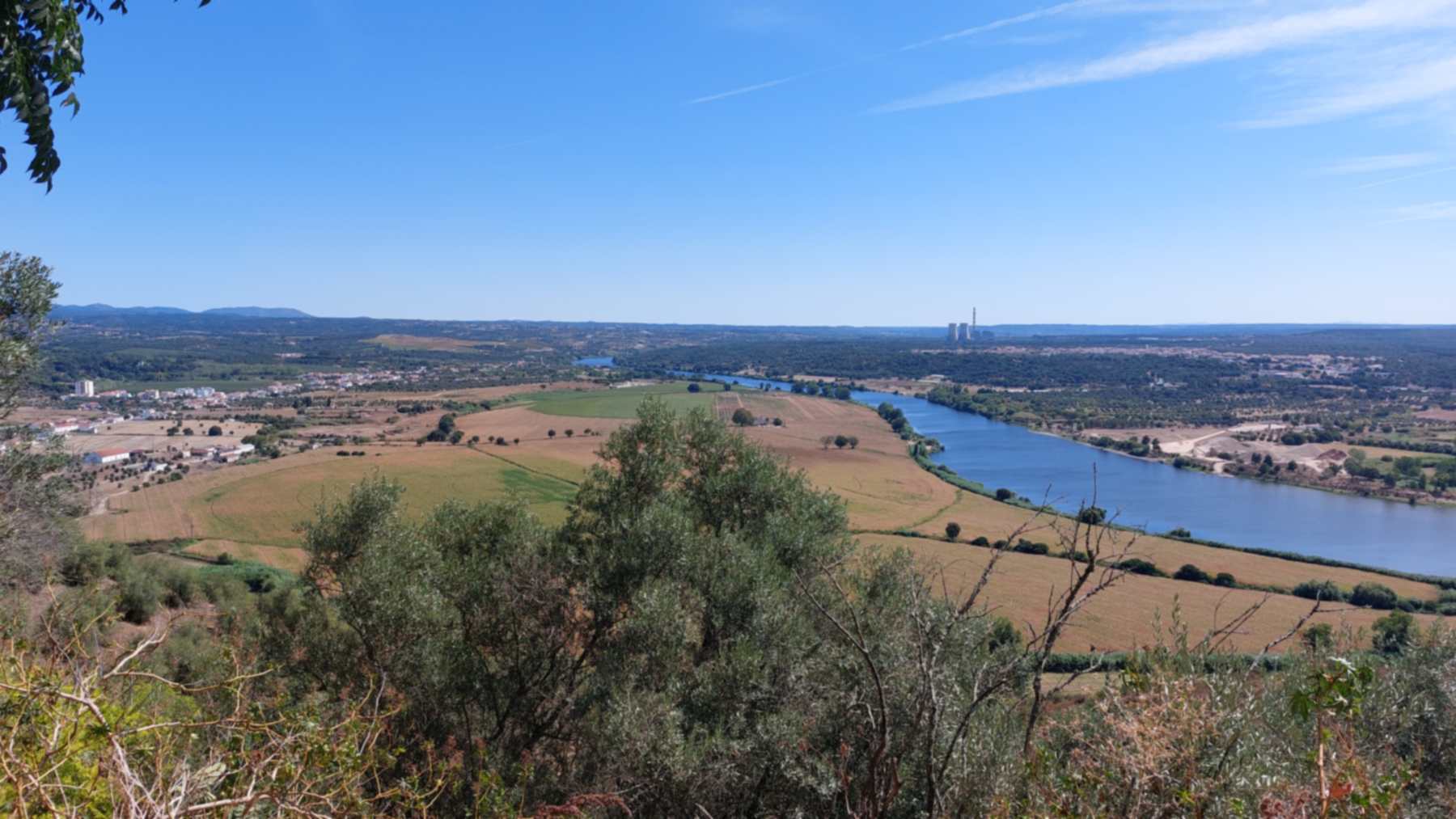
The two data centers in Abrantes, in central Portugal, could consume up to 22.2 million liters of water per day at full capacity. The calculation was published on September 22, 2026 by the environmental movement proTEJO. It calls for a joint environmental assessment before authorizing either of the two projects.
The two facilities would be located beside the Tagus River, near the old Pego thermal power plant. The Agência Portuguesa do Ambiente (APA) places nearly 60% of surface water bodies in that basin below the “good status.”
EDC One and Hyperion, in Abrantes
The first project is promoted by EDC One opposite the old thermal plant. According to the environmental association Quercus, the City Council approved it in September 2025 as a Municipal Interest Project. It declares 300 megawatts (MW) and received tax exemptions of 16.2 million euros.
The second, also according to Quercus, belongs to the Hyperion group and would occupy around 151,000 square meters next to the Alvega roundabout. Its electrical connection, of 200 megavolt-amperes, would feed the future Pego interconnection point.
The Abrantes City Council unanimously gave a favorable opinion to its request for prior information, according to Quercus’ August 26 statement. For proTEJO, with that step urban viability is already decided.
Closed circuit or evaporation
proTEJO added the combined capacity of the two centers, 500 MW, and applied the WUE, the international indicator that measures the liters of water a facility uses per kilowatt hour.
With cooling in a closed loop, according to that estimate, consumption would be about 3.6 million liters per day. With evaporation, the most common in the sector, it would rise to 22.2 million. In a year, the high scenario would total about 8.1 million cubic meters and the low around 1.3.
The proTEJO note reminds that no promoter has revealed which system they will use. Its conclusion: “The Tagus River no longer has room to be the cooling tower for European artificial intelligence.” Spain is preparing a decree with a cap of 0.1 liters per kilowatt-hour, and according to their calculations no Abrantes scenario would meet it.
The Tagus, in slight decline
The APA published in March 2026 the significant water management issues of the Tagus and Ribeiras do Oeste. Only 40% of surface water bodies and 60% of groundwater bodies are in good condition, and the agency notes a “slight regression” across three planning cycles.
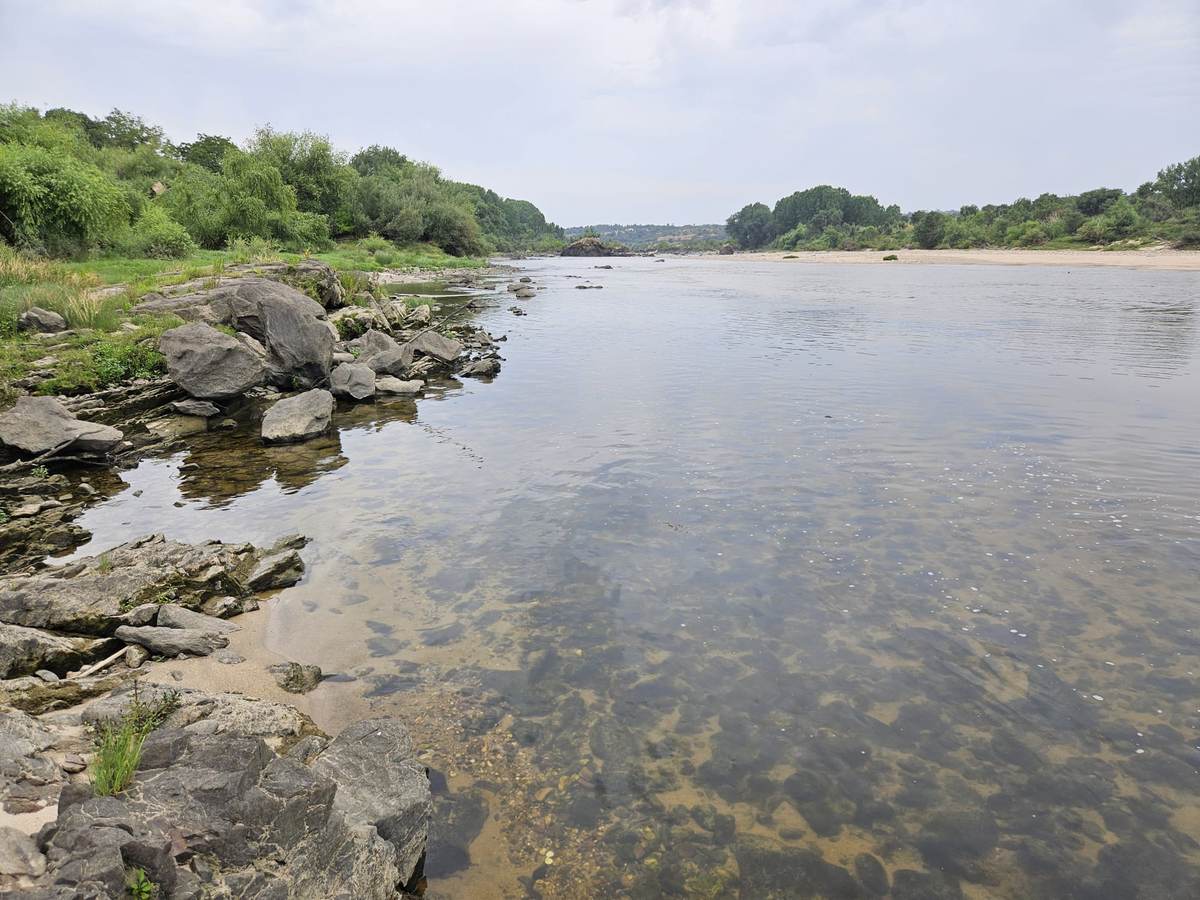
According to the same document, 40% of the subbasin surface exceeds 50% in the scarcity index, and since 2000 16% of the months have been hydrological drought. The average annual runoff fell by 22% between the periods 1930-1988 and 1989-2015, and the APA speaks of a resource that, although renewable, is increasingly limited.
29 times the municipal electricity
The International Energy Agency explains that artificial intelligence brings more powerful and denser servers. Cooling accounts for 7% of electricity consumption in large, efficient centers to over 30% in less efficient business centers.
If the 500 MW operated year-round, they would use about 4,380 gigawatt-hours, about 29 times the 148.8 GWh consumed by Abrantes as a whole in 2024, according to Quercus. With an average utilization of 30% of the capacity, the association estimates about 1,314 GWh per year, 8.8 times the municipal consumption.
A cumulative study, still pending
The two organizations want an environmental cumulative impact study before any license. Quercus asks that it measure water, the regional electrical grid, river pollution, noise, land use, and the added heat to the area.
Neither promoter has delivered it yet, reports proTEJO, which adds that the APA postponed the requirement until after urban approval. Both organizations also request public meetings in Alvega and Concavada.
The impact of data centers on water and energy concerns people in other countries, and in Zamora the Monfarracinos data center opened a similar debate.
On October 13, Quercus recalled that Portugal has 46 data centers and that, according to the Government, as many as 44 more could be added. It proposes cooling without evaporation, using recycled water, and that promoters pay for grid reinforcements. “Portugal must learn from international experience,” said its public policy expert, Mariana Garanhão.
The National Plan for Data Centers, approved in 2026, sets timelines for issuing licenses but does not establish maximum consumptions, criticizes proTEJO.
Actual consumption, not published
Quercus and proTEJO are environmental organizations that oppose licensing the projects without a prior study, and their figures are their own calculations. The 22.2 million liters are the ceiling of an estimate, not data from EDC One or Hyperion, which have not published their cooling system or their consumption. And full capacity does not mean operating at maximum every day.
The 2028-2033 period is the APA’s fourth planning cycle, and its March document does not forecast a drought for those years nor evaluate data centers.
Meanwhile, the hidden environmental cost of data centers remains without an official figure in Abrantes.
Photo: Threeohsix / Wikimedia Commons (CC BY-SA 4.0)
