
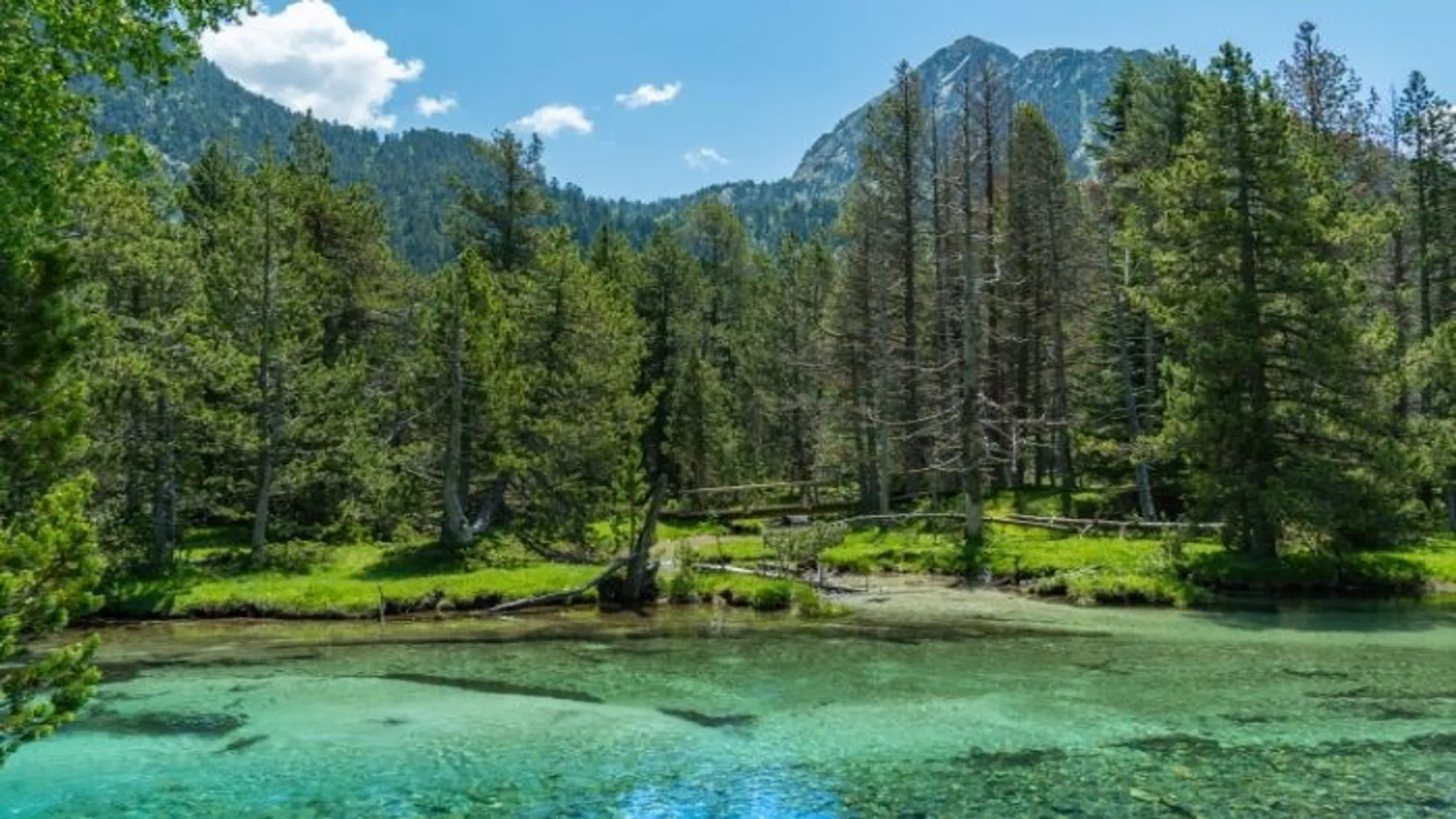
A forest is not only important for the number of trees that make up that wooded mass, but that key perspective also looks at the time that natural space has had to develop its ecological richness.
In the Aigüestortes i Estany de Sant Maurici National Park, the mature forests show high levels of conservation, according to a study by the CREAF and the CTFC. The evaluation of about twenty forest stands helps to better understand their condition and comprehend why preserving these ecosystems is fundamental for biodiversity and environmental balance.
What makes a forest mature and what benefits does its conservation bring? The analysis reveals how the diversity of tree ages, the presence of dead wood, and natural refuges support fauna and the capacity to store carbon. It also explains what information monitoring these forest masses provides and how it can help guide future management and conservation decisions.
The study evaluates 432 hectares of forest, with maturity scores ranging from 5.3 to 8.7 out of 10, compared with the 2.3 out of 10 average for Catalan forest masses reported in the Nature State Report 2020. The fourth Ecological and Forest Inventory includes 192 plots and enables comparison of the evolution of these ecosystems with records from 1993, 2004 and 2014, offering a three-decade view of monitoring.
The evolution of the forests is also reflected in their capacity to store carbon. In the analyzed fir plots, reserves have risen from 69.8 to 148.5 tonnes per hectare. The contributions of researchers Jordi Vayreda and Lluís Comas allow deeper insight into the relationship between conservation, forest maturity, and management. The aim is to understand which measures help preserve the better-conserved forests and how to promote ecological maturation in other forest areas.
The mature forests of the Aigüestortes i Estany de Sant Maurici National Park
This natural area in Lleida concentrates the greatest quantity and quality of mature forests in Spain, according to a study by the Centre for Ecological Research and Applications in Forestry (CREAF) and the Catalan Forest Technological Center (CTFC).
The work, funded with European Next Generation funds through the BHAVEC project, has evaluated the maturity level of about twenty forests in this protected area, reaching values between 5.3 and 8.7 out of 10.
These figures far exceed the Catalan forest masses average, which sits at 2.3 out of 10 according to the Nature State Report 2020.
The analyzed forests cover 432 hectares —mostly fir stands, followed by Scots pine and black pine stands— and are located in the valleys of Sant Nicolau, Espot and Colomèrs.
“Mature forests have trees of different dimensions and ages, dead wood that forms a highly complex tree structure, composed of many vegetation strata,” explains CREAF researcher and co-leader of the study, Jordi Vayreda.
This diversity creates microclimates that favor moisture retention, increase resilience to fires or droughts, and provide refuge for endangered species such as the capercaillie, so Vayreda argues that “knowing where these forests are located and preserving them must be a priority.”
Within the study framework, the fourth Ecological and Forest Inventory of the protected space has also been developed, after sampling 192 plots.
For the first time, the work compares current data with inventories from 1993, 2004 and 2014 and reveals that over the last 30 years carbon reserves have doubled in fir plots (rising from 69.8 to 148.5 tonnes per hectare), while in Scots pine plots they have grown from 57 to almost 100 t/ha and in black pine plots from 47 to 65 t/ha.
CREAF researcher Lluís Comas highlights that the advance toward more mature stands with abundant dead wood and “dendro-microhabitats” -such as cavities or cracks that shelter wildlife- “demonstrates the importance of using the national park designation as the highest form of protection.”
To accelerate this natural aging in other sectors, CTFC experts propose selective interventions such as opening small clearings, reducing competition around large trees, or generating dead wood standing and on the ground, measures that are already being evaluated in a pilot trial.
Meanwhile, the director of Aigüestortes National Park, Lluís Florit, emphasizes that these results provide key tools to decide the park’s future conservation strategy.
