
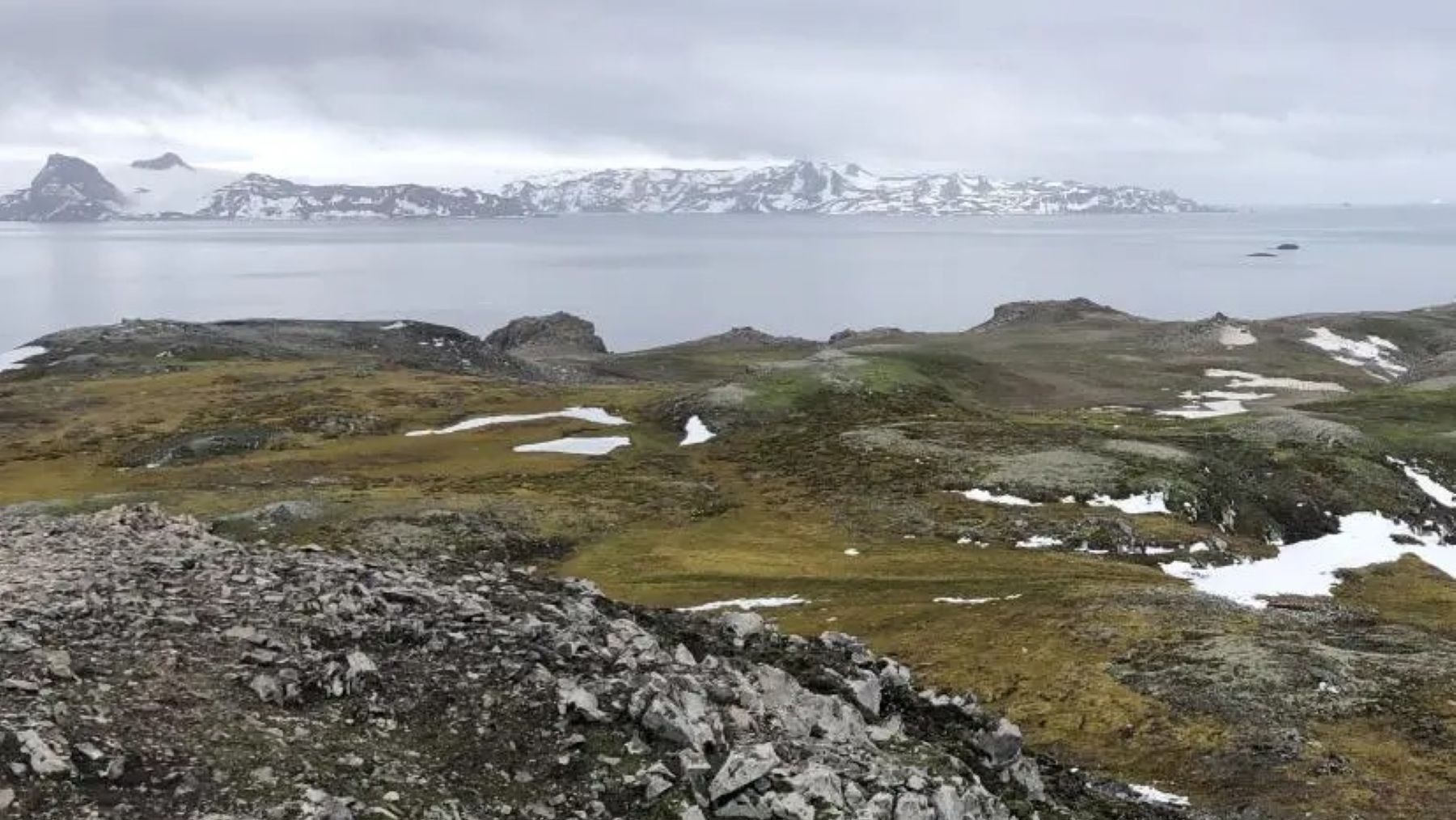
A study involving CREAF proposes expanding protection of Antarctic vegetation by 44 square kilometers, essential to preserve its plant, moss, and lichen communities.
Antarctic vegetation sustains small ecosystems capable of surviving extreme cold, but only 21.4% of its cover lies within protected areas. A study led by the University of Edinburgh, with participation from CREAF, identifies significant conservation gaps and proposes 92 priority locations in Antarctica to broaden protection.
The selected areas total 44 km² and are mainly concentrated on the Fildes Peninsula, Taylor Valley, and the Vestfold Hills. To identify them, the team combined high-resolution satellite imagery with information on invasive species threats, the distinctiveness of plant communities, and their proximity to research bases.
The research, published in Biological Conservation, emphasizes the importance of a cover formed by two flowering plant species, about 150 moss species and 400 lichen species. These organisms participate in the carbon and water cycles, and also provide food and shelter for insects and microorganisms. The proposal has already been submitted to the Committee for Environmental Protection of the Antarctic Treaty.
Antarctic Vegetation: Problems in the Deep South
Only 21.4% of Antarctica’s vegetation cover—crucial, for example, for regulating the carbon and water cycles—lies within protected zones, warns a study from the University of Edinburgh in which the Centre for Ecological Research and Forestry Applications (CREAF) of Catalonia participates.
Published in the journal ‘Biological Conservation’, the research has identified 92 priority locations to expand the continent’s plant protection and has presented its proposal to the Committee for Environmental Protection of the Antarctic Treaty.
To determine the protected percentage of Antarctic vegetation and to select the most urgent zones, the team used high-resolution satellite data on vegetation cover and analyzed factors such as the threat of invasive species, the irreplaceability of plant communities, and their proximity to scientific bases.
Only Two Flowering Plant Species Survive in Antarctica
The Antarctic vegetation cover consists solely of two flowering plant species, in addition to about 150 moss species and 400 lichen species adapted to the extreme cold that are essential in providing food and refuge for insects and microorganisms.
“The study provides, to date, the most thorough assessment of Antarctic vegetation status and reveals substantial protection gaps across the continent,” explains Mariana García, a researcher at Trinity College Dublin and associate of CREAF.
The areas identified to prioritize this conservation, which altogether barely add up to 44 square kilometers across the continent, are mainly concentrated on the Fildes Peninsula, Taylor Valley, and the Vestfold Hills.
“Our results show that, currently, large swaths of this vegetation lie outside the existing protected-space network,” emphasizes the study’s lead author at the University of Edinburgh, Charlotte Walshaw.
The research team concludes that the next step will be to combine satellite observation with on-the-ground expeditions to consolidate the foundations for the continent’s future environmental protection.
Vegetation Cover Multiplies
The need for monitoring grows in light of changes observed on the Antarctic Peninsula: a study published in 2024 in Nature Geoscience estimated, using Landsat images, that the surface with probable vegetation cover rose from 0.863 square kilometers in 1986 to 11.947 in 2021, almost fourteen times larger.
That growth, detected in a specific region and linked to global warming, reinforces the importance of combining satellites and fieldwork to understand how these communities transform and to guide their conservation.
