
The Arctic thaw opens the way for oilers as twelve expedition members investigate its transformation: Guterres denounces interests that discredit science and calls for decisions at COP31.
Tara Polar Station
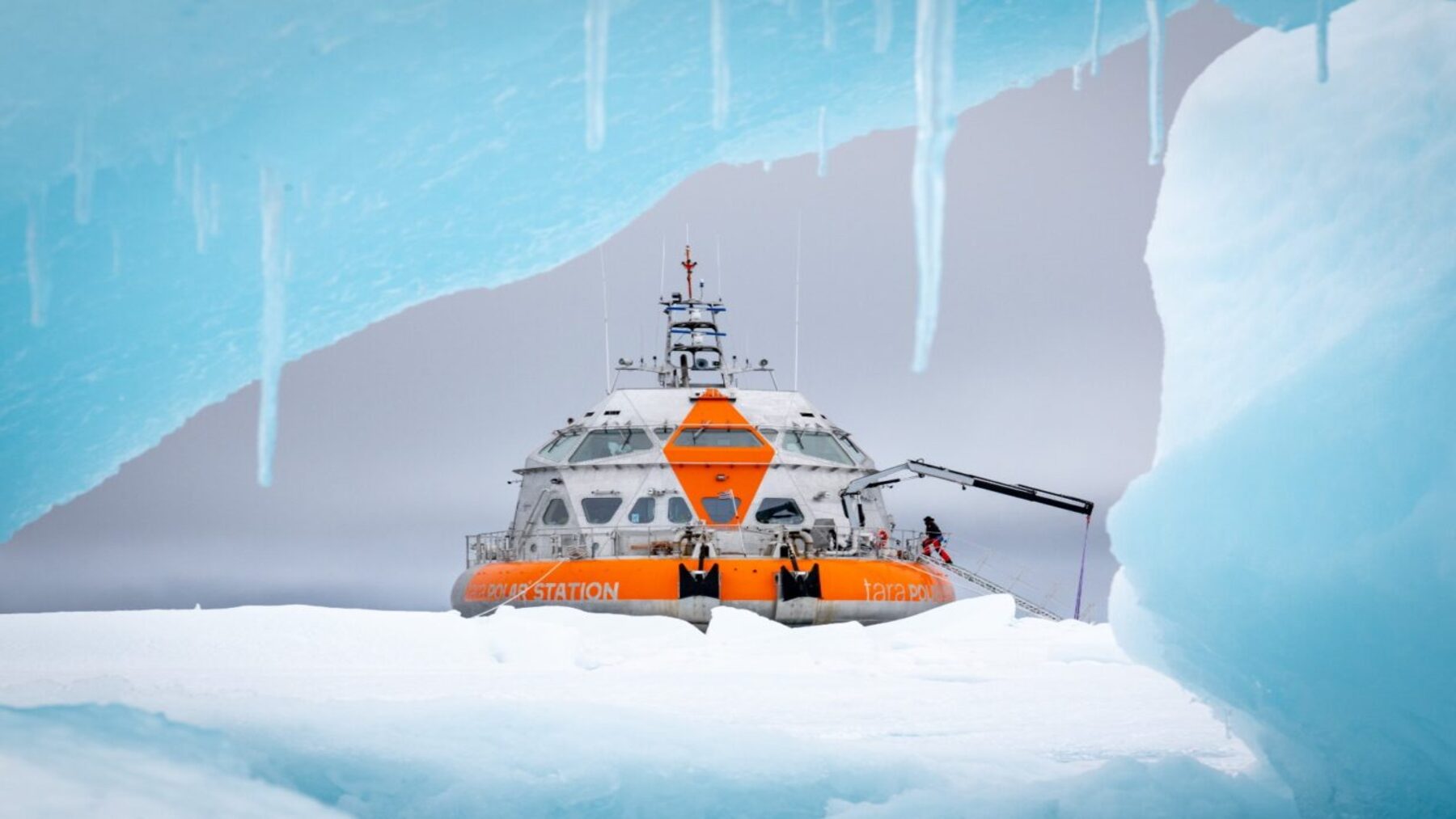
The Arctic thaw has many ramifications, but among the worst is that it paves the way for oil tankers and exposes a brutal contradiction: warming facilitates the transit of fuels that contribute to causing it. The crew of Tara Polar Station has observed these polluting vessels while seeking ice solid enough to install their laboratory.
Aboard this 26‑meter French scientific station that measures the negative impact of this navigation, twelve people and the dog Örkki spend the polar night at the mercy of the currents. They are investigating a region that is warming exponentially faster than the global average.
Its message has reached the President of the UN, António Guterres: turning a planetary emergency into a commercial opportunity multiplies the reasons to demand greater protection and stricter controls.
The Arctic thaw opens the way for oil tankers: hypocrisy is already afloat
Maxime Geoffroy, the expedition’s chief scientist, explained to the UN secretary-general that they had seen numerous oil tankers in the Northeast Passage, off the Arctic coast of Russia. His testimony describes real traffic, not a future possibility.
The retreat of ice due to climate change eases navigation, but it also exposes an environment especially vulnerable to accidents and pollution. A fuel spill can become trapped between ice floes and prove extraordinarily difficult to clean.
Governments must be held accountable for the conditions under which they permit that activity. Opening this route does not remove environmental risks nor does it guarantee sufficient capacity to respond to a spill emergency.
Scientists trapped in the ice to understand what we are losing
The Tara Polaris I mission inaugurates a twenty-year program in which science, with ten planned expeditions, will monitor the situation. It brings together scientists from different countries to study organisms, biodiversity, carbon, and ocean transformations.
The expedition reached 82 degrees north latitude, traversing open-water channels. The comparison with Nansen’s voyage, begun in 1893, illustrates a different reality, though an isolated expedition does not replace the climate series that allow measuring trends.
The Arctic thaw opens the way for oil tankers while it weakens the ice’s reflective effect. When the dark ocean is exposed, it absorbs more solar radiation and fosters additional warming. The loss affects a climate system connected to distant regions.
COP31: listening to science requires stopping the postponement of decisions
Guterres denounces that economic interests tied to fossil fuels try to discredit the scientific evidence. Geoffroy also warns against strategies that delay necessary measures or reduce transparency about environmental commitments.
This scientific effort needs funding, cooperation, and freedom to communicate results. The risks do not disappear but multiply because models still must specify when and how certain consequences will occur.
The Arctic thaw caused by global warming opens the way for oil tankers and obliges the leaders gathered in Antalya to face that contradiction head-on. Recognizing science while delaying emissions reductions keeps open the contradictions that the problem documented by its researchers presents.
The Arctic thaw opens the way for oil tankers: according to NASA and NSIDC, the twenty lowest annual Arctic sea-ice minima on record correspond to the last two decades, spanning 2007 to 2026. In the summer of 2026, the minimum reached approximately 4.6 million square kilometers.
Year-to-year variability exists and advances gradually, but it does not erase the documented trend. Turning this weakening into a logistical advantage for fossil fuels requires a fierce critique of the political class and far greater environmental scrutiny, never a commercial celebration.
