
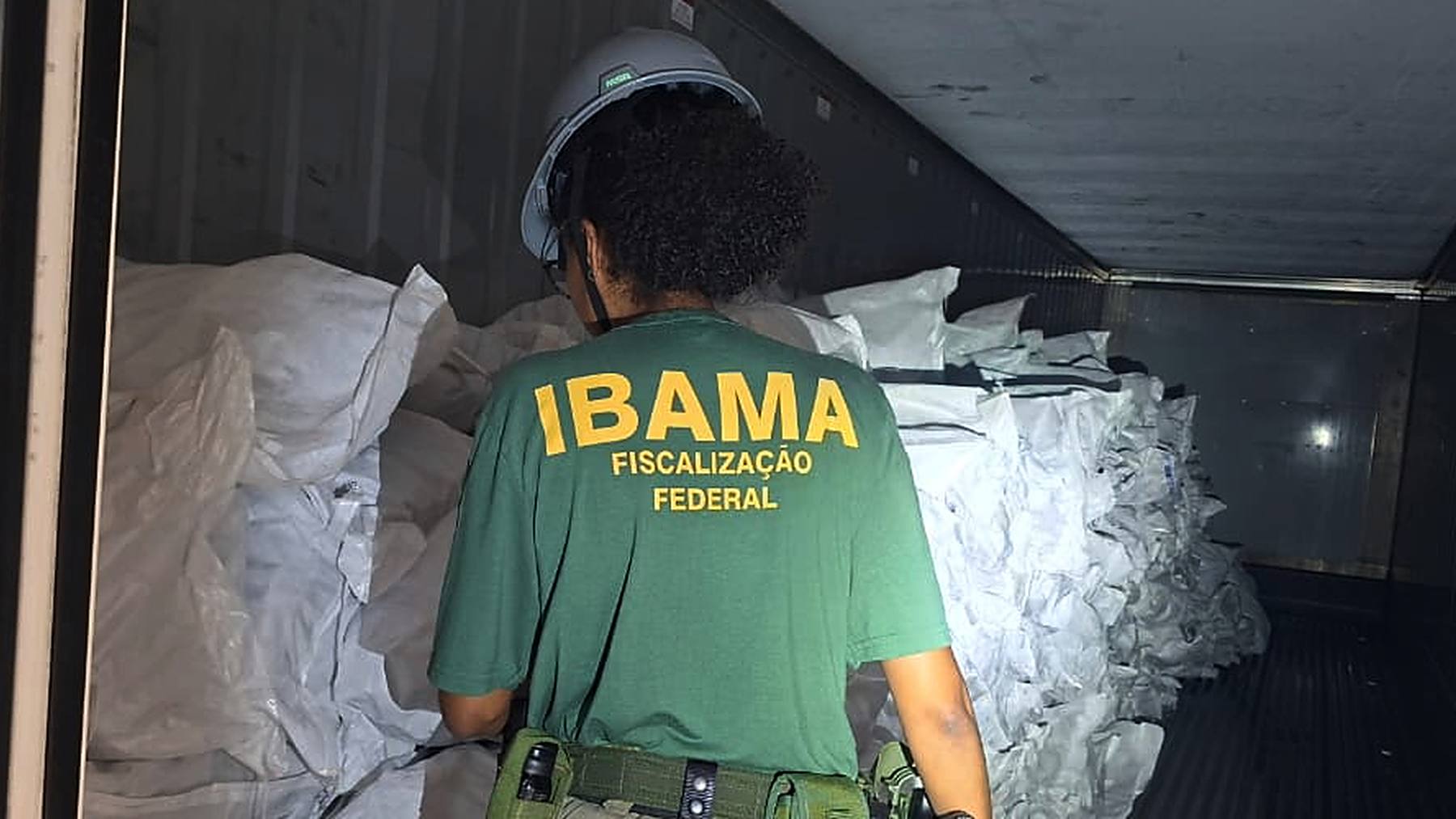
Brazil intercepted at the port of Itapoá, in Santa Catarina, a container carrying more than 17 metric tons of shark fins. It was bound for Malaysia, declared as «frozen sardines,» according to the Receita Federal. Ibama, the country’s environmental agency, has imposed a fine of 50 million reais (about 8 million euros) on the exporting company.
To assemble that cargo, some 5,700 sharks would have died, according to Ibama’s environmental agents, and a portion of the fins come from a species that is threatened with extinction. How many animals fit in a single container? Many more than one might imagine when thinking of a can of sardines.
Labeled as sardines
Tuesday morning, October 27, proved decisive. The customs officers of the Receita Federal uncovered the merchandise thanks to intelligence work and monitoring. They intercepted it that day.
On the papers it said sardines and on the raffia sacks as well, but according to the Receita inside were the fins. A very simple ruse, indeed. But in a port full of containers, who is going to look bag by bag?
Then it was Ibama’s turn to take charge of all that. Its fine arrived that same Tuesday. The institute does not mince words and speaks of an attempt to evade the inspection.
Blue sharks and makos in sacks
A large part of what was identified belongs to the blue shark (Prionace glauca), which in Spain is called tintorera. A smaller portion came from the shortfin mako (Isurus oxyrinchus). And that species is already on the endangered list.
If you want to put faces to them, there is a guide listing all the sharks in the world that dedicates part of its sales to protecting them. Because from a shark, in a bag like these, only what can be sold remains.
Up to $3,000 per kilogram
Why all this fuss to hide them? For money, of course, because the fins were going to end up on Malaysian plates. In Asian countries, Ibama notes, the kilogram can fetch up to $3,000.
In Brazil, however, almost no one consumes them. “In Brazil there is practically no consumption of this type of product,” explained in 2023 Jair Schmitt, Ibama’s Director of Environmental Protection in that operation.
This trade isn’t exactly far from us, by the way. Spain has already appeared in a study on illegal fin exports alongside China and Taiwan. And illegal shark fishing in Spain continues to make headlines.
Fins kept attached to the body
The cargo fell seven months after Brazil tightened the screws. In March 2026, the Government approved tougher rules for the blue shark trade. This species was added to Appendix II of the international CITES convention in 2023.
Since then it has been prohibited to export fins separated from the body. The animals must arrive at port with them naturally attached. It makes sense, since a whole shark is far easier to monitor than a bunch of loose fins, regardless of how many labels the sacks bear.
Females and juvenile specimens cannot be retained either. In fishing for export, additionally, this species cannot account for more than 20% of the catch on each trip. And without a CITES license and without proving where the goods come from there is no shipment.
The 2023 precedent
Santa Catarina had already figured in this story three years ago. In June 2023, Ibama seized 28.7 tons of fins that were also headed to Asia. Of them, 27.6 tons came from a single exporting company in that state.
That time around, about 10,000 sharks were killed (4,400 blue sharks and 5,600 makos). More than 40 people were sanctioned, and Ibama still presents it as the country’s largest fin seizure.
And yet, with fines, operations, and new rules in place, a shipment of this type has reappeared. It gives one pause.
An unnamed company
Official notes leave several unanswered questions, beginning with the name of the company, which neither Ibama nor the Receita have disclosed. They also do not clarify which ships caught these sharks or in which waters. That detail would go a long way toward understanding where the chain starts.
It hasn’t been published how many fins belong to mako, and the 5,700 animals are only an agent estimate. The Receita adds that what was detected could constitute administrative violations and environmental crimes. Neither note mentions any conviction, only a fine and possible infractions, so we’ll have to see how this all ends.
Information about this fine has been published by Ibama in its official note.
Photo: Ibama
