
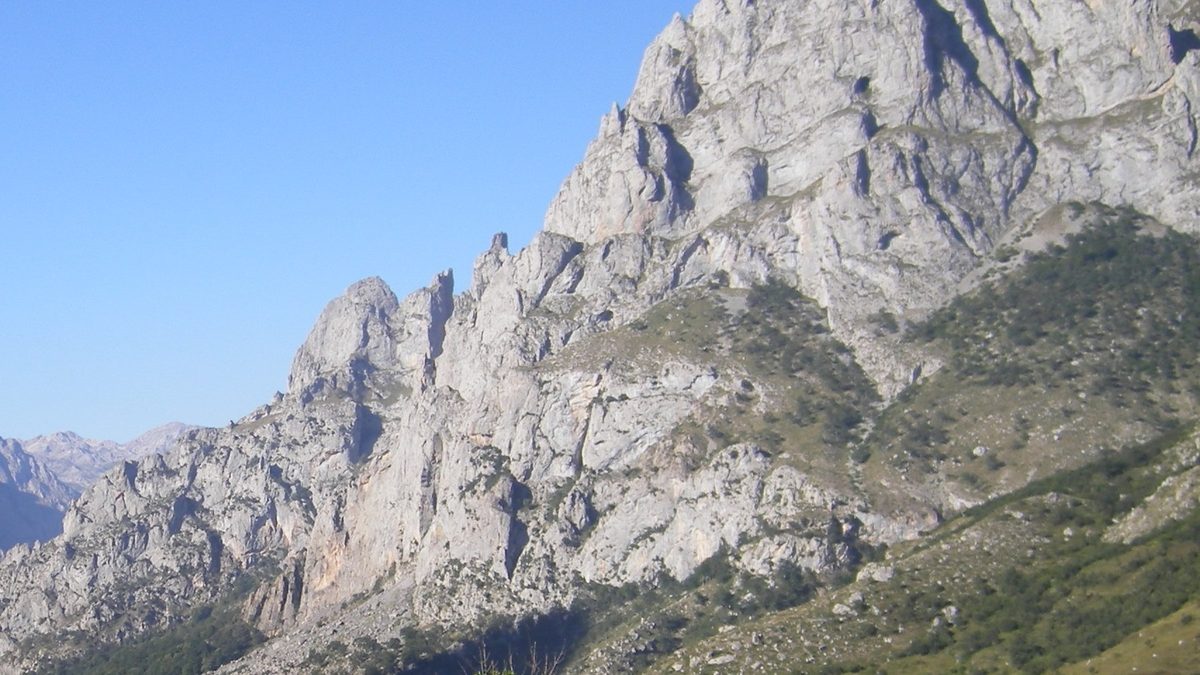
A brown bear died on Saturday of a gunshot wound in Posada de Valdeón (León), inside the Picos de Europa National Park. The control was aimed at wild boar, an activity foreseen in the park’s own regulations, according to the Junta.
It was reported by the Territorial Delegation of the Junta of Castile and León in León, in a press release. The Junta has notified the Civil Guard, which will investigate the circumstances of the death. The carcass will go to a laboratory of the Junta itself.
What the Junta Has Reported
According to the note, the control was supervised by an environmental agent and two environmental wardens. Also taking part were neighbors with the level of specialization required for this work.
The Junta assures that previously tracking protocols to detect bears in the area had been applied. The latest one was carried out on Friday, in the same control zone. It found no sign of bear presence.
The case is now in the hands of the Nature Protection Service (SEPRONA) of the Civil Guard. Its officers will collect data, perform the necessary checks, and investigate the circumstances of the animal’s death.
A necropsy to learn more
The bear’s body will be transported to the laboratory of the Junta’s Center for Wildlife Recovery. There the necropsy will be performed, the examination that helps clarify how an animal died.
The note does not say whether it was male or female, nor how old it was. It also does not specify what time the shot was fired, nor the exact point in the valley, nor who did it.
Why the wild boar is controlled
The Junta recalls that these controls on overabundant species are part of the National Park’s master plan (PRUG). They are carried out for conservation reasons and to prevent damage. According to the Junta, their development is regulated by control plans previously approved by the Management Commission.
On the León side, that plan is Decree 17/2025 of Castile and León, dating from December 2025. It states that fauna controls must be selective and based on scientific data. In addition, they can never be carried out in the park’s reserve zones.
The text calls for special attention to the wild boar. It explains that it damages key elements for the park’s conservation and that it transmits diseases to livestock. Therefore, it provides for continuous control plans for the species to prevent excessive densities inside the park.
A park shared by three communities
Picos de Europa spans 66,030 hectares across Asturias, Castile and León and Cantabria. The Leónese portion, where Posada de Valdeón is located, accounts for 23,580 hectares of that total. Each community approves its own master plan, as we noted when Asturias approved its for farming and tourism.
According to the León plan, the wolf, the wild boar and the deer are the species that cause the most damage in the park. The same decree notes that the brown bear is listed as “endangered.” It also foresees maintaining annual censuses to monitor the species.
How many bears remain
In 2023, the Junta presented the genetic census of the brown bear, conducted together with Galicia, Asturias, Cantabria and the ministry. It estimated about 370 bears in the Cantabrian Range, with 250 in the western subpopulation and 120 in the eastern. To do this, 1,288 feces and hair samples were analyzed, collected across 16,700 square kilometers.
That same census indicated 210 males and 160 females, i.e., 56% of males across the entire range. In the eastern part of the range, previous estimates hovered around 50 individuals. According to the Junta, the census showed stability in the west and an increase in the east, something that aligns with what we report from the LIFE Osos con Futuro project.
A species with its own strategy
The brown bear of the Cantabrian Range has a conservation strategy approved in 2019. It was signed by the Environmental Sector Conference. It notes that the species is listed as “endangered” in the Spanish Catalogue of Threatened Species.
Among its lines of work are the protection of the species and the prevention of conflicts between bears and people. Also research and monitoring. That framework explains the debate about the protection of the brown bear in Spain.
For now, we must wait. The necropsy and SEPRONA’s work will clarify the circumstances of the death of this bear in Valdeón.
Image: Picos de Europa National Park / R. Suárez
