
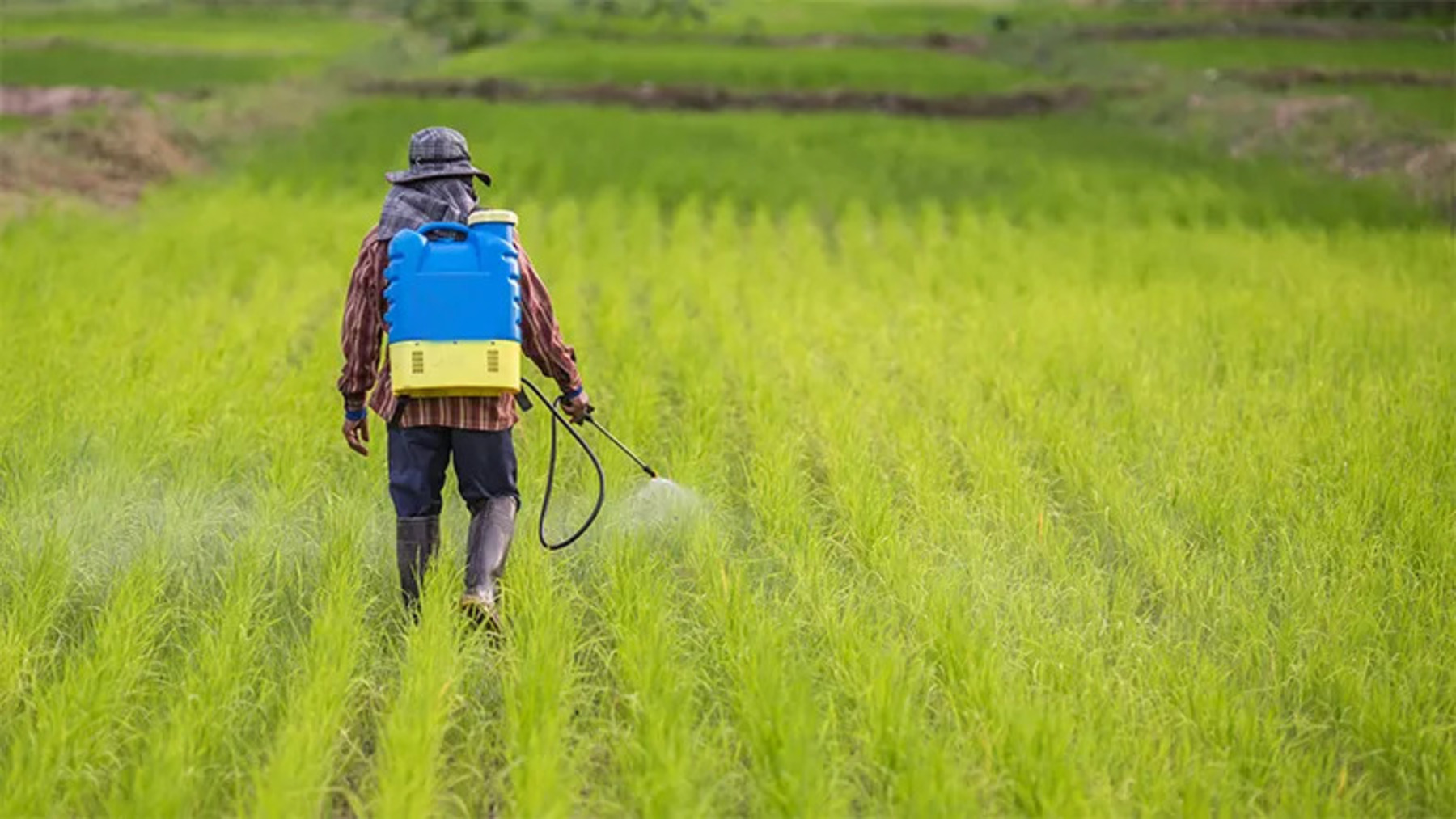
Environmental organizations denounce the influence of the chemical industry on a reform that threatens to weaken health and environmental protections.
Citizens are tired of calling for fewer pesticides, stricter controls, and foods free of these dangerous substances, but the European Commission seems to be moving in the opposite direction and is not listening to these public demands.
Meanwhile, while 68% of Spaniards advocate for the complete elimination of pesticide use in agriculture and 94% oppose granting unlimited-time authorizations, Brussels is negotiating a reform that could grant indefinite permissions to about 200 chemical substances. A decision that translates to health and environmental protection taking a back seat when weighed against the interests of the agrochemical industry.
The data come from a survey commissioned by PAN Europe and conducted by YouGov across seven European countries. In Spain, only 3% of respondents believe that even more pesticides would be necessary.
Furthermore, opposition to unlimited authorizations cuts across the political spectrum and no group shows a stance in opposition: the rejection stands at 94% among PP voters, 95% among PSOE voters, 93% among Vox voters, and 95% among Sumar voters. It is hard to find a more resolute public consensus. Yet, European institutions seem willing to ignore it, and they have underscored as such.
Pesticides with no expiry date: a boon to the chemical industry
The epicenter of the controversy is the Food and Feed Safety Omnibus legislative package, known as the pesticides omnibus. The proposal contemplates eliminating periodic reviews of certain authorizations and, in simple terms, nearly 200 pesticides—almost half of those used in the EU—will be free to be used without an established expiry date.
The consequence is worrisome: even as new research may over time reveal harmful effects on health or ecosystems, the obligation to periodically review their authorizations would disappear. Science could advance and provide new evidence, but the substances would continue to be used under a much less demanding and more dangerous system for people who consume those foods.
And there’s more. The text also contemplates that a pesticide banned for its danger could continue to be used for an additional three years. That is, even when authorities decide to withdraw it, exposure of the population and the environment could extend for another 36 months. Incredible, but true.
Another contested measure would allow substances that do not meet official safety criteria to be authorized on socio-economic grounds, even in the face of unfavorable scientific guidance from the European Food Safety Authority (EFSA).
Science remembers but the lobby is the one in charge
The rejection stands at 94% among PP voters, 95% among PSOE voters, 93% among Vox voters and 95% among Sumar voters.
The opposition does not come only from environmental organizations. More than 500 scientists and researchers across Europe have called to halt the reform process and to demand an independent assessment of its consequences. Scientific organizations such as the Endocrine Society, the European Society of Endocrinology, and the European Society of Pediatric Endocrinology have also voiced their opposition.
The International Society for Environmental Epidemiology has repeatedly recalled the evidence on possible adverse effects of pesticides on the nervous, reproductive, and cardiovascular systems. UN experts have also expressed concern about the consequences of this type of measure announced from Brussels.
But one of the gravest aspects concerns who is influencing the decisions. A report from Corporate Europe Observatory alleges that the lobby of pesticide manufacturers would have intervened to the point of drafting parts of the legislative proposal. An accusation that requires explanations and transparency: are the rules being written by those who should be subject to them?
The vote scheduled for December in the European Parliament will be decisive in this sense to see whether things change. Meanwhile, 75% of Spaniards consider health protection to be the main criterion for authorizing a pesticide. They believe that economic or business criteria should not be taken as the sole valid ones.
The simple final question is this: who should pay the consequences of using potentially dangerous substances? PAN Europe and Ecologistas en Acción demand that those who manufacture and commercialize them do so, not the families that consume them nor the taxpayers who end up bearing healthcare and environmental costs.
Europe has an opportunity to demonstrate that food safety is not negotiable with chemical manufacturers. If it approves nearly eternal authorizations while the public and the scientific community demand more controls, it will not be administrative simplification: it will be a setback in protecting public health.
