
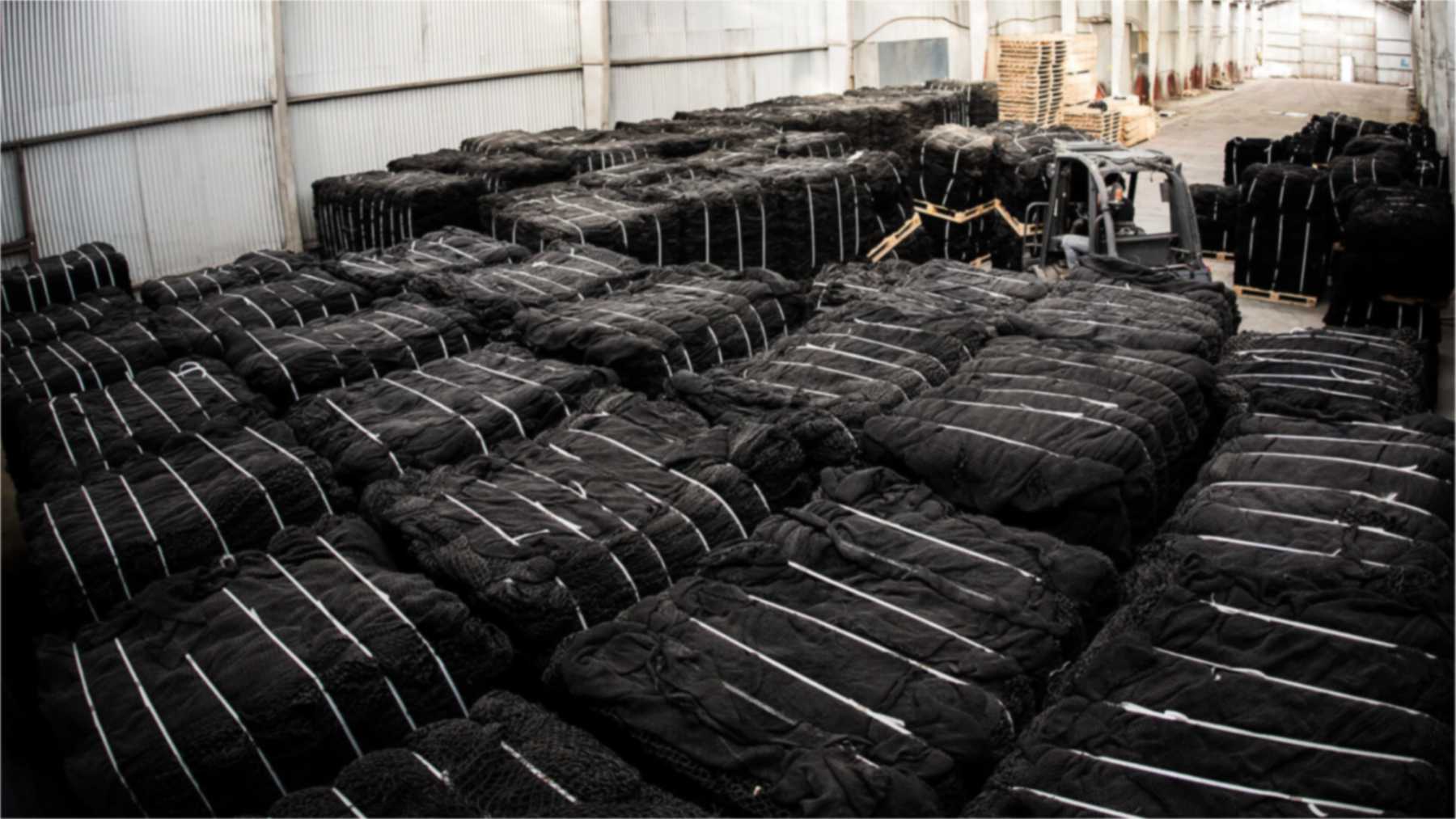
In 2013, three surf-loving friends launched in Chile a program to collect used fishing nets and, with that plastic, began manufacturing a skateboard. Their company, Bureo, now reports more than 17 million pounds of nets collected for recycling since then, about 7.7 million kilograms.
Spread across their 13 years of activity, that figure comes to roughly 590 tons per year, according to their own calculation. And the material, which started on skateboards, has ended up on hat visors, jackets, sunglasses, surf fins, and Jenga pieces.
A skateboard named Minnow was the first product
The founders are Ben Kneppers, David Stover and Kevin Ahearn. “Deep down we are ocean lovers and surfers,” they write on the company’s website, where they recount that they grew up in fishing communities in the Northeast United States.
According to that same account, the first collection program started in Chile in 2013 and from it came the Minnow, which they present as the world’s first skateboard made with recycled nets. The boards were shipped from their garage, turned studio, in Redondo Beach (California).
The nets were a headache for artisanal fishing communities, which had nowhere to take them. “We know it’s a burden, and we take it off their shoulders,” Kneppers told Boston Magazine in 2015. “For each skateboard, we prevent more than 30 square feet of fishing nets from reaching the ocean,” he added, i.e., about 2.8 square meters.
The model soon changed. “We quickly realized that the scale of the net pollution problem was far greater than we could tackle as a small emerging brand,” Stover told Lehigh University, where he studied with Ahearn, in 2021.
From then on, Bureo began selling to other companies a raw material that Ahearn described as “100% recycled and 100% traceable fishing net.” “This allowed us to scale our on-the-ground impact quickly,” he explained.
Lost nets keep fishing for years
A discarded net at sea continues to trap animals even if no one returns for the catch, a phenomenon known as “ghost fishing.” NOAA, the U.S. agency that studies the oceans and atmosphere, explains that these gear kill fish, crustaceans, marine mammals, turtles and birds, damage coral reefs and seagrass beds, and get tangled in rudders and propellers.
Patagonia notes on its website that scientists estimate more than 650,000 marine animals die or suffer serious injuries each year from getting entangled in fishing gear. Conservation International’s fact sheet adds that an abandoned net can keep fishing for up to ten years and that these synthetic materials persist up to 600 years while breaking down into microplastics.
“The problem here isn’t the fishermen, but the lack of infrastructure available when nets reach the end of their life,” summarizes that organization. Bureo frames it similarly: “The fishing communities we work with are not the problem; they are part of the solution.”
Fishermen are paid or donate their worn-out nets
The system works on incentives. “Low-income fishermen receive direct payment for their nets, while nets from commercial fisheries are donated,” the company explains, which today says it collects in 21 communities across six countries: Chile, Peru, Argentina, Ecuador, Mexico and Japan.
In Chile, the nets pass through the Talcahuano plant, near Concepción. Christopher “Caco” Clemo, head of Bureo in the country, recounted in a Patagonia piece published in 2022 that about 800 tons of nets were processed there each year.
“If you had told me eight years ago that I would be running a plant and a warehouse where at any moment 15 to 20 people work processing old fishing nets to turn them into a material that can be used for everything from clothing to skateboards, I don’t know if I would have believed it,” Clemo said. According to his account, fishermen began to come to drop off nets on their own because a cleaner ocean is better for their livelihoods and their families.
The shredded nets become NetPlus nylon
At Bureo’s facilities the nets are sorted, cleaned, shredded and packaged before traveling to recycling plants. There they undergo depolymerization, a type of chemical recycling that breaks the plastic into its basic building blocks and allows it to be remade into new nylon pellets.
Those pellets, which the company markets as NetPlus, are transformed into threads with which technical fabrics are woven. Bureo says it tracks every net from its origin to recycling so brands can verify that the material is from used fishing nets.
Patagonia and Costa bring the nets into clothing
Patagonia has supported Bureo since 2014 through Tin Shed Ventures, its venture capital fund. The brand explains that NetPlus is used in its hat visors and jackets, and also in Costa sunglasses, Futures surf fins, and even Jenga sets.
The visors were relatively straightforward, Patagonia acknowledges, but for garments they had to work with suppliers to chemically transform the plastic from the nets into a high-quality thread. Since beginning to use NetPlus in 2020, it has helped divert more than 2,000 tons of nets, and in the Spring 2026 season it expects to weave more than 250 tons into its products.
Costa, which has been working with Bureo for more than seven years, expanded its Untangled collection in September 2026 to clothing and accessories. “For Bureo it’s not just about making another product, but about showing consumers and the industry what is possible when brands commit to doing better,” said Ahearn, now the company’s chief technology officer, to Vision Monday.
According to that same outlet, Costa estimates more than 3.9 tons of nets have been reused in its Untangled products since the collaboration began.
In Japan, fishermen classify their own nets
The program reached Japan in 2023 in partnership with Ellange, a Chiba-based company founded in 2021. Toyota Tsusho explained at the time that the nets are cleaned and sorted in Japan with strict traceability controls and are recycled abroad afterward.
In March 2026, the Japanese company detailed that fishermen participate in the classification and quality checks, while it provides investment and seeks sales channels for NetPlus. The project earned the president’s prize from Keidanren, Japan’s major business federation, at the 34th Global Environment Grand Prix.
What Bureo’s figures don’t tell
The 17 million pounds refer to nets collected on land for recycling at the end of their life, not ghost nets recovered from the seabed. It’s a preventive approach designed to keep the material from entering the sea.
The Conservation International fact sheet spoke of more than 7.2 million pounds collected across 62 fisheries and fishing communities and of material incorporated into more than 13 million products. That tally of items does not reveal how much recycled plastic each one contains, and a NetPlus-brim hat does not have to be made entirely from nets, so it’s worth checking the label.
Plans aren’t guarantees either. CI Ventures, Conservation International’s investment arm, allocated $500,000 to replicate the program in Peru, Ecuador and Mexico, aiming to move from 800 to 4,000 tons annually by 2026 and reach more than 100 fishing communities. On Bureo’s pages consulted, there is no annual figure confirming it has been reached, and 4,000 tons would be five times the initial 800 and nearly seven times its average annual figure since 2013.
Kneppers summarized the company’s growth approach in 2015. “Our model has always been ‘little by little.’ We show one step and then build on it and learn from it to see how we can do better.”
The collection figures come from Bureo’s website, consulted in October 2026, and the Japan details come from Toyota Tsusho’s official press release of March 4, 2026.
Image: Bureo