
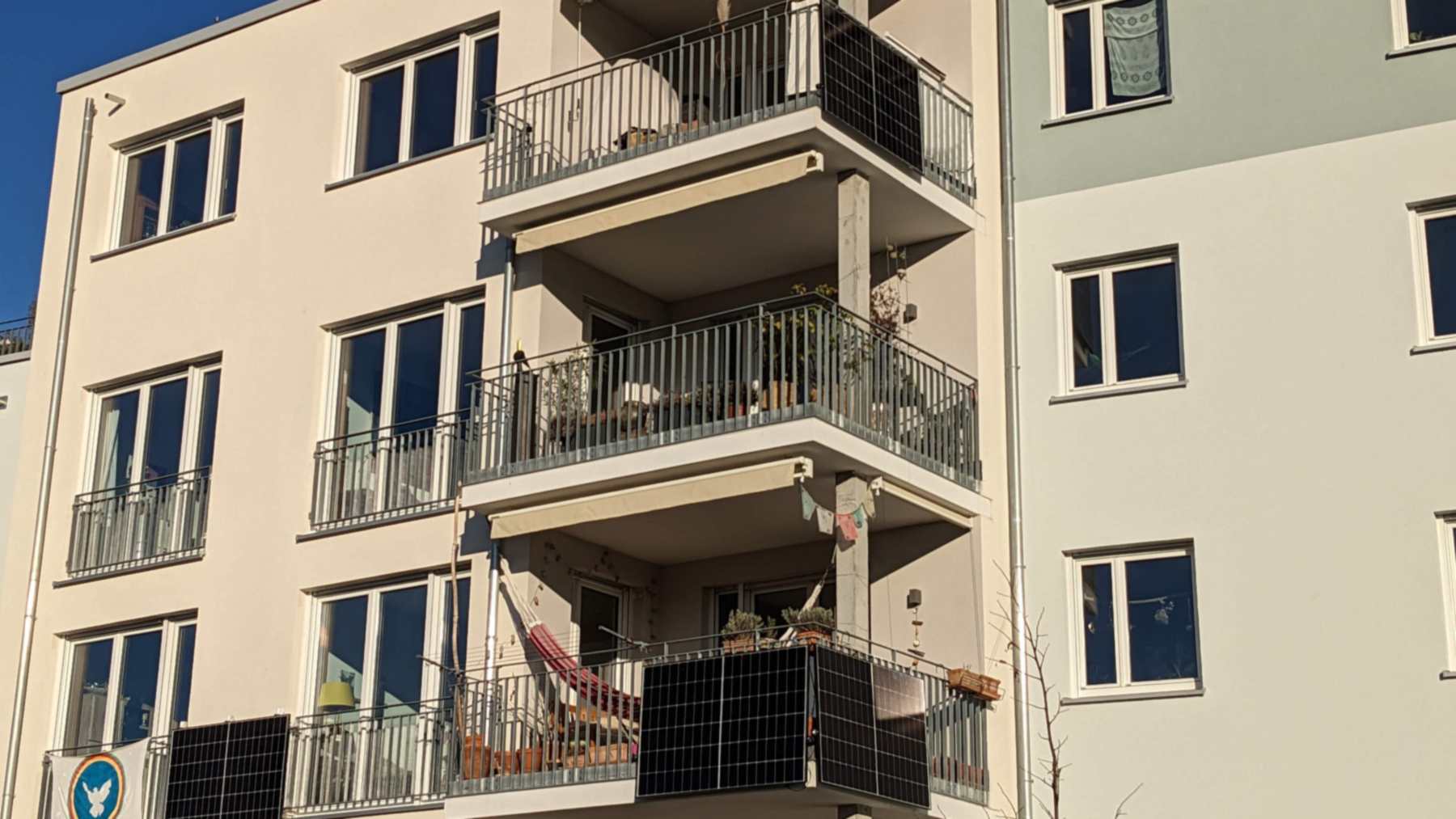
A partir de enero 1, un inquilino de San Diego podrá colgar un par de placas certificadas en la barandilla de su balcón, enchufarlas a la pared y recortar su factura sin pedir permiso a la compañía eléctrica, en cuanto lleguen a las tiendas los primeros modelos que cumplan la ley. Los paneles solares de balcón pasan a ser legales en California con una ley que el gobernador Gavin Newsom firmó el 30 de septiembre de 2026.
The rule is Senate Bill 868, known as the Plug and Play Solar Act (the Plug and Play Solar Act). It was introduced by Democratic Senator Scott Wiener, from San Francisco, and sponsored by the environmental group Environmental Working Group (EWG) and the Abundance Network.
With it, California becomes the tenth state in the United States to legalize these devices, according to EWG. Utah was the first, in 2025. Newsom, who had already criticized Donald Trump’s stance on renewable energy, thus adds the most populous state to the list.
What the new law allows
The text defines a “portable solar generation device” as photovoltaic equipment, or a set of them, with an alternating current output of up to 1,200 watts per dwelling. It must connect to and disconnect from the building’s installation through a plug and must be used to offset the household’s own consumption.
According to EWG, that limit is enough to power everyday appliances such as refrigerators, lights, Wi‑Fi routers, and air conditioning equipment.
If the device meets the conditions, it is exempt from “all interconnection requirements” imposed by state law, the California Public Utilities Commission, and the utilities themselves. Interconnection is the technical and administrative process that hitherto was required to attach any solar installation to the grid, no matter the size.
Electric companies will also not be allowed to require customers to obtain their approval before installing or using the panels, nor to pay any fees related to them or to the electricity that they inject into the home’s installation, nor to add extra controls or equipment.
The only thing they can ask for is a notice. The law allows them to require the user to fill “a simple online registration form” with the address, the brand, the model, and the size of the equipment, and it clarifies that this notification cannot become an authorization.
Safety requirements
In return, the law imposes technical conditions. The equipment must comply with the latest version of the National Electrical Code and the California Electrical Code, and be certified as a plug-in photovoltaic system by Underwriters Laboratories (UL) or by another nationally recognized testing laboratory.
It must also carry a certified mechanism that isolates it from the building’s installation during a blackout, so the panels do not feed electricity back onto the grid while workers are on it. According to the EWG release, the systems must shut off on their own within seconds if the grid goes down.
A process that used to cost hundreds of dollars
Some Californians already had plug-in panels, but utilities required them to sign an interconnection agreement. According to EWG, the cost and time demanded by that process slowed the arrival of these devices.
“This new law will bring cleaner energy, greater energy independence, and real savings for consumers,” said Bernadette Del Chiaro, senior vice president of EWG for California.
“These small and easy-to-use solar panels will give everyone, including renters, the relief they desperately need in the face of our skyrocketing electricity bills,” Wiener said after the signing. “Electricity costs have reached ridiculous levels here in California,” he added.
California’s electricity rates have nearly doubled in the last decade and are the second most expensive in the country, according to EWG.
In Europe, the conflict has reached the courts via a different route, that of neighbors, as in the case of a Polish judge who ordered the removal of balcony solar panels in Gdańsk even though the owner had gathered signatures from the majority of the community.
How much you can save with the panels
According to EWG, today these devices cost from around $500, and the organization expects the price to fall as they spread.
A single 400‑watt unit can cover about 14% of a typical apartment’s electricity consumption, with savings of around $250 per year, according to EWG.
The model that the bill’s backers had in mind is Germany, where there are already more than 4 million of these systems installed, according to EWG.
The law is designed for those left out of rooftop solar, such as renters or families without the money for an installation that can cost tens of thousands of dollars. It is an issue also seen in Spanish cities, where roof ownership conditions access to self-consumption, and has already led to experiments with solutions like Cádiz’s balcony glass photovoltaics.
A law with an expiration date in 2030
The interconnection exemption and the prohibitions on the utilities will only stay in effect until January 1, 2030, unless Parliament extends them. The Assembly added that clause with wording requested by the companies themselves, according to EWG.
From that date onward, moreover, it will not be possible to sell in California plug-in equipment that does not meet electrical codes or that lacks certification and the grid-isolating system.
What the law still does not resolve
The law alone does not put panels on any balcony. The equipment must meet the new certification requirements before reaching stores, and the exemption does not apply until January 1, 2027.
There are no real savings data for California yet. The 14% and the $250 per year are EWG estimates, and the outcome will depend on the sunlight each balcony receives and on electricity prices in each area.
The full text of the law, approved by the governor on September 30, 2026, has been published on California’s legislative portal as Chapter 985 of 2026.
Photo: Rudy23 / Wikimedia Commons (CC BY-SA 4.0)
