
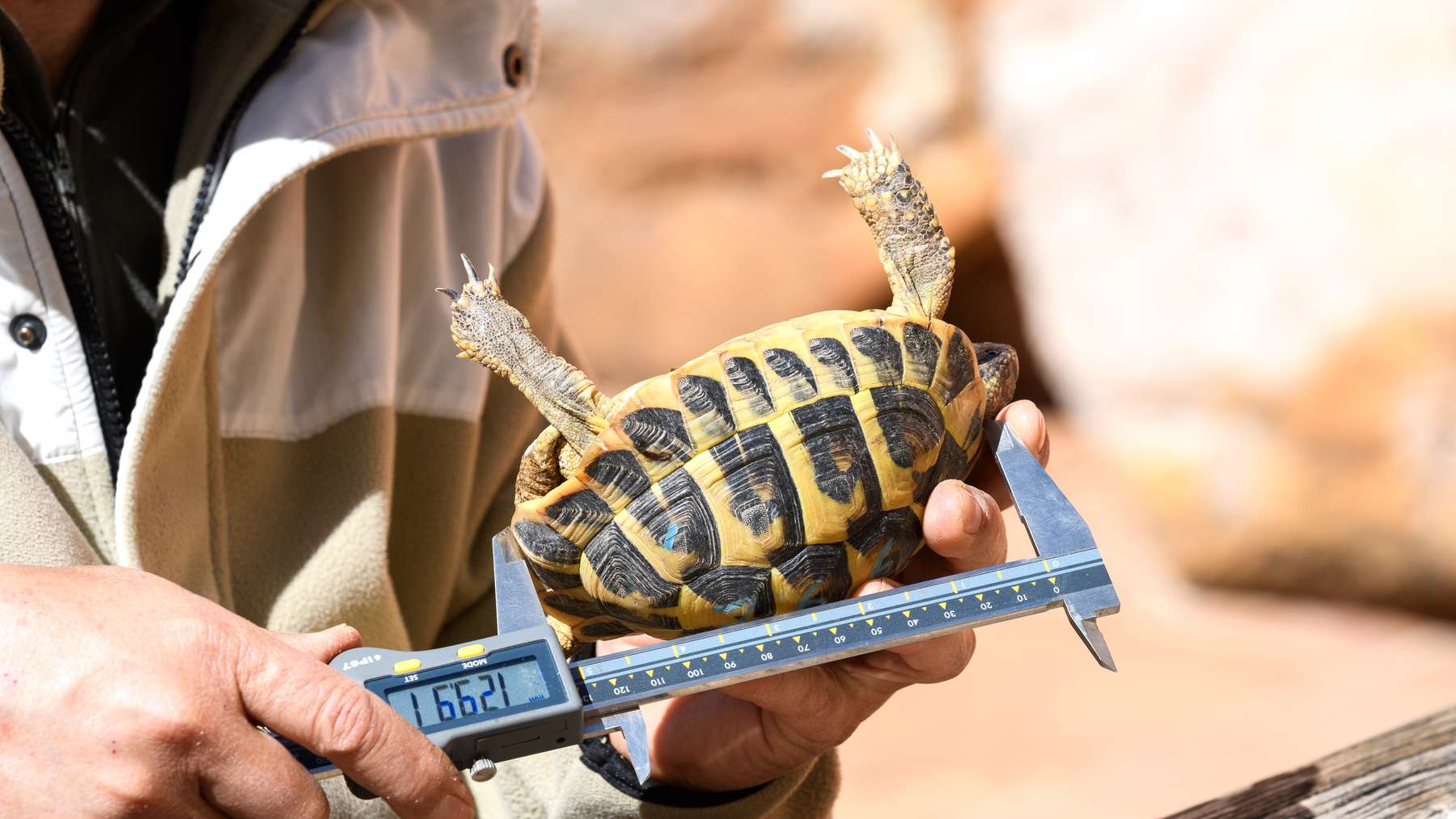
Recently the Government of Catalonia released 798 Mediterranean tortoises (Testudo hermanni) in the Serra de Montsant and Els Ports natural parks, in Tarragona. The species is listed as endangered in the Catalog of native wildlife threatened in Catalonia. For that reason, every individual that returns to the wild matters.
With these releases, the reintroduction program has already surpassed 12,600 tortoises across both protected areas. This figure comes from the press release of Parcs Naturals de Catalunya dated October 22, which also brings good news: some of the animals survive, adapt, and reproduce in the wild.
161 tortoises released in Montsant
This week, 161 tortoises were released in the Serra de Montsant Natural Park. Releases there began in 2005. Since then, more than 8,302 individuals have been reintroduced.
Most of them were released using the method known as hard release, a direct release into the wild without enclosures or adaptation periods. The animal leaves the box and starts fending for itself among the scrub.
Two decades of work on a rocky, pine-dotted ridge that anyone who has climbed into the Priorat area knows well. And the tally now stands at over 8,300.
Volunteers and dogs in Els Ports
The Els Ports Natural Park has relied on the help of volunteers for these releases. There, the program is younger, having started in 2021, but in barely five years it already totals 4,319 tortoises released.
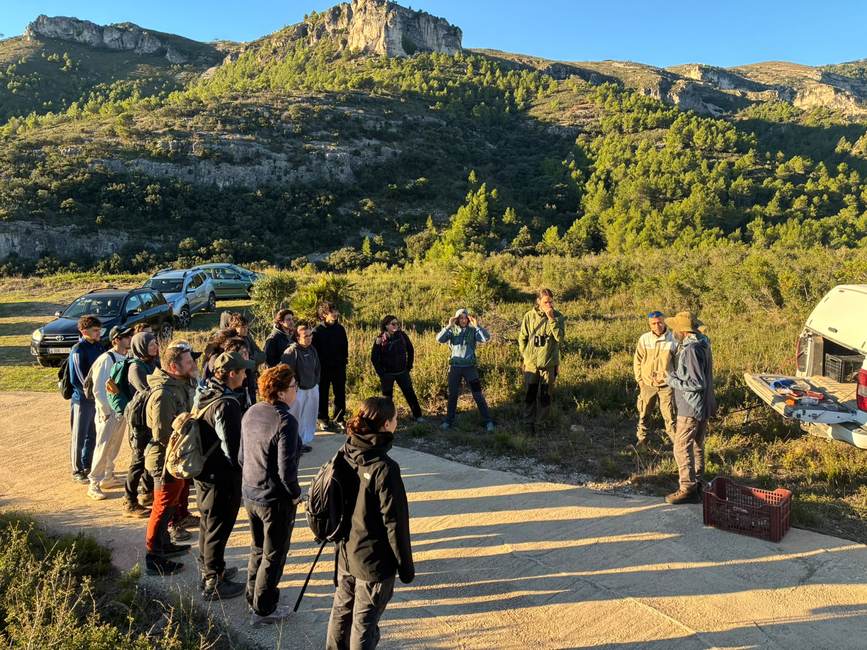
To understand what happens next, technicians combine two tools. On one hand, a capture-and-recapture protocol with trained dogs that track the terrain. On the other, individuals marked with GPS transmitters.
This has shown that a portion survives, adapts to the environment, and reproduces. Not everyone succeeds, of course. But breeding in the wild is the best possible sign the program could provide.
Tortoises that lived in homes
Where do so many tortoises come from? Most arrive from three centers. They are the Centre de Recuperació d’Amfibis i Rèptils de Catalunya (CRARC), in Masquefa, the Tortoise Reproduction Centre of l’Albera, in Garriguella, and the Canal Vell Biological Station, in Deltebre.
Some come from private individuals, because every year tortoises that people kept at home are collected. Until the 1980s, this species was sold in pet shops and other stores as a pet. For years it was just another household pet, like the canary or the aquarium fish.
As they can live between 70 and 80 years, many remain in patios and terraces, with owners who do not know that the species is protected and that owning one is illegal. Who doesn’t remember a tortoise in their grandparents’ home?
From the Albera to the Ebro Delta
Outside Montsant and Els Ports, the Mediterranean tortoise, one of Catalonia’s most emblematic reptiles, lives mainly in the Natural Site of National Interest of l’Albera. There remains its last natural population there.
There are also individuals in the Delta del Ebro Natural Park, where tourists accept limiting parking to protect the delta, and in Garraf Park. The list continues with an organic farm in the Bovera valley, the Serra de Llaberia, and the Gaià River in Santes Creus.
Only one of these populations, that of l’Albera, is natural according to the note. Returning species to the places from which they disappeared is an increasingly common tool, from the reintroduction of the barn owl in Valencia to the giant tortoises that restore ecosystems in Seychelles. The species changes, but the idea remains the same.
The 798 tortoises, without breakdown
There is one detail in the official note that does not quite add up. Its headline speaks of 798 tortoises across the two parks. Yet the text also attributes 798 to Els Ports, in addition to the 161 from Montsant.
If the 798 are the total, Els Ports would account for 637, which makes sense for a younger program. If not, the latest campaign would total 959 tortoises. The Generalitat does not specify which reading is correct.
Nor does it provide survival figures. It is known that some tortoises survive, but there is no percentage or count of how many offspring have been tallied. And that data is, in essence, what measures the program’s real success.
The press release about the releases has been published on the Parcs Naturals de Catalunya website.
Photo: Bruno Durán / Parcs Naturals de Catalunya
