
Eduardo Pavez, a Chilean veterinarian and ornithologist, has spent 36 years dedicated to the Andean condors. He began in 1990, with the first systematic surveys of the species in his country. The rehabilitation center he founded in 1991 has treated 180 of these birds and has returned 80 to the wild, according to AvesChile.
And the story isn’t limited to the numbers. The transmitters on six condors released in Patagonia have revealed an uncomfortable problem, because only 22% of their movements occurred inside protected areas. What’s the use of shielding a park if the bird spends most of its time flying outside of it?
Up the Cordillera since 1990
That initial fieldwork covered the Patagonian range and central Chile. It was carried out together with the French ornithologist and filmmaker Michel Terrasse and two other young Chileans, Christian González and Charif Tala. Between 1992 and 1994, Pavez and Tala produced the first systematic studies of condors in Chile, with support from Codelco.
Even today AvesChile speaks of “scarce records” on their biology. We’re talking about the largest of the flying birds, with a wingspan of about three meters, performing a not glamorous but vital task: cleaning the Andes of carrion. And the IUCN already classifies it as Vulnerable.
From 180 admissions to 80 released
The first condor entered the Center for Rehabilitation of Raptors (CRAR) in 1993. Since then, 180 individuals have passed through there. The injured or confiscated by the Agricultural and Livestock Service (SAG) are taken first to the National Zoo, and only then to the center.
Pavez, who founded CRAR in 1991 and has chaired the Union of Chilean Ornithologists, is today at the helm of the Manku Project, the name the program adopted in 2019.
Tampoco sobran los que ya no pueden volar, porque algunos crían desde 1999. La primera puesta con éxito llegó en 2000, con un pollo llamado Pillán que salió en libertad un año más tarde. Ya son 25 los nacidos en cautividad, y la mayoría también se ha soltado.
Two months without seeing people
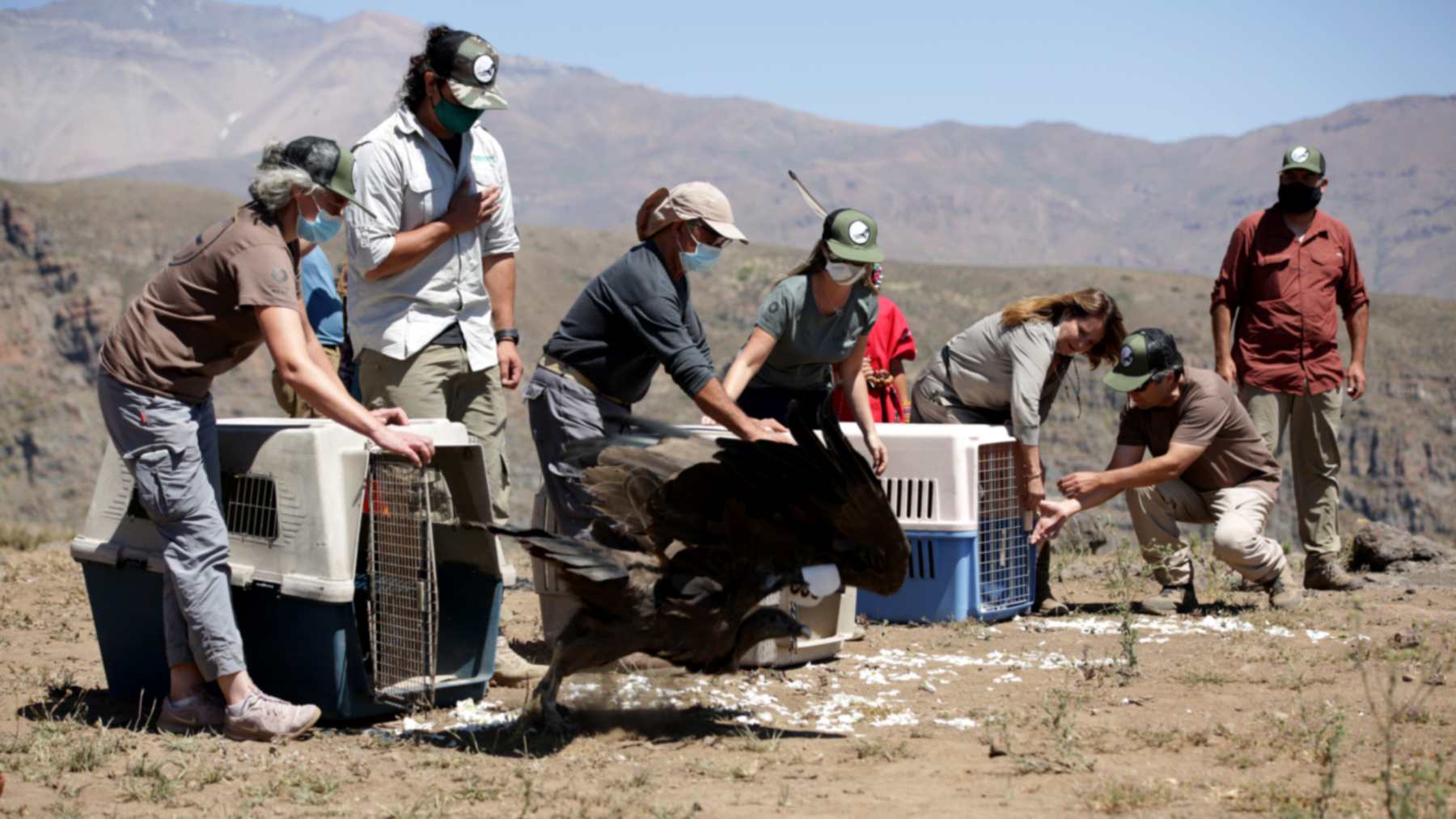
A release is not improvised. Before the 2024 release in Patagonia, Pavez explained that the birds “spend two months there, in that cage, getting used to the surroundings.” Food and water are left for them at night, to avoid any contact with people.
That day of the photo does not end the work. Afterward comes monitoring, because what matters is that the animal integrates into the territory and among its own.
In January 2026 the project released three individuals in the Chilean Patagonia. Pavez explained then that releasing them there or in central Chile presents “contrasting challenges and opportunities.” The center is densely populated, but the south remains, for the most part, “wild land.”
22% inside Protected Areas
Rewilding Chile has published the tracking of six birds released in the Patagonia National Park. Its area spans 350 kilometers north to south and 250 east to west, with as many records in Chile as in Argentina. Some days they cover up to 130 kilometers, though the norm is considerably less.
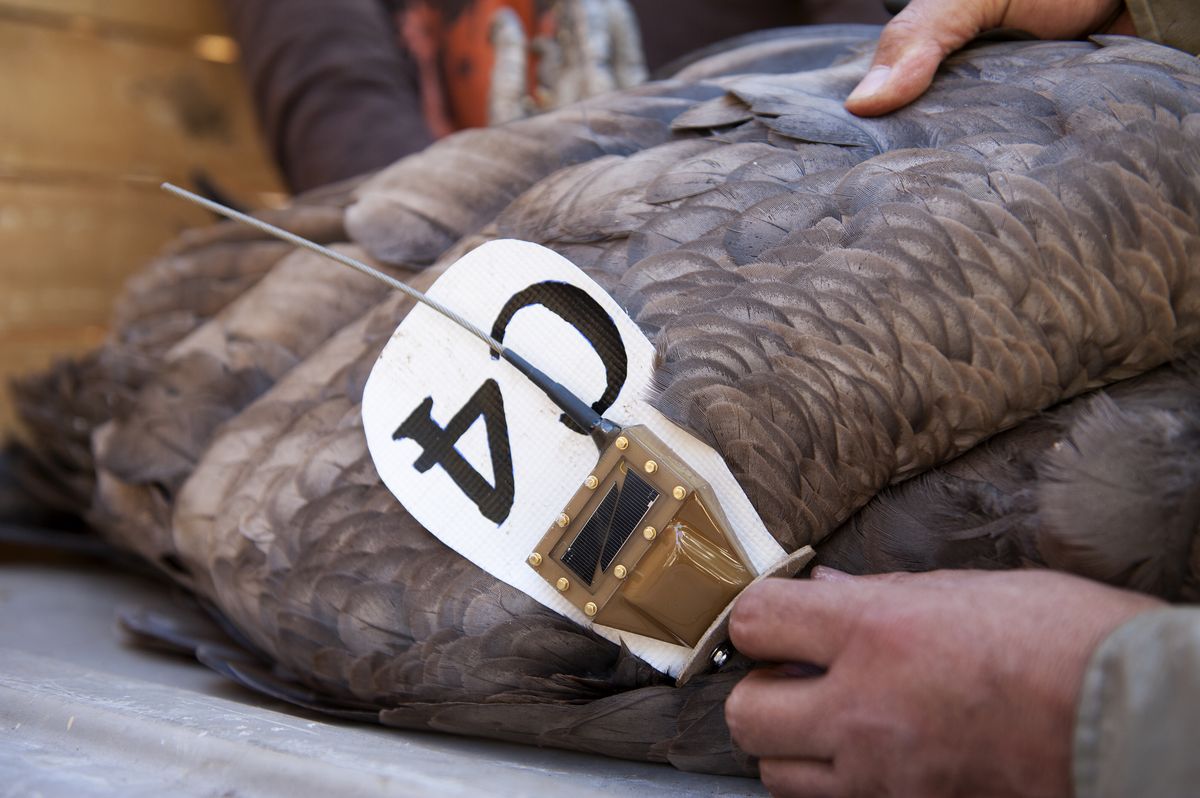
That’s the crux. With barely 22% of those movements inside protected areas, the remaining 78% lie outside, and a large portion of their life unfolds on steppes and productive lands. In practice, a national park is not enough for them.
Since 2014, Manku has released 24 condors, and 20 left with satellite transmitters. Almost all have managed to insert themselves into local populations. That is no small feat.
Baiting, Hunting, and Wind Turbines
The threats, in Pavez’s words, are “all of human origin.” Rewilding Chile lists poisoning, hunting, food scarcity and, recently, collisions with wind turbines.
C44, one of the condors moved south in 2024, appeared in Cajón del Maipo poisoned by baits, and others end up eating garbage in Chilean landfills. And in Spain? A scavenger recovered in El Puerto de Santa María also left with GPS to see if it could adapt.
The count continues without a date
It bears reading the fine print carefully. The 80 released are listed on AvesChile’s website without a date, so the figure may be out of date. And the 22% comes from just six birds, all from Patagonia.
The official notes also do not say how many of those 80 are still alive today. Without that number, it is hard to truly measure 36 years of work.
The story of the program has been published by AvesChile on the Project Manku page, and the satellite tracking on the Rewilding Chile report.
Photo: Manku-MERI / AvesChile
