
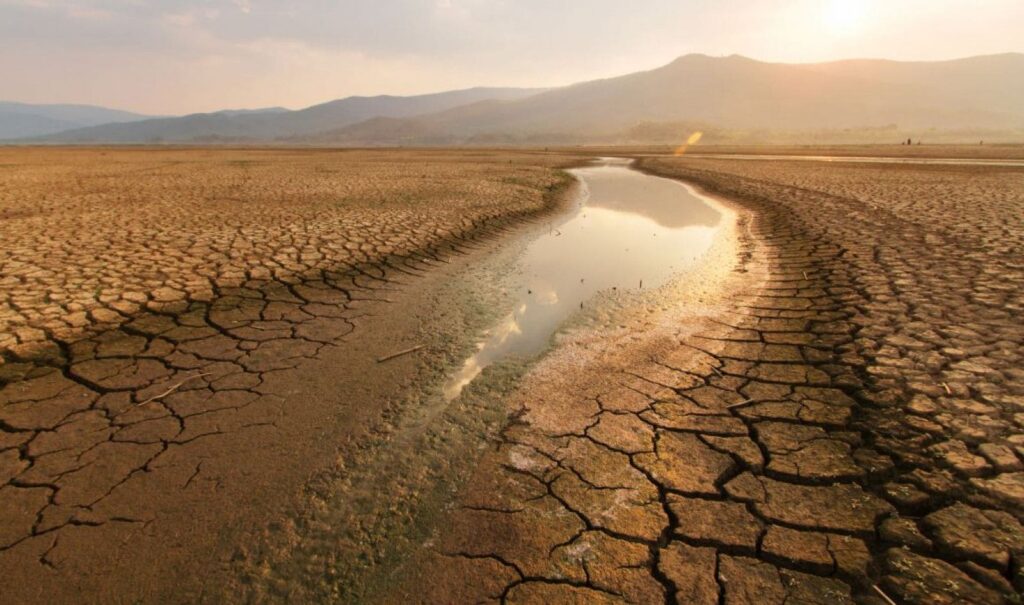
The International Day Against Climate Change 2026 focuses on climate change in Spain after a peninsula-wide summer averaging 24.5 °C and new episodes of torrential rainfall in the Mediterranean.
Climate Change in Spain
From record heat to floods, climate change in Spain poses risks that affect health, housing, and essential services. Today, October 24, the International Day Against Climate Change 2026, Spain faces the contrast between an exceptionally warm summer and an autumn marked by episodes of torrential rainfall. Caution requires preparing for different threats that can unfold within a few months.
The summer of 2026 registered an average temperature on the peninsula of 24.5 °C in peninsular Spain, 2.4 °C above the 1991-2020 average, according to AEMET. In addition to climate change, factors such as the exposure of buildings and infrastructure to flood-prone areas shape the consequences of extreme precipitation.
Six points concentrate the challenge: rising temperatures, floods, damage to health, wildfires, warming of the Mediterranean, and economic and biodiversity losses.
Thus, understanding how they relate helps identify what requires priority protection: from heat-vulnerable populations to water supply, crops and communications.
Vulnerability to Global Warming
From the record heat and major fires of the summer to torrential rains and autumn floods, Spain, due to its geolocation and particular vulnerability, experiences extreme weather events that test its ability to protect the population, the economy, and health, and to adapt to climate change in Spain, whose international day is commemorated today.
Among the major climatic challenges Spain faces are torrential rains and floods as recorded this week in the Mediterranean due to the storm Dana Adam, just before precisely the second anniversary of the 2024 Dana, which caused the Valencia tragedy with more than 200 deaths.
The latest assessment by the Ecological Transition agency presents more than a hundred climate risks, with half of them relevant due to severity or imminence, and among those highlighted are heat-related deaths and air pollution, extreme drought, thermal stress in cities, as well as risks to safety such as interruptions to water or energy supply.
Spain warming under climate change: 1.75 degrees warmer since 1961
The annual average temperature in Spain has risen 1.75 degrees since 1961, according to the Meteorological Agency (AEMET), which notes an acceleration of warming in recent decades: the 12 warmest years have occurred entirely in the 21st century.
The summer of 2026 has been the warmest since at least 1869, with an average temperature in peninsular Spain of 24.5 degrees, 2.4 degrees above normal. Moreover, the peak-summer conditions extended for four months and September was the warmest on record.
Torrential rains and ‘tragic’ floods
Climate change is one of the factors that contribute to increasing the probability of floods associated with torrential rainfall, one of the natural disasters with the greatest yearly impact; the large number of human losses, the destruction of infrastructure, and the enormous economic losses are among its most relevant impacts.
In many cases, the occurrence, intensity, and severity of floods stand out, such as, for example, Valencia’s Dana of 2024, when 771.8 liters per square meter were recorded in Turís in 24 hours, and the recent floods of the Dana Adam, which highlight the territory’s vulnerability to these phenomena.
More deaths from heat waves and effects of pollution
High temperatures are a growing threat to health, especially among older people, those with chronic illnesses and outdoor workers. In addition, the combined effect of rising temperatures and pollution can aggravate respiratory and cardiovascular diseases and raise mortality risk.
According to estimates from the Daily Mortality Monitoring System (MoMo), at the Carlos III Health Institute, between June and September 2026 more than 5,700 deaths were attributed to heat, the highest figure in the last decade in Spain.
Forest fires ‘recurring’ more virulent and prolonged
The rise in temperatures, droughts and irregular rainfall create favorable conditions for broader, more intense, and harder-to-extinguish wildfires, and the frequency of heat-induced fires could increase by 14 % by the end of the century in the Mediterranean basin under a mid-range emissions scenario, a percentage that would reach 30 % with high emissions.
The report also warns of longer fire seasons and losses of forest mass, soil erosion, and reduced capacity of forests to absorb carbon dioxide.
A Mediterranean with higher temperatures
The sea Mediterranean is not exempt from climate change in Spain; In 2025, the surface water temperature of the Spanish Mediterranean reached its highest values since 1940, and in August 2026 it reached a historic record of 28.5 degrees.
The increase in sea temperature provides additional energy and moisture to storms, in addition to affecting marine ecosystems and promoting torrential rains as evaporation grows; to this is added sea level rise, which threatens beaches, coastal infrastructure, and aquifers.
Economic and biodiversity risks
The agricultural sector will also suffer from reduced water availability; energy due to lower hydroelectric generation and the damage that extreme phenomena cause to transport and energy infrastructure, such as road and train closures during extreme events, as seen in recent days with rainfall.
Tourism, one of the main engines of the Spanish economy, could be affected by a possible reduction in visitors due to extreme heat, as well as by the spread of mosquito-borne infectious diseases and the diminished tourist appeal due to the degradation of natural resources.
Among environmental threats is the tendency toward arid climates, occupying more than 20% of the territory, and could extend to more regions, affecting species conservation.
MITECO National System for Flood-Prone Zone Mapping
Adaptation also begins with understanding the exposure of each location. The MITECO‘s National System for Flood-Prone Zone Mapping allows consulting mapped flood-prone areas and provides information to plan housing, infrastructure, and prevention measures.
Incorporating these maps into urban planning decisions enables action before the next emergency: where construction takes place and what uses are permitted on a site condition the consequences of a flood caused by climate change in Spain.
