
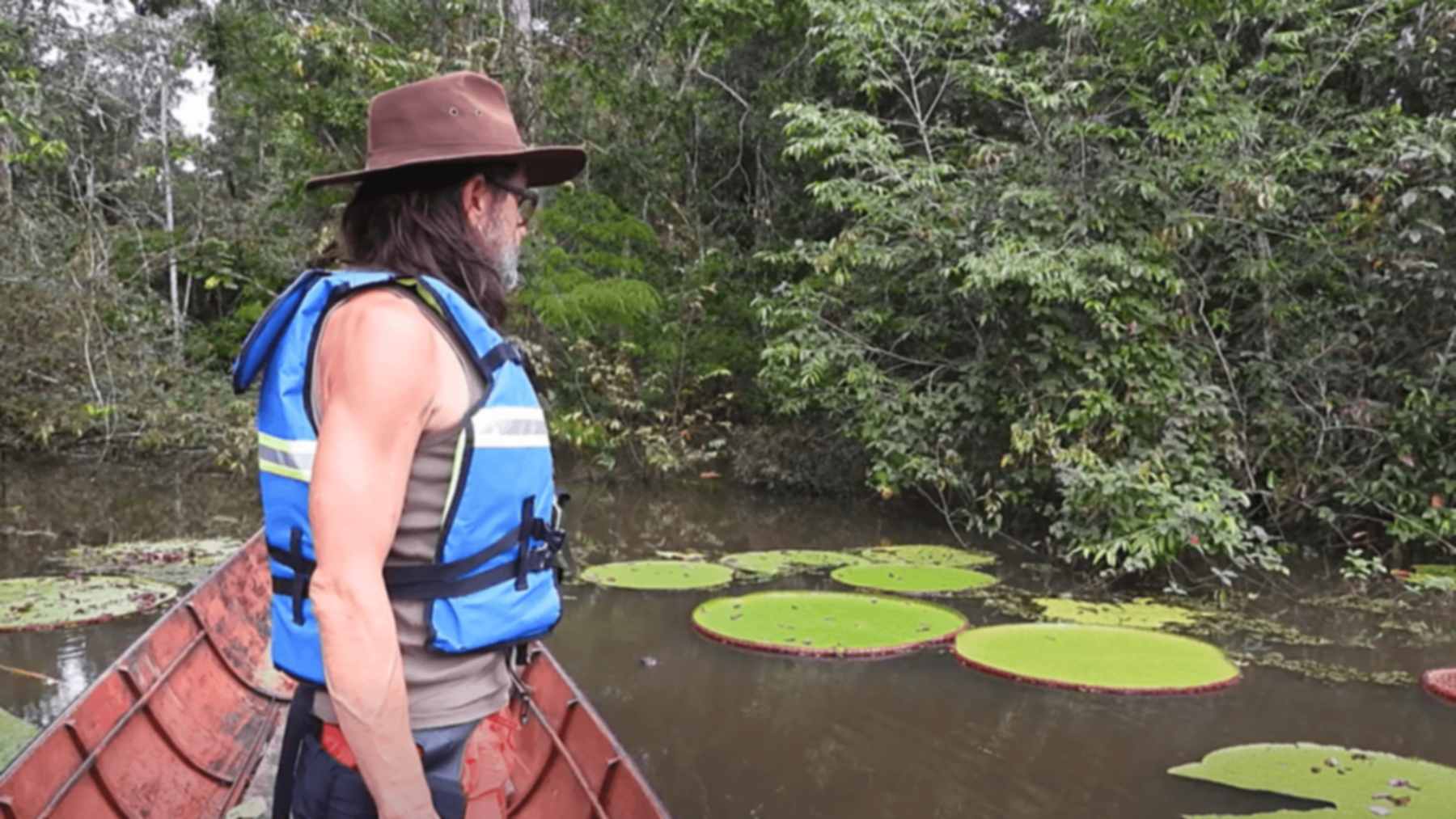
Colombia has had a giant new water lily for science since October. It is called Victoria colombiana, it lives in lakes around Inírida, in Guainía, and its floating leaves measure up to 2 meters in diameter. Researchers estimate that in the wild there are only between 30 and 50 specimens remaining.
And the curious thing is how it all started. Five years ago, a water-lilies expert at the Kew Gardens saw photos on Instagram and something didn’t add up. The formal description appears in the journal Phytotaxa, and Kew announced it on October 9, 2026, in a press release.
Instagram photos in Guainía
The images had been taken by Jeremiah Harris, who runs a carnivorous plant nursery in the United States. He thought they were Victoria amazonica, the best-known giant water lily, and didn’t give it another thought.
Carlos Magdalena, horticulturist and researcher at Kew, wasn’t so sure. According to the note, no known species of the genus Victoria lives in the Inírida River, which belongs to the upper Orinoco basin. What was such a plant doing there?
To settle the question, Magdalena cross-checked the Inírida and its lakes with satellite images. In one of them, several leaves from the same plant were visible from space. Harris later confirmed that they were the ones shown to him by local guides.
Five days of expedition without a flower
The next step was to write to Mauricio Bernal, from Bogotá’s José Celestino Mutis Botanical Garden, which has cultivated these water lilies for years. Together with Nilo Rodríguez, Jaime Hernández, and Gustavo Melo, who work with local Indigenous reserves, they prepared the trip for nearly two years. Once in Inírida, they spent five days traveling along the Inírida and Guaviare rivers and found only two specimens, none in flower.
That was a serious problem. Without a flower there is no fertile herbarium sheet, the pressed and dried plant that botanists compare species with. On top of that, the plants were suffering from the high water caused by late but intense rains.
A dawn boat
The return flight was scheduled for 9 in the morning. The night before, at 11, Magdalena told the boatman Gustavo Melo, from the Tukano Indigenous community, of his discouragement, and Melo said he knew exactly where there was more.
They set off at 1 a.m., in the dark and heading away from the airport. Just before dawn they reached a small lake with five more specimens, one of them in bloom. In total they documented seven plants in two lakes and still caught the plane in time.
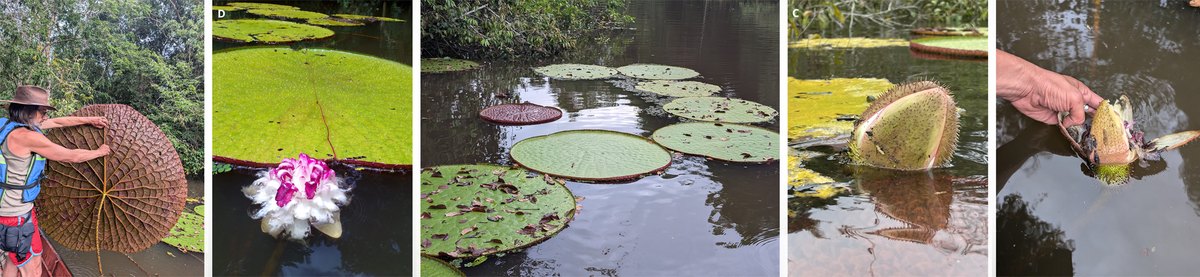
“This is one of those extraordinary stories in which Indigenous knowledge and horticulture (with the help of social media and technology) came together to reveal a truly exceptional botanical achievement,” summarizes Magdalena. The Bogotá City Hall note collects this sentiment, adding that nature “continues to be full of surprises.”
The fourth Victoria and a fifth
The sheets were preserved in the Bogotá Botanic Garden’s herbarium. The taxonomic work was supervised by Maarten Christenhusz, a taxonomist and honorary associate researcher at Kew.
With the new species, the genus now counts four, alongside Victoria amazonica, Victoria cruziana, and Victoria boliviana. But the article goes a step further. Its authors propose recognizing also Victoria mattogrossensis, from the Pantanal, and already speak of five accepted species.
Christenhusz recalls that among new species, “few are as large, spectacular and emblematic as this one.” According to the Phytotaxa summary, its seeds have no known animals that disperse them and they do not tolerate dryness. That is why they travel mainly with the rivers and their floods.
Between 30 and 50 specimens
A geographic information system analysis, conducted by Carlos Pedraza-Peñaloza of DreamGIS Colombia, found a third lake hosting the species. Satellite images suggest that during the dry season more plants could appear. The caveat is that reaching them would be harder then, because boating is easier than trekking on foot.
Today the team estimates that between 30 and 50 plants remain in the wild. They therefore are preparing an official assessment for the IUCN Red List as a “critically endangered” species. It is no small feat for a plant that has just been described.
Nor is this an isolated case within Kew’s purview. In Chile, for example, only one wild specimen of Dendroseris neriifolia survives, tied to a cliff with ropes.
Seeds for Bogotá
There is reason for hope, though. One idea is to establish a naturalized population in a more accessible lake within Indigenous territory, which would serve as a reserve and as a draw for local ecotourism. The researchers also intend to collect seeds to cultivate it in Bogotá, and perhaps one day it could grow at Kew alongside its three relatives.
Ultimately, it follows the same pattern as with the eleven new plant species in the Andean forests. Only what is known is protected. And Colombia has already shown that monitoring yields results, such as the drop in deforestation in the Colombian Amazon.
The study has been published in the journal Phytotaxa.
Photo: José Celestino Mutis Botanical Garden, Bogotá
