
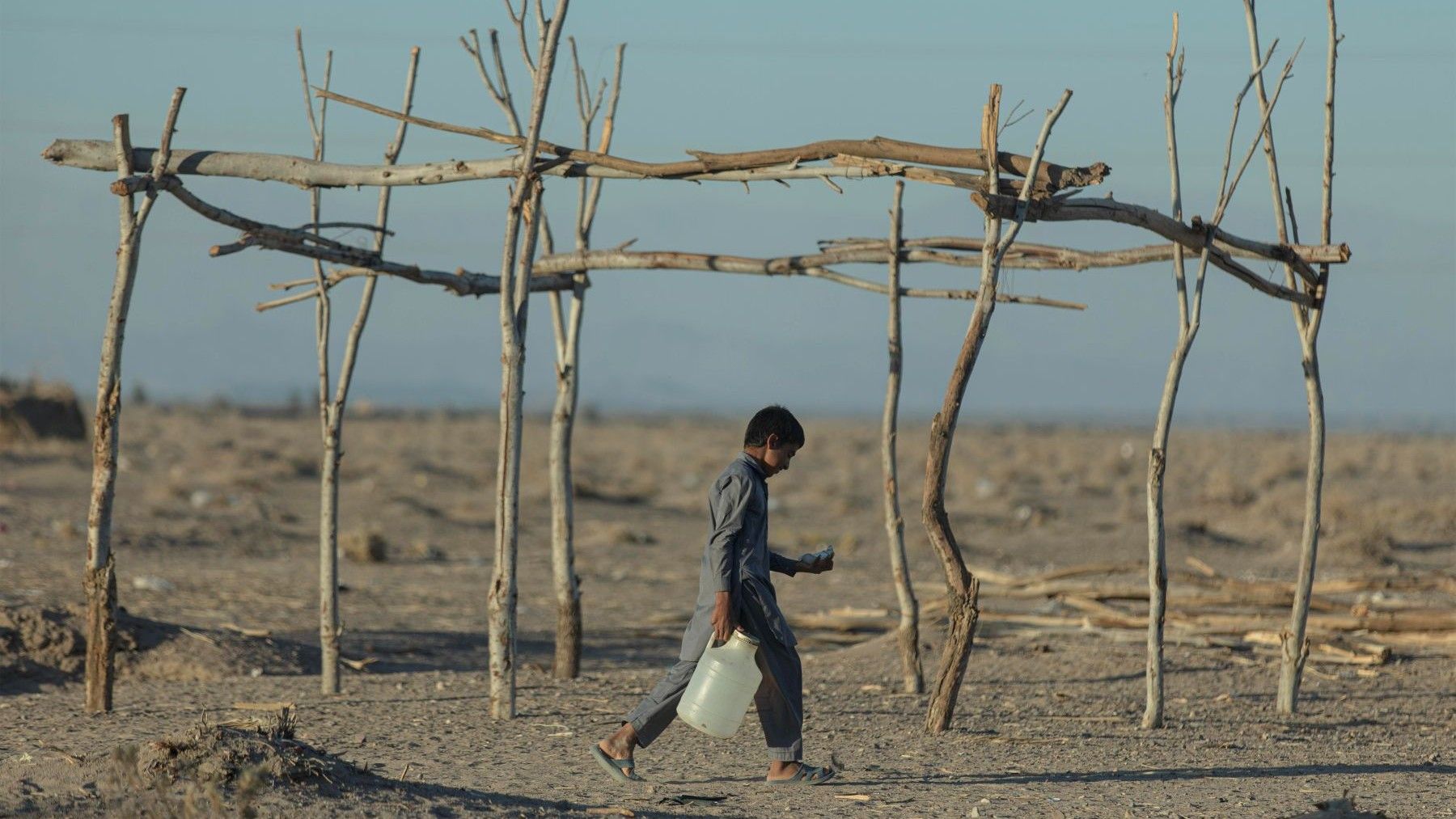
The International Fund for Agricultural Development (IFAD) warns that an intense El Niño episode like the one currently affecting us could trigger severe economic losses over five to six years, making the postponement of protection for smallholder farmers an act of irresponsibility that will have disastrous food security consequences.
A Key Issue at COP31: the Problems that El Niño Will Bring
According to an analysis carried out by the International Fund for Agricultural Development (IFAD), the current El Niño could cause economic losses of up to $11 trillion accumulated over five or six years. A threat of this magnitude requires decisions to be taken before harvests fail.
The El Niño report, presented alongside Turkey’s Ministry of Agriculture and Forestry, the host country of COP31, describes a devastating combination: climate perturbations, expensive energy, and increasingly costly fertilizers. Small producers, who generate one third of the world’s food, bear the brunt of this triple pressure.
The proposal put forward is very concrete: investments in production must be linked to markets and financing. It makes no sense to fund farmers’ seeds if other resources, such as water, buyers, or credit, are missing. Prevention must cover the entire value chain to protect crops and rural incomes.
El Niño: a bill that overwhelms farming operations
The $11 trillion figure corresponds to a scenario of a highly intense El Niño as the one currently being experienced. This includes agricultural damages, impacts on infrastructure, and repercussions that would spread through prices, demand, and trade. This is an accumulated potential loss, not an annual bill nor an inevitable outcome.
The analysis places the El Niño phenomenon among several interlinked disturbances. During 2026, disruptions in fertilizer and energy markets caused direct increases reflected in the costs of production, processing, transport, and distribution of goods, all within a single planting season.
That dependence constitutes an unsustainable vulnerability: a farm operation may require more money to produce just as drought threatens its income. Governments must anticipate this combination, because late aid can arrive after harvest losses, forcing unsustainable debts or leading to the sale of productive assets.
Isolated Aid: the Absurdity of Protecting One Part While Abandoning the Rest
IFAD’s models allow comparison of strategies to cope with droughts and price shocks. An intervention focused on financing, such as insurance, reduces agricultural income losses by 9.8%. When inputs, markets, and financing are combined, the reduction rises to 18.7%.
The difference is substantial: the integrated approach is nearly twice the protection estimated. An insurance helps absorb losses; appropriate seeds keep production going; storage and buyers protect the value of the harvest, so each component addresses a different risk.
Therefore, announcing an isolated measure as a definitive solution would be pure greenwashing. The proof must be in preserved incomes and in the capacity to recover. Policies against El Niño effects require coordination, real access, and verifiable results.
Solar Irrigation and Reliable Markets: Two Solutions Already Boosting Incomes
In Bangladesh, interventions combined solar irrigation, vermicomposting (worm-composting), credit, and certification of food safety. According to the report presented, they reduced costs and facilitated access to higher-value markets, with a 50% increase in participating households’ incomes.
In Turkey, donor support to farmers was paired with solar irrigation, greenhouse construction, orchards, and trading and processing facilities. The result is that incomes rose by 40%. In Kenya, the combination of training, inputs, insurance, and buyers doubled drought resilience.
These results support further investments that reduce concrete vulnerabilities produced by El Niño. Solar irrigation can reduce fossil fuel use and insurance can help prevent asset losses. Delaying effective actions while climate announcements multiply is unacceptable.
The financial imbalance underscores the urgency: according to IFAD, smallholder farmers receive less than 1% of climate finance, despite producing one third of the world’s food. That share marks a red line for governments and funders: protecting food security requires that funds reach those who sustain harvests.
