
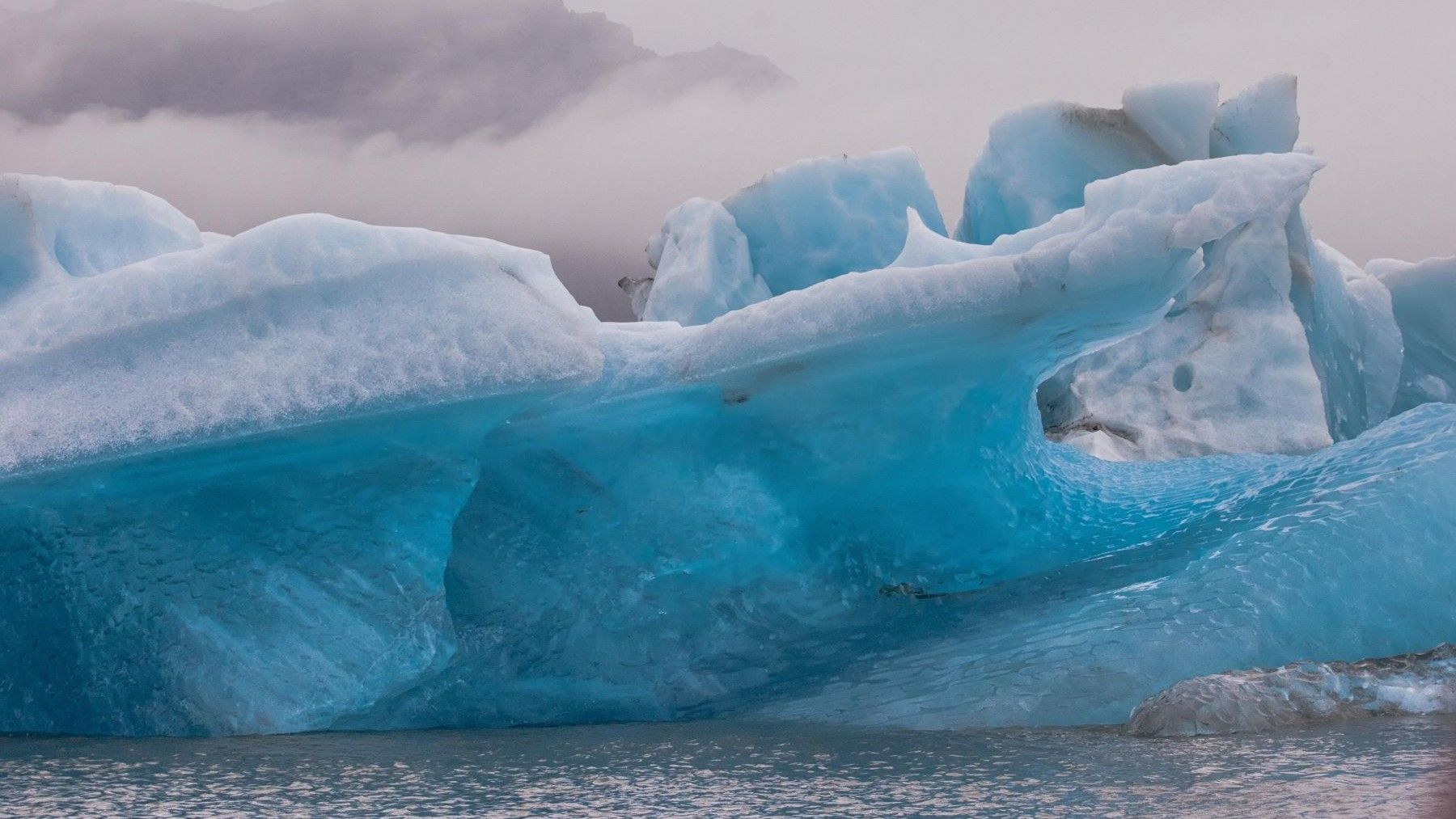
A new study published in Science concludes that the cryosphere has left its safety margin: maintaining current emissions threatens water, coastlines, and the climatic stability that sustains human societies.
What is happening with the planet’s cryosphere?
The cryosphere has already surpassed its planetary safety margin. An international study led by Stockholm University and published in Science concludes that human-caused global warming is degrading the icy systems that help keep Earth habitable.
The warning challenges the pursuit of a climate policy that continues to tolerate emissions while accumulating commitments. Continuing to feed global warming means worsening degradation that is already compromising human livelihoods.
The study identifies which functions are under threat and proposes precautionary boundaries to guide public decisions. The question for governments and industries is concrete: how much longer will they delay reducing emissions that push ice out of its balance?
The cryosphere loses the balance that allowed humanity to thrive
Glaciers, ice sheets, snow, sea ice and permafrost are part of the cryosphere and participate in regulating energy, water, and carbon cycles. Their deterioration affects systems relied upon by communities far beyond polar regions.
Researchers who published the study in Science take the Holocene — the last 11,700 years — as a reference, a period marked by relatively stable conditions that fostered the rise of civilizations. Their assessment concludes that current changes and those already committed push icy landscapes away from that framework.
Surpassing this margin does not mean that all ice will disappear immediately. It means entering higher-risk conditions with processes that can reinforce one another. Confusing that distinction with a reason to delay would be irresponsible.
Burning fossil fuels comes at a price, even far from the poles
The anthropogenic warming is the main driver of this degradation. Therefore, persisting in reliance on coal, oil, and gas while pledging climate protection deserves a direct challenge.
The threat to the cryosphere has tangible consequences: deterioration of freshwater reserves, rising sea levels, and disruptions to ecosystems. The warming bill affects those who do not decide fossil investments, yet must bear the consequences.
The study also points to regional disturbances, such as black carbon emissions and the expansion of industry and infrastructure. Reducing greenhouse gases must be accompanied by measures addressing these local pressures: protecting the ice requires tackling their causes.
Governments have a scientific reference: they must turn it into actions
The safe operating space proposed to protect the cryosphere provides a foundation for setting preventive targets. The authors urge using it to limit emissions and reduce human disturbances on icy landscapes.
The research brings together more than 30 scientists from various disciplines and institutions. Their warning reinforces the need to evaluate energy and industrial decisions for their effects on Earth’s stability.
A climate commitment without concrete emissions reductions leaves the engine of the problem intact. Governments must explain how their policies will curb these pressures, with measurable objectives and clear responsibilities.
The grim example of glaciers
Records from the World Glacier Monitoring Service reveal the cumulative damage: since 1975, glaciers have lost approximately 9,580 gigatons of mass, equivalent to about 26 millimeters of sea-level rise.
The calculation excludes the large ice sheets of Greenland and Antarctica, as it focuses on glaciers. Continuing to delay emission reductions means accepting that this bill will continue to rise.
