
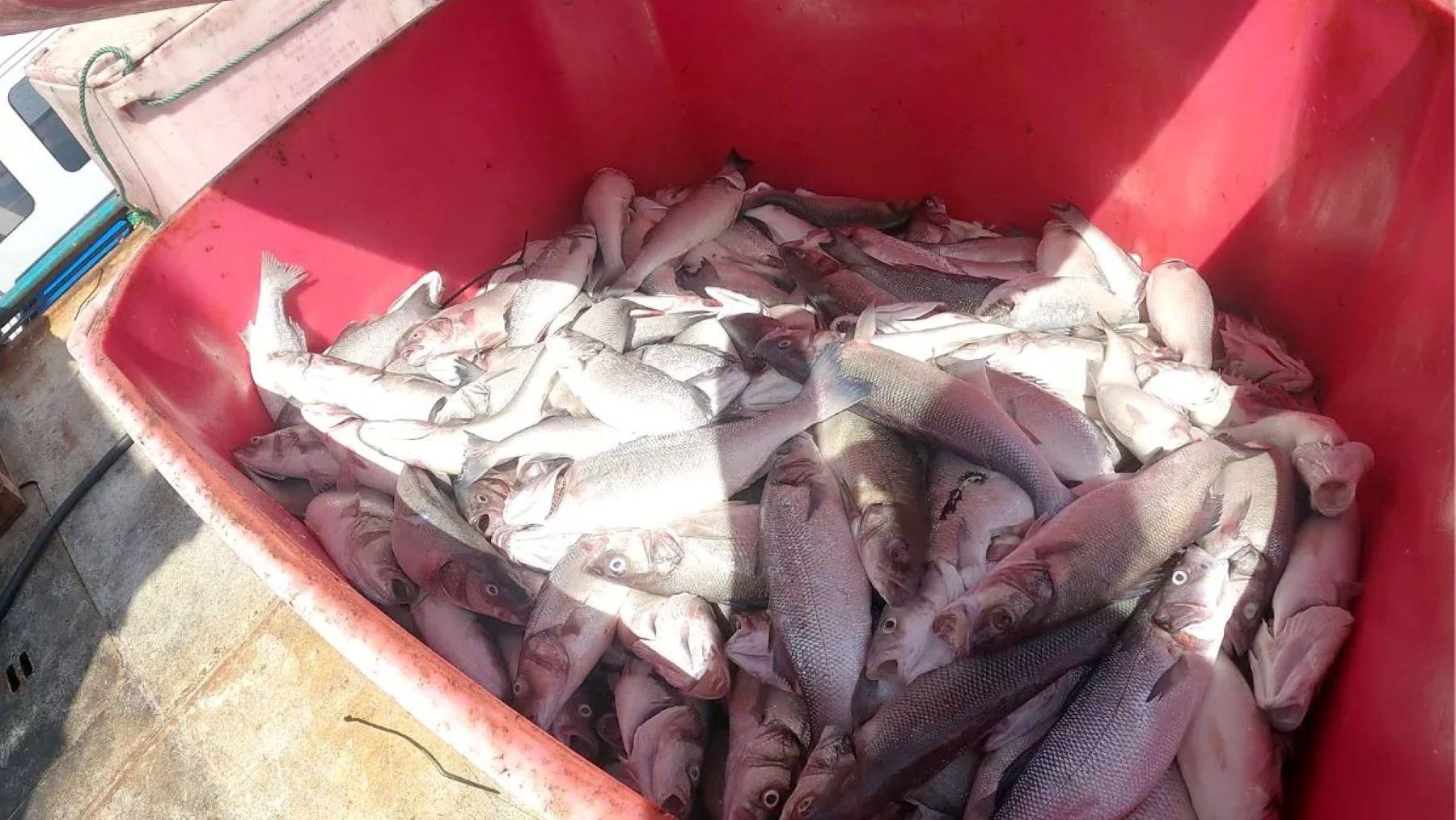
Activist Don Staniford claims to have witnessed, on October 9 at the port of Taliarte, the collection of tons of dead Aquanaria specimens. Greenpeace demands an investigation into why there were dead fish in Gran Canaria, a report on the scope of the issue, and the dismantling of the marine cages at Melenara.
At a public dock in the Canary Islands, five tons of dead sea bass were gathered. The occurrence of dead fish in Gran Canaria was witnessed at the port of Taliarte a week ago by an activist, a fact that Greenpeace has denounced and publicized.
The NGO wants the causes of this mortality at Aquanaria to be investigated and for the public to be informed about what happened to those fish. The data has come from an activist, and there is no record confirming or denying whether the information provided by Don Staniford has been verified.
Images of dead fish in Gran Canaria come from containers filled with sea bass, and this situation has rekindled the debate long under way about the sustainability of industrial aquaculture systems and their potential impacts.
Greenpeace calls for the dismantling of the Melenara cages and for an immediate halt to the new operation planned to be located in La Aldea. Its complaint raises questions about waste management, animal welfare and the protection of the marine environment linked to aquaculture.
Dead Fish in Gran Canaria: Greenpeace Demands Explanations
The on-site footage of dead fish in Gran Canaria last weekend recorded by activist Don Staniford brings to light the animal-welfare problems associated with rearing sea bass and gilthead seabream in Gran Canaria.
Both the instances of dead fish in Gran Canaria, crowded in unprocessed containers from Aquanaria, and those found in the cages themselves in the sea near Canexmar, with the causes of mortality unknown, pose risks to local food safety and public health.
On December 26, 2025, Greenpeace denounced the problem generated by the sea cages at Melenara and demanded transparency from public administrations, in addition to joining a human chain involving various neighborhood groups and environmental activists to demand the removal of aquaculture cages located about 350 meters from Melenara beach, an area prohibited by the Regional Plan for Aquaculture Management of the Canary Islands (PROAC).
In this instance, the images provided by the activist Don Staniford, in his ongoing struggle to curb the impacts of industrial aquaculture worldwide, show large quantities of dead fish crammed into containers for disposal.
Tons of Sea Bass Discarded
The activist confirms that last Friday, October 9, he witnessed a waste truck at the Port of Taliarte collecting up to five tons of dead sea bass from the public wharf using a forklift. This information has not been made public by Aquanaria, and therefore we demand a thorough examination of the reason behind this mass mortality.
“Another episode of mass fish mortality at Aquanaria has occurred. This situation is unsustainable, and therefore we call for the immediate dismantling of the cages and for a rigorous analysis of the causes of the problem with full transparency of information,” said Irene Sánchez Lasso, Greenpeace spokesperson in the Canary Islands.
An Unsustainable Model
The current model of aquaculture production is a business that can push the system to its limit due to the overcrowding of a large number of fish in cages. Rising ocean temperatures and the resulting decrease in water oxygen, together with the stress endured by caged fish, are the perfect trigger for more disasters like the one that occurred previously in Melenara in 2025. This is not an isolated event in aquaculture; there are documented cases in Norway or Chile, to name only two examples.
In light of these incidents of dead fish in Gran Canaria, the need to halt new aquaculture projects becomes even more evident, such as the plan presented by the Gran Canaria Bass Company to establish a large-scale aquaculture farm for sea bass off the coast of La Aldea, aiming to produce around 5,400 tons per year.
The concession is located very close to a zone designated as special protection for birds and to other conservation areas, both terrestrial (Tamadaba) and marine (seabeds of Güigüi). These latter areas are only seven kilometers away and shelter species such as the angel shark, critically endangered, which has found one of its last refuges in the Canarian waters.
