
An iron-air battery that is intentionally allowed to oxidize can deliver electricity for up to 100 consecutive hours, a little over four days. Xcel Energy announced on February 24, 2026, together with Google, a project of 300 megawatts and 30 gigawatt-hours in Minnesota (United States). The utility presents it as the largest battery in the world announced to date by capacity.
And what if the difficult part of renewables wasn’t producing energy, but enduring those days with little wind or sun? This invention, made from iron, water, and air, points toward that. That said, the agreement still depends on Minnesota’s regulator, and for now it’s more promise than reality.
Oxide that stores electricity
Form Energy, the American company that makes these batteries, talks about “reversible oxidation.” When discharging, the battery draws oxygen from the air and converts metallic iron into iron oxide. When charging it does the opposite, because the current returns the oxide to iron and the oxygen goes back into the air.
It’s roughly what happens to an old gate in the rain, only controlled and broken down again and again. The electrolyte is water-based and does not burn, according to the company’s technical data sheet. It’s no small thing.
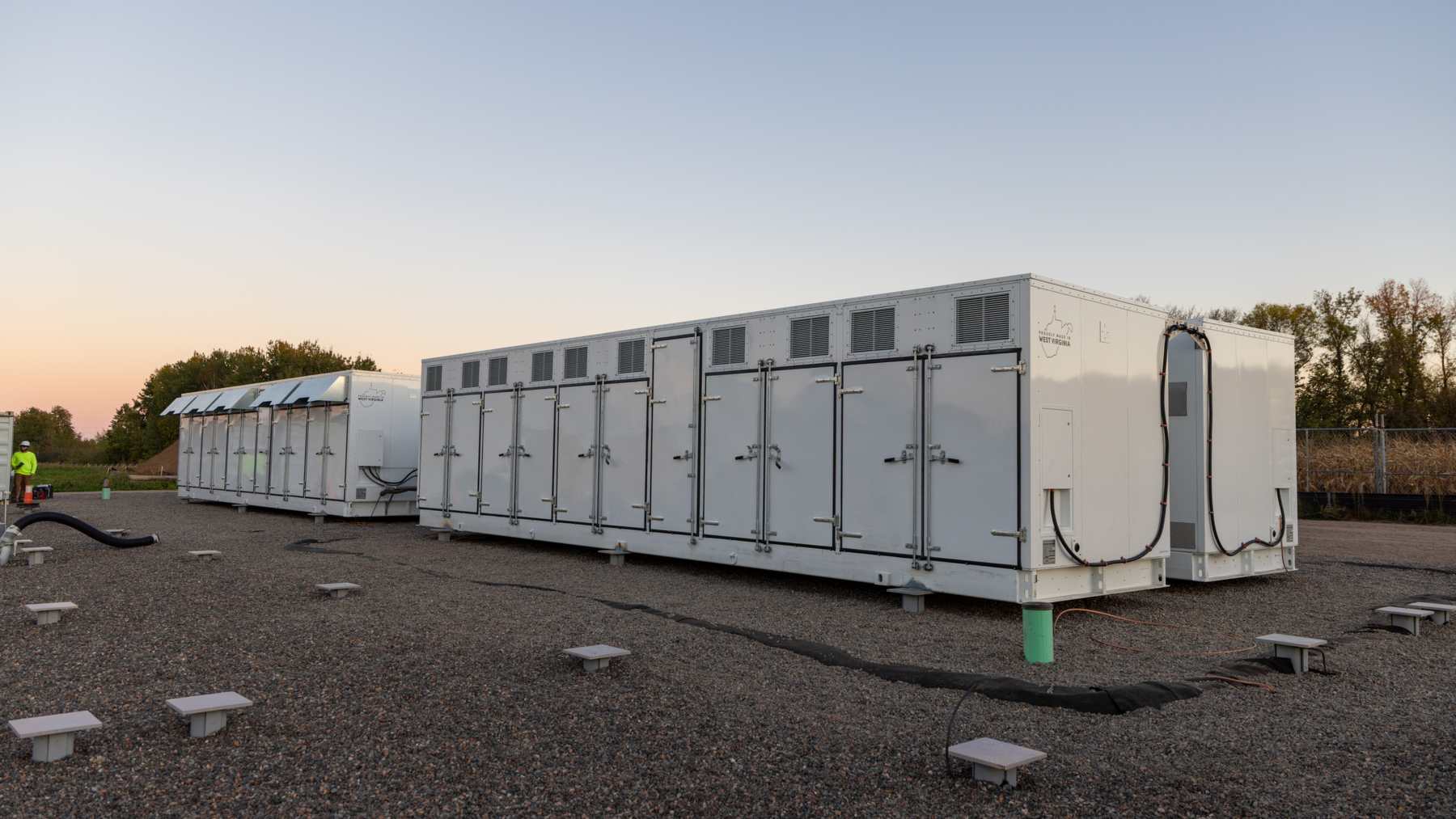
Each module stacks many small cells with iron and air electrodes. Those modules go into enclosures similar to shipping containers. Hundreds are needed to form a block of several megawatts.
From four hours to one hundred
Lithium batteries for large grids typically deliver about four hours at full power. That is recalled by Great River Energy, a Minnesota cooperative that is already working with iron-air. They’re good for getting through a busy afternoon, but for spanning several gray days, far less.
With 300 megawatts, four hours would amount to 1.2 gigawatt-hours. The Minnesota installation would therefore store 25 times as much energy as a lithium system of the same capacity. In return, of course, it has to take up space and demonstrate that it works at that scale.
A few years ago we already discussed an iron battery with potential of up to 100 hours and, later, this lithium-alternative being tested in Delft. What changes now is the size.
1,900 megawatts for Pine Island
Xcel will provide service to a new Google data center in Pine Island. At the same time it will add 1,400 megawatts of wind, 200 of solar, and the 300 of storage to its grid. Google adds another 50 million dollars for a distributed network of smaller batteries.
And who pays? The tech company says it will pay all the costs of its electric service, and Xcel promises that its customers “won’t pay more.” Anyone who looks at their electricity bill understands it, and the debate over whether data centers drive electricity prices up has also reached Spain.
Minnesota still hasn’t said yes
Xcel took the agreement to Minnesota Public Utilities Commission in April 2026, and without its approval there is no supply. In its latest quarterly report, the utility continues to speak in conditional terms. The decision is expected in early 2027. If approved, it estimates about $1.1 billion in benefits for its customers.
Of the 1,900 megawatts, according to that same report, 1,000 already have the green light from other energy procurement processes. The remaining 900 will be ordered, at the latest, in the second quarter of 2027. The document does not specify which group includes the battery, so it’s wise not to take anything for granted.
Ireland and the Netherlands as well
Form Energy signed in March with FuturEnergy Ireland a project of 10 megawatts and 1,000 megawatt-hours in the northwest of Ireland. It will arrive, if the plan proceeds, in 2029. Peter Lynch, its chief executive, sees it as “a first opportunity” to deploy it at scale.
In the Netherlands, the Dutch Ore Energy has agreed with the marketer Budget Thuis on a deployment of 1 gigawatt-hour. The first phase, of 400 megawatt-hours, will be delivered in 2028. The plan involves storing surplus wind for between 24 and 100 hours and relying less on backup gas.
Around here, meanwhile, the conversation goes in other directions, with controversies such as the Luanco battery parks. And that also weighs.
Performance and price, not disclosed
Form Energy already manufactures in Weirton (West Virginia), and in 2025 delivered its first pilot system to Great River Energy. That trial, rated at 1.5 megawatts and 150 megawatt-hours in Cambridge (Minnesota), is 200 times less powerful than Pine Island. Hence there is still a lot to verify.
The press releases from Xcel and Google do not say how much electricity is lost between charging and discharging, nor how much the installation will cost, nor when it will start. Without these three data points, no one can yet say whether oxidizing iron will pay off.
The official statement has been published in Xcel Energy’s press room.
Photo: Form Energy
