
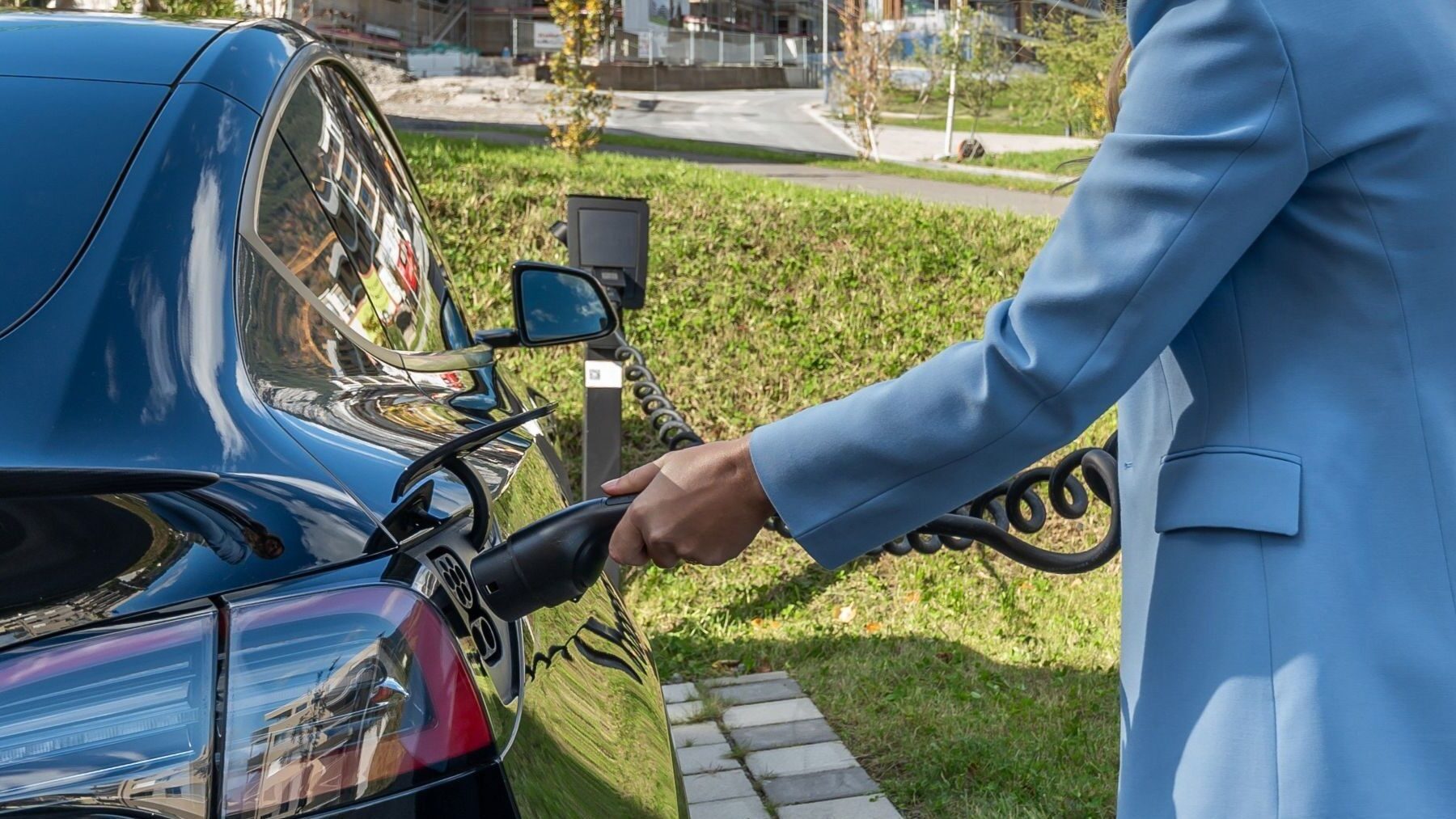
Electric cars in the EU reached 27.7% of August registrations. In Spain, although sales grew, they accounted for 13.4% of the total.
The ACEA issued a statement explaining that, due to the rise in electric-car registrations, EU-wide new-car sales rose 4.5% in August, and that pure electric vehicles registered were almost 200,000.
Plug-in hybrids also continue to accelerate their sales pace (10.8%), while gasoline-powered cars with internal combustion engines experienced a drop of almost 25% and diesels fell more than 23%. Notably, there is progress in the sales of Chinese electric cars, especially those from BYD.
Electric car sales surge in the EU
New-car sales in the European Union rose 4.5% during the past August, reaching 708,211 units, driven by the strong advance of battery-electric cars, whose registrations jumped 62.7% year-on-year, according to ACEA.
In August, 196,486 pure electric vehicles were registered in the EU, compared with 120,779 in the same month of 2025, while plug-in hybrids grew 10.8%, to 78,426 units, and conventional hybrids advanced 2.2%, to 234,980.
On the other hand, gasoline vehicle registrations fell 24.6%, to 133,816 units, and diesel dropped 23.8%, to 45,403.
Among the major European markets, pure electric cars rose 112.8% in France and 75.1% in Germany.
Spain also posted growth above the European average, with registrations rising 11.8% in August, to 68,544 vehicles. Pure electric cars grew 30.9%, plug-in hybrids 23.3% and conventional hybrids 26.9%.
The electric car revolution
In the accumulated period from January to August, registrations increased by 5.3% across the EU, reaching 7.55 million units, according to ACEA. The organization framed this evolution ‘in a context of rising energy prices and persistent geopolitical uncertainty’.
In the statement, ACEA explains that ‘ the demand for various electrified vehicle types remained solid, driven by market-support measures and by a broader model offering’.
Pure electric vehicles accumulated a growth of 44.9% in the first eight months of the year, reaching 1.64 million registrations, and achieved a share of 21.7%, compared to 15.8% a year earlier.
Conventional hybrids are the most demanded option in the EU, with 36.6% of the market and 2.76 million units, an 11.1% rise; while plug-in hybrids grew 19.6%, to 758,082 units, and reached a 10% share.
By contrast, registrations of gasoline and diesel vehicles decreased 18.6% since January and their joint share fell to 29%, compared with 37.5% a year before.
Spain’s growth is significant
In Spain, registrations rose 11.8% in August, to 68,544 vehicles, more than double that of the EU as a whole in terms of growth rate.
Pure electric vehicles advanced 30.9%, plug-in hybrids 23.3%, and conventional hybrids 26.9%.
Conversely, gasoline sales fell 12.8% and diesel plummeted 43.5%, to 1,843 vehicles.
From January to August, the Spanish car market grew 6.3%, to 818,201 vehicles, slightly above the EU average.
Pure electric cars rose 34.2%, to 83,122 units; plug-in hybrids advanced 33.9%, to 102,217; and conventional hybrids, 21%, to 386,579.
Together, these three technologies accounted for around 70% of national registrations during the first eight months of the year, although pure electric accounted for about 10% of the market, compared to 21.7% that it holds in the EU.
Gasoline registrations fell 18.5% and diesel by 33.5%, to 28,513 units, barely 3.5% of the Spanish market.
Tesla lags, BYD advances
By manufacturers, the Volkswagen group maintained EU market leadership with a 26.5% share; followed by Stellantis at 15.9%; and Renault at 10.4%.
Among brands that have seen the strongest growth, BYD surged, multiplying its registrations by 163%, to 177,752 vehicles, and reached a market share of 2.4%, above the 1.9% held by Tesla, whose sales rose 65.9%.
Chery increased its registrations by 250.9% and Leapmotor by 426.8%, though both started from volumes much smaller than those of other brands.