
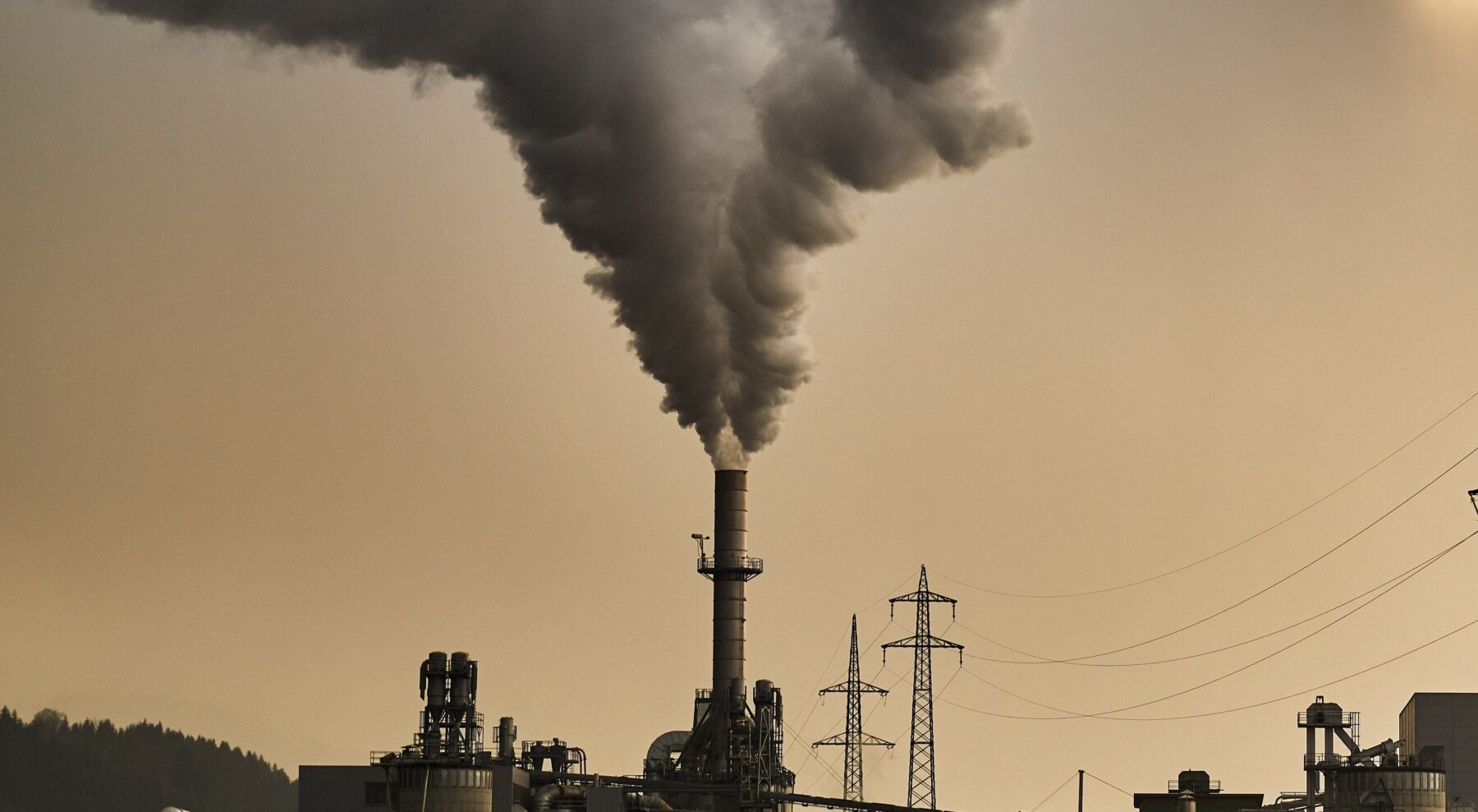
The Council and the European Parliament have agreed to extend free emission rights through 2030 in order to protect the competitiveness of European industries, which translates into lower costs for emitting and greater pressure on the EU’s climate credibility.
Free Allocation Has a Price and an Environmental Cost
Free emission rights are once again pitting European climate policy against industrial demands. The Council and Parliament have agreed for 2026–2030 to establish a cushion of roughly 121 million allowances, which is awaiting formal approval.
The institutional justification is to protect European production against competitors operating under looser environmental rules. The economic consequence is equally clear: beneficiary installations will need to buy fewer rights than they would have without this extension.
The agreement warrants a close examination that may be uncomfortable: how that relief is shared, what happens to rights retained for non-compliance, and what guarantees allow distinguishing industrial protection from a new reduction in the cost of polluting.
More Free Emission Rights: But Who Pays for Industrial Protection?
The pact affects plants whose allocation is calculated using the reference parameters for heat and fuel. These criteria are used when it is not appropriate to apply a product-specific parameter.
The prospect of a carbon leakage has an undeniable environmental logic: moving factories to countries with weaker standards can shift emissions outside the continent, but it does not eliminate them. For this reason, it is important to demonstrate the concrete risks and prevent protection from becoming a permanent concession.
Each free-right reduces the need to buy it, although the installation remains subject to the system. The controversy lies in how much that cost should be alleviated and what verifiable decarbonization outcomes accompany the benefit.
The initial free-emission rights proposal contemplated around 88 million rights that were available for free allocation. Negotiators added another 28 million that had not been allocated so far because certain facilities did not meet the conditions related to energy audits or climate neutrality plans.
Protecting Factories Requires More Than Slashing CO2
The agreement also reserves 5 million rights for sectors particularly exposed to carbon leakage. Those not used under this measure will be directed to the Modernization Fund and the Innovation Fund.
That destination raises a key choice: easing current costs or funding investments that reduce future emissions. Industrial support must also be evaluated for its capacity to accelerate efficiency, electrification, and the replacement of fossil fuels.
Free emission rights are not a test of decarbonization. The Council and Parliament still must endorse and adopt the text; their responsibility will be to justify the allocation and demand results, as well as to provide certainty to businesses.
What is the Economic Dimension of the Measure?
The economic dimension of free emission rights defeats any attempt to present the adjustment as a minor procedure: according to the Commission’s estimates cited by the Council, the approximately 88 million rights in the initial proposal implied an industrial saving of €6 billion. That estimate does not correspond to the full package of 121 million. A concession of such magnitude requires environmental accountability to match it.
