
Europe removed in 2025 at least 603 dams and barriers from its rivers, scattered across 21 countries. This is reported by the annual Dam Removal Europe coalition report, which notes a new European record. With these projects, more than 3,740 kilometers of river channels were reconnected.
They are 11% more than in 2024, when 542 were counted. But behind each removal there are months or years of studies and permits, as Rewilding Europe explains in a review dated October 27. In the Portuguese Côa Valley, in fact, two old provisional dams have everything ready to fall—except for funding.
More pipes and weirs than walls
It is worth clarifying the word dam, because according to the report, among the known-type barriers, half were water passages under roads—those pipes that block fish passage. Another 31% were weirs and only 10% were actual dams. Moreover, 78% were under 2 meters tall, and barely 5% had been used for electricity production, in both cases among those for which the data existed.
Sweden was the country that removed the most barriers, followed by Finland and Spain. Here there are already cases such as the removal of two weirs on the Zumeta River. Doing the math, it adds up to more than one and a half barriers per day.
The Côa, ready but without funding
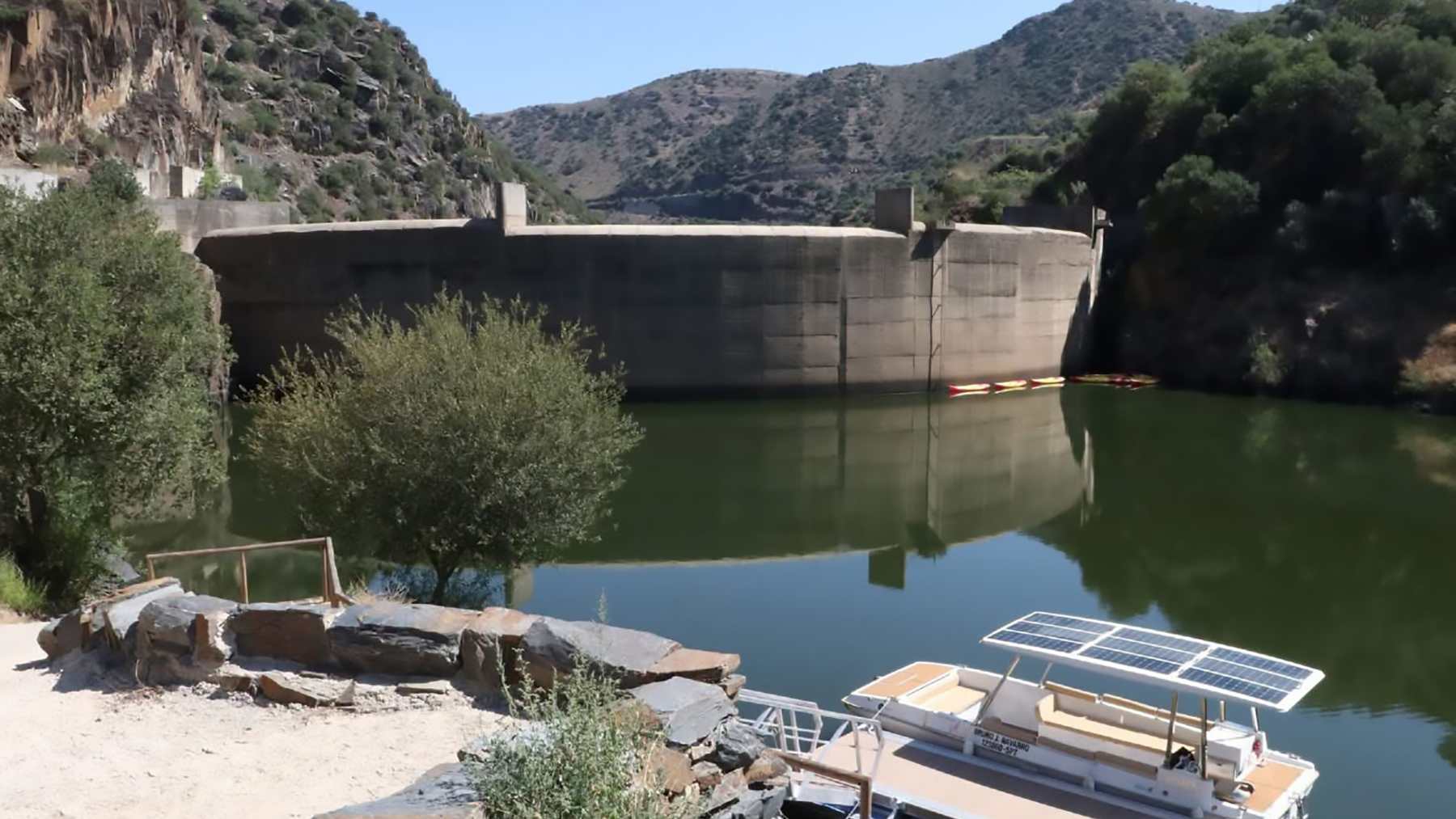
In the Greater Côa Valley, in northern Portugal, two wings remain. They are provisional dams that are raised to divert the water while a larger dam is built. They are remnants of a project abandoned in the 1990s after the discovery of paleolithic rock art.
Removing them would reconnect the Côa and Massueime rivers with the Douro, a river that already features joint actions by Spain and Portugal. About 50 kilometers of river connection would be restored. The valley’s archaeological heritage, recognized by UNESCO, would also be safer from floods.
Technical, ecological, and social studies say it is feasible, and the Douro basin plan designates them as priorities. So what is missing then? That the Portuguese government provide the funding, something Rewilding Portugal hopes to see in the 2027 budget.
Three years of permits in Italy
When the concrete breaks and the water begins to flow again, everything seems straightforward. In the Central Apennines, however, Rewilding Apennines spent about three years removing five barriers from the Giovenco River, which fell in 2024. Permits had to be sought from municipalities, the region, a national park, and heritage authorities.
Those works reconnected 11 kilometers. In September 2025, already with experience, a 30-meter-long dam on the Liri—the river into which the Giovenco flows—came down. The lesson is to prepare both the feasibility study and the project at the same time, not one after the other, to save months.
Trout with no offspring in the Ramna
In the Southern Carpathians, Romania, Rewilding Romania has mapped five basins and counted 82 artificial barriers. The priority are ten old weirs on the Ramna River, erected in the seventies to combat erosion. Their owner, the municipality of Cornereva, supports removing them.
Sampling found adult trout in the Ramna, but almost no juveniles. The weirs block access to upstream spawning zones. In more than 100 interviews, locals were mostly neutral.
When they were told about the trout, the mood changed. According to Rewilding Europe, the fact struck a chord because “people want fish in their rivers.” A similar sentiment was observed in the United States after the largest dam removal in its history, with the return of salmon.
The European target of 25,000 kilometers
The EU Nature Restoration Regulation obliges the recovery of at least 25,000 kilometers of free-flowing rivers by 2030. Spain has already submitted its draft, as noted when discussing the National Nature Restoration Plan.
Is the current pace enough? At roughly 3,740 kilometers per year, it would take almost seven years to reach 25,000. The calculation is approximate, because the report measures differently and includes non-EU countries.
The coalition also warns that the announced review of the Water Framework Directive signals a trend toward weakening environmental ambition. And water and nature laws have been, according to the report, a key driver of removals.
Kilometers measured only in 198 cases
The report itself acknowledges that counting removals is slow. The kilometers reconnected are known for only 198 of the 603 barriers, so the real figure could be higher. Last year, 24 more removals appeared after the report was published, so 603 is a minimum.
There is also no date for the Côa’s wing dams. They depend on 2027 budgets that do not yet exist. And that, for now, no one can guarantee.
Rewilding Europe’s review of what it costs to remove a dam has been published on its official website.
Photo: Museu do Côa
