
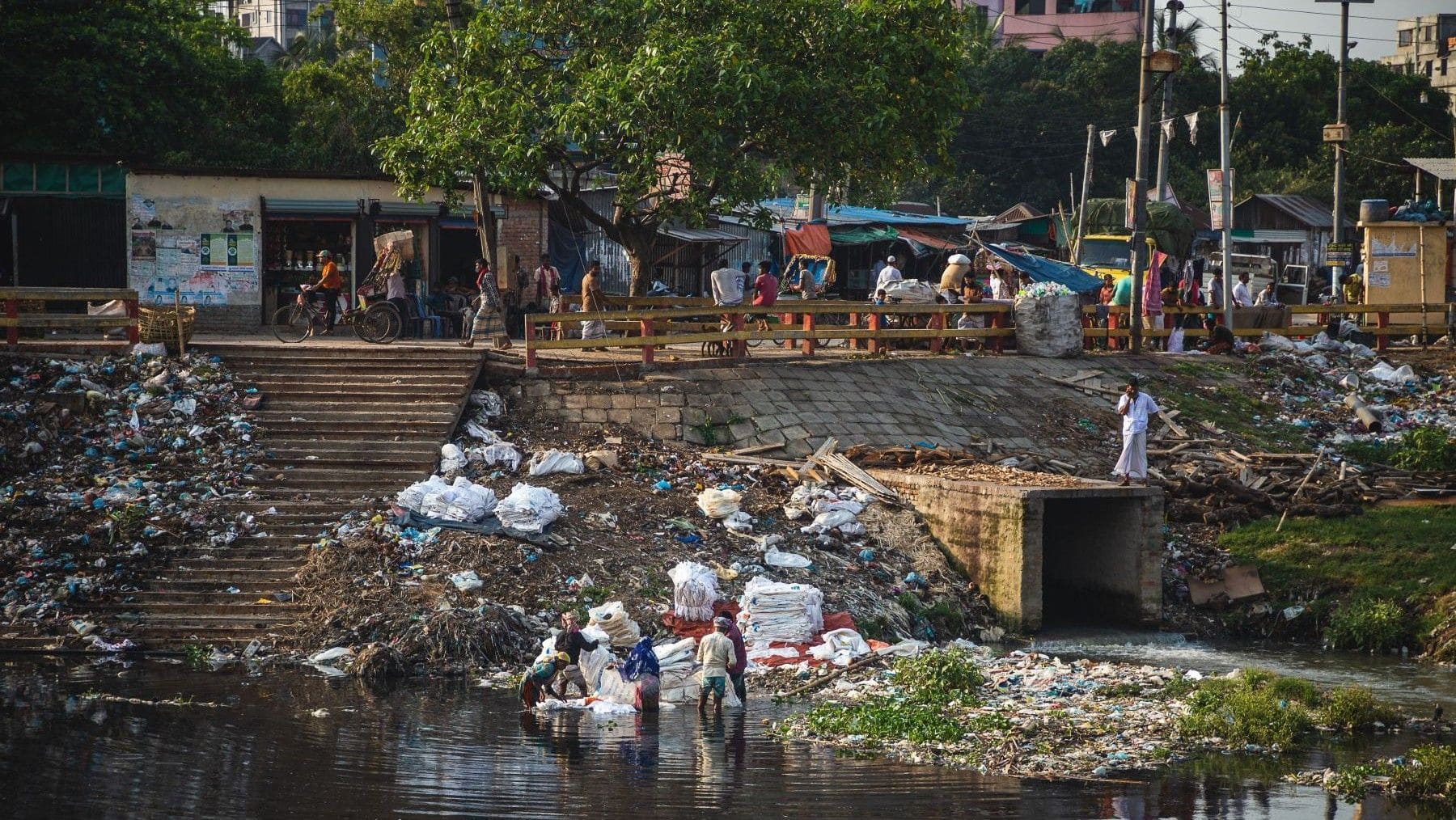
The global waste crisis requires limiting plastics, producing durable goods, and financing their management: shipping trash to poorer countries worsens pollution and inequality.
Waste is a major problem across the globe
The global waste crisis challenges a model that designs objects to discard them quickly and then seeks anywhere to place their remains. Experts are calling for infrastructure, repairable products, and limits on plastic production to contain a pollution that reaches remote places.
Sonja Schmid, from Climate Action Accelerator, warns that waste is increasing faster than expected. Julio Barea, from Greenpeace, denounces that exporting it can transfer the damage to territories with less capacity to manage it.
The response requires intervening before waste reaches the bin. Extending the life of products and reducing the amount of waste produced must carry more weight than continuing with unlimited manufacturing. Relying entirely on recycling is a very insufficient bet.
The global waste crisis overwhelms infrastructures and deepens inequalities
Schmid notes that high-income countries have a far greater waste collection capacity than poorer countries. The lack of services favors uncontrolled dumps and open-air burning, with environmental and health consequences.
The problem requires funding and clear responsibilities. It would be unacceptable to demand that communities without services solve a structural deficit through individual effort. Governments must expand adequate collection and treatment systems.
The prevention remains decisive even where infrastructures exist. Expanding facilities while waste volume grows unchecked can prolong resource depletion. Manufacturers and distributors must also be accountable for the design and end-use of their products.
Exporting trash shifts the problem to other territories
Barea questions the export, ironically called ‘tourism’, of waste to countries like Vietnam, Malaysia, or Thailand. According to his denuncia, a portion of the material is recovered, but what is rejected may be incinerated or abandoned in landfills. Not everything exported ends up there, but to achieve effective traceability, robust controls are required.
The global waste crisis has an important labor dimension: those who sort materials without sufficient protection can be exposed to hazardous substances. Moving ecological and environmental risk far from the people who produce the trash does not remove its consequences.
A responsible management must certify how the final treatment is carried out, including the rejects. It would be absurd to claim that exporting trash is a recycling solution without verifying what happens afterward. That opacity fuels the greenwashing and turns the circular economy into a mere marketing label.
Durability against wastefulness: act before waste appears
Schmid calls for objects that are sturdy, repairable, and reusable, accompanied by incentives and rules. The practical example is a reusable bottle: its benefit depends on using it repeatedly, avoiding premature replacement.
Greenpeace proposes reducing global plastic production by up to 75% by 2040. This is the NGO’s demand, not an internationally approved objective. It frames the debate around overproduction and reliance on items with very short lifespans.
The global waste crisis requires combining several fronts: prevention, reuse, and treatment. The omnipresence of microplastics reinforces the urgency of finding a solution: fragmenting materials is not the same as making them disappear. Governments and companies must forget their empty proposals and demonstrate real reductions, while facilitating affordable alternatives.
Every year more and more tons of trash are generated
The OECD calculated that only in 2019 were 353 million tonnes of plastic waste generated, of which only 9 % were effectively recycled, excluding losses from the process. It is a historical figure, not an updated 2026 rate, but it reveals the depth of the problem.
Stopping the global waste crisis requires producing and consuming differently: portraying recycling as a sufficient solution would perpetuate a polluting wastefulness that already compromises too many ecosystems.
