
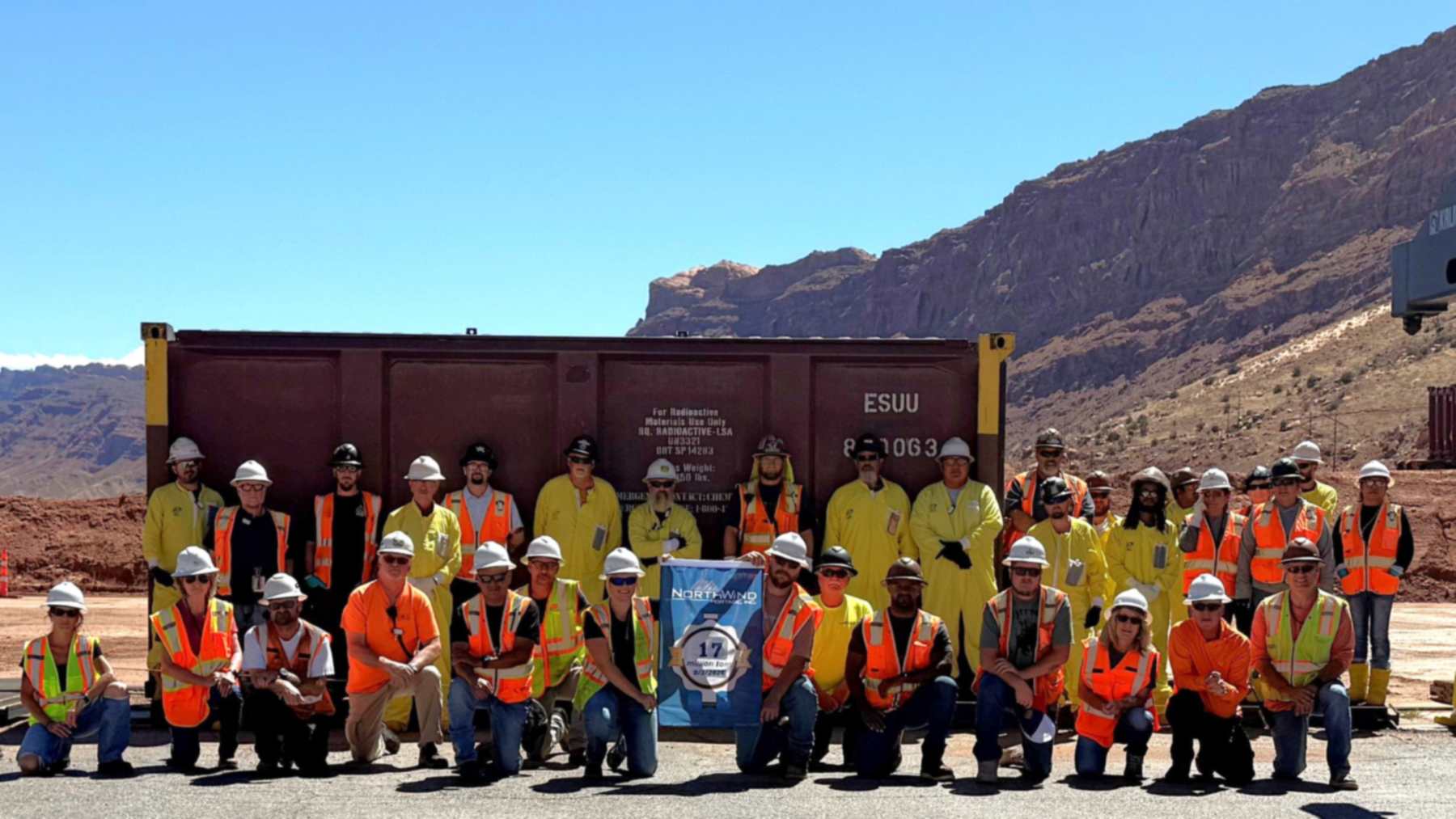
The United States Department of Energy (DOE) has removed about 15.4 million tons of uranium mill tailings from the Colorado Riverbank near Moab, Utah. The Office of Environmental Management announced the milestone on September 29, 2026. The waste has been transported by rail since 2009 to a disposal site about 48 kilometers away.
The DOE cites 17 million short tons, the U.S. unit, which corresponds to about 907 kilograms per ton. The cleanup remains ongoing, because contaminated soils, groundwater, and the final cap of the repository still need to be completed, in a river already facing its own water shortage.
A Tailings Pile Near Arches
According to the project’s official briefing, the Moab plant began processing ore in 1956, built by the Uranium Reduction Company, which in 1962 sold it to Atlas Minerals Corporation. Through 1970 it sold its uranium concentrate to the Atomic Energy Commission for defense programs. Later it produced mainly for nuclear power plants until its closure in 1984.
The process residues, a radioactive sand that technicians call tailings, were pumped to an unlined pond. Over the years they formed a pile more than 24 meters thick on about 53 hectares, about 1.5 kilometers from the entrance to Arches National Park.
The process extracted more than 90% of the uranium, but left radium and other decay products behind, and the DOE estimates for these tailings an average radioactivity of about 660 picocuries per gram of radium-226.
Ammonia Leaching into the River
The pile held a lot of water, especially in the center, and this excess leaked through the soil into groundwater that ends up in the Colorado River. According to the DOE, ammonia can harm endangered fish fry in the river’s backwaters along the banks.
Since 2003, eight extraction wells and more than 30 wells injecting fresh water have protected the river, because they recover ammonia and uranium before they reach the river that carved the Grand Canyon.
Four Trains per Week
Atlas proposed capping the pile and leaving it there, but the company went bankrupt in 1998, and the DOE took ownership of the land in October 2001 by congressional mandate. Since then the federal government has funded 100% of the cleanup, and in 2005 the DOE decided to move the waste by rail to Crescent Junction, also in Utah.
Since April 2009, workers excavate the tailings, dry them in bays to the optimal moisture, and load them into steel containers with lockable lids. A gantry crane lifts them onto the train in Moab, and four trains now depart weekly, each carrying up to 156 containers. At Crescent Junction, trucks unload them into the cell and send them back on the train for the return trip.