
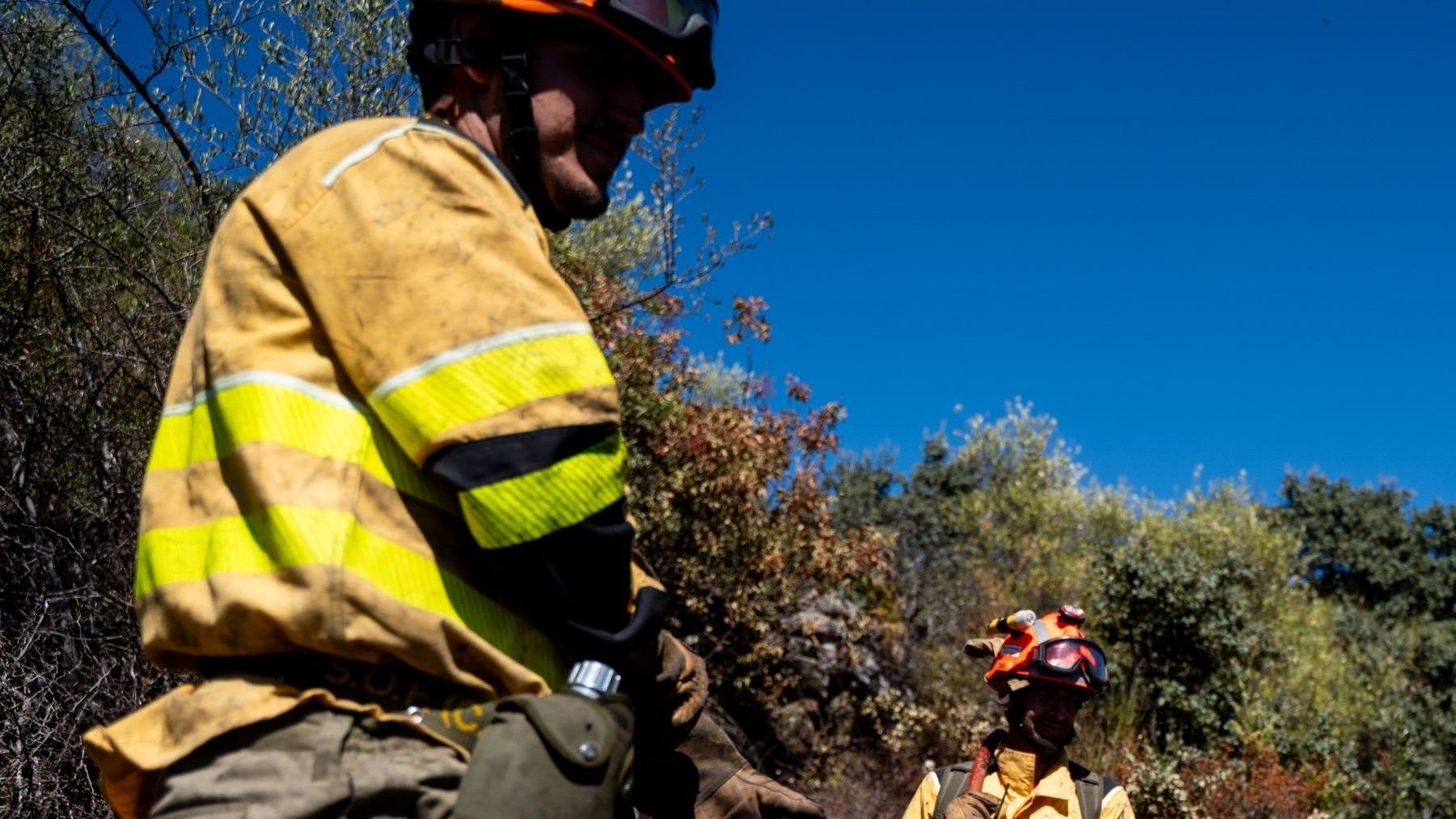
The Spanish provinces of Galicia, Andalusia and Extremadura are asking in Brussels for more funding to get ahead of fires and reinforce the management of their territories and the prevention of forest fires.
The representatives of the Spanish communities agree that action must be taken well before the forest starts to burn. Therefore, after a summer marked by severe forest fires, they have brought their economic request to invest in forest fire prevention to the EU headquarters.
The Valencian Moreno Bonilla has called for a dedicated allocation for forest fire prevention in the European budget 2028–2034; the Extremaduran Guardiola advocates installing firebreaks and promoting grazing, and from Galicia, Rueda insists that the funds be managed by the regions.
At the plenary of the European Committee of the Regions that took place yesterday, October 13, in the Belgian capital, the regional presidents of three of the regions most affected by the summer wildfires attended to explain what they need to prevent these events.
The article discusses what the position of each of the three regional representatives is regarding the large fires that affected the country, especially in their communities, and what they are asking the EU to address this issue for the future.
Three regions bring forest fire prevention to the EU
The presidents of several Spanish autonomous communities demanded this Tuesday in Brussels more resources and more investment in forest fire prevention, which this summer burned tens of thousands of hectares across the entire Spanish territory, a reality “increasingly common in the regions” that must have funding guaranteed in the next European budget.
In a debate at the plenary of the Committee of the Regions (CdR), the president of the Government of Andalusia, Juanma Moreno, who is also the first vice-president of the European body, argued that, after a summer “marked by fires that have been devastating, prolonged droughts, and extreme heat waves”, for many regions “these crises are no longer exceptional.”
“They are part of a new reality that accompanies us every year,” Moreno said, who called for “integrated management policies that cover the entire process,” from forest fire prevention and preparation to response and recovery.
He also argued that the next EU budget for the 2028–2034 period “must guarantee adequate and specific funding” to combat forest fires and added that European initiatives in this area “will only succeed if they incorporate the real dimension that regions and cities have in Europe.”
Similarly, the president of the Junta de Extremadura, María Guardiola, stated that fires and droughts “are no longer exceptional phenomena” and also backed forest fire prevention.
“They are a reality increasingly frequent in the Extremadura regions. We see it very clearly, we face fires that are increasingly intense, more voracious and drought periods also increasingly prolonged, with serious environmental, economic and social consequences,” Guardiola indicated.
The Extremaduran president called for an environmental regulation that “facilitates and does not hinder essential actions such as firebreaks, maintenance of access routes, active forest management or support for traditional practices such as extensive grazing and preventive clearing”.
Fires must be prevented at the European level
For his part, the president of Galicia, Alfonso Rueda, said that forest fires are a “European-level challenge” for which “it is essential to anticipate and boost the territory’s resilience.”
“We defend that Europe must increase the funds allocated to forest fire prevention and act against drought to improve the regions’ capacities,” added Rueda, who considered that it should be the regions themselves who manage these funds because “it is much more effective, less costly and safer” than reacting when the emergency has already been unleashed.
