
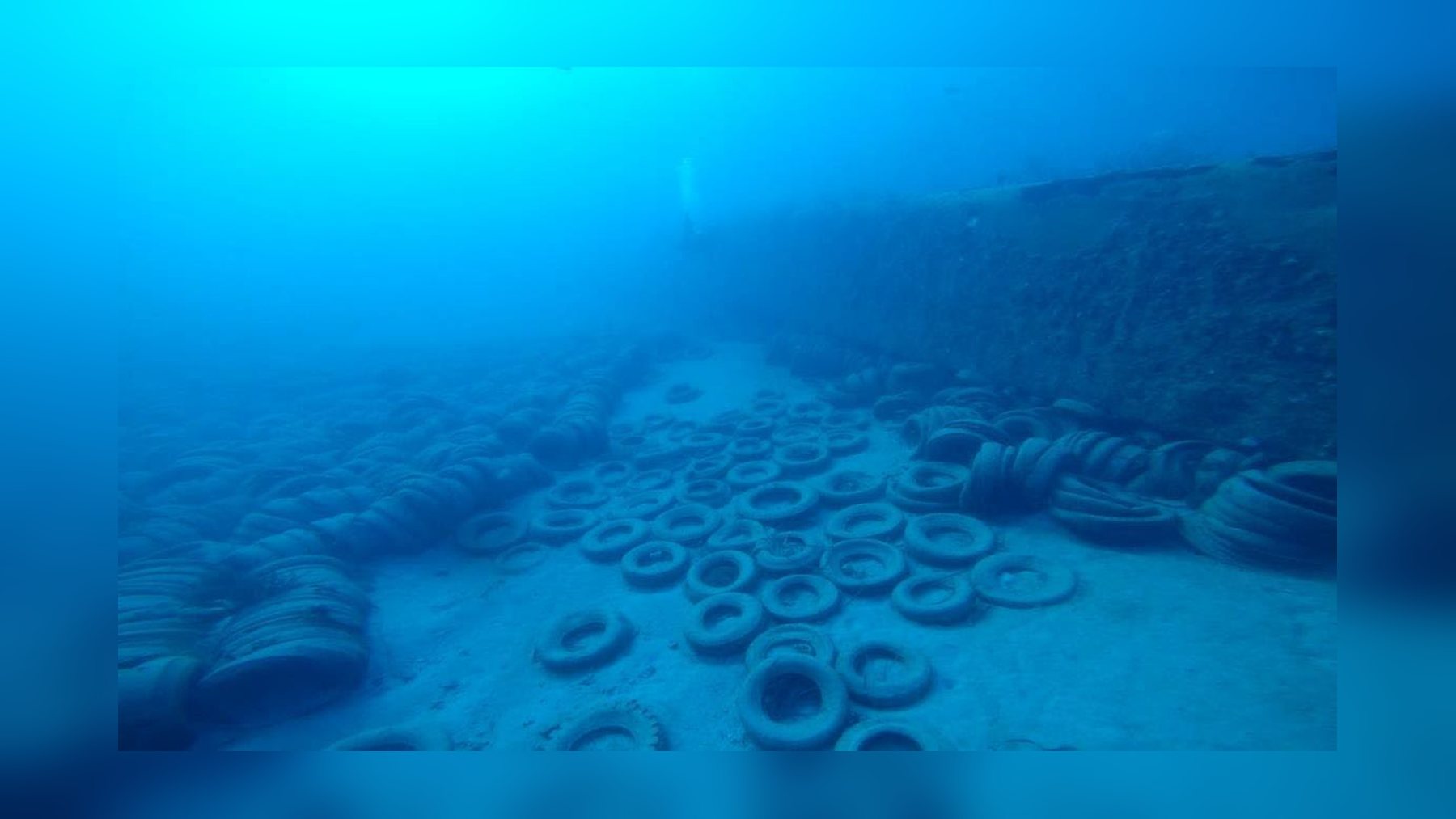
Florida removed 535,676 tires from the seafloor off Fort Lauderdale between 2015 and 2025, according to the balance sheet that its Department of Environmental Protection (DEP) updated on January 23, 2026. They are remnants of the Osborne Tire Reef, a tire reef sunk in the 1970s to attract fish.
That reef ended up harming nearby corals. According to the DEP’s estimates, between 1 and 2 million tires reached the sea, and its 2024 restoration plan estimates that completing the work will cost about $137 million.
Inexpensive Tires with Permission from the Army Corps of Engineers
In the 1960s, several studies recommended building reefs out of tires. They were plentiful, cheap, and easy to handle, according to the DEP report submitted to the Florida Legislature in 2023. There were also plenty of used tires around. Florida and the U.S. Army Corps of Engineers granted the permits. The tires were dumped onto the seabed between two Broward County reef lines.
There are few records of many of the dumps. The existing ones indicate 50,000 tires in April 1972 and 190,000 in November 1973. Some were lowered in bundles from a barge. Others were dumped by individuals from their boats.
Broken Straps, Rusted Staples, and Hurricanes
The packages carried plastic strapping and a metal staple. Many straps broke when the load was released with a crane. The others loosened as corrosion ate away the staples, the DEP explains.
The currents scattered the tires at random. Then tropical storms and hurricanes carried them to natural reefs. For the DEP, their instability “indicated that they were not suitable as artificial reefs.”
A Florida House analysis adds that, after three years, they covered about 34 acres. That’s nearly 14 hectares, and the tires were already reaching the beaches. The idea was tested in more places, such as Puget Sound’s tire reefs, the Yarmouth reef sunk in 1978, or two concrete channels with more fish.
Balloons, Military Divers, and a Crane to Port Everglades
The first removal occurred in 2001. Nova Southeastern University, with funding from NOAA, removed 1,600 tires using lift balloons. It cost about $17 per tire.
Between 2007 and 2009, divers from the Army, the Navy, and the Coast Guard removed more than 72,000 tires. Later, overseas missions pulled them away from the work.
In 2015, the DEP hired a diving company. A diver secures the tires and a crane hoists the package. The vessel returns to Port Everglades with around 300.
The pace has slowed. The official tally shows 85,118 in 2020, the best year, and 25,562 in 2025. At that rate, the half‑million visible tires estimated by the plan would take about 20 years to remove. In September 2025, the DEP signed another contract through 2032. The new company is still processing its permits.
From 2019 Sonar to 2024 AI-assisted Search
A 2019 sonar survey found tires across about 312 hectares north of Port Everglades inlet. In 2024, with the help of artificial intelligence, the search covered more than 2,400 hectares. Tires were found in all four county reef complexes, spanning over 8 kilometers. The plan concedes they were distributed “far beyond what was expected.”
The DEP estimates that about 521,000 tires remain visible: 429,000 on the sand and at most 92,000 touching the reef. It does not count buried tires or those outside the surveyed area.
Horn Coral Among the Loose Tires
Part of the tires has come to life.
In April 2024, divers surveyed 30 sites and found hard corals growing on tires at 18 of them. In four sites, the horn coral, an endangered species, grew alongside loose tires.
The permit does not allow moving tires that host coral. For this reason, Nova Southeastern relocates the colonies first. By September 2023, it had removed 747, and 472 ended up in four transplant zones.
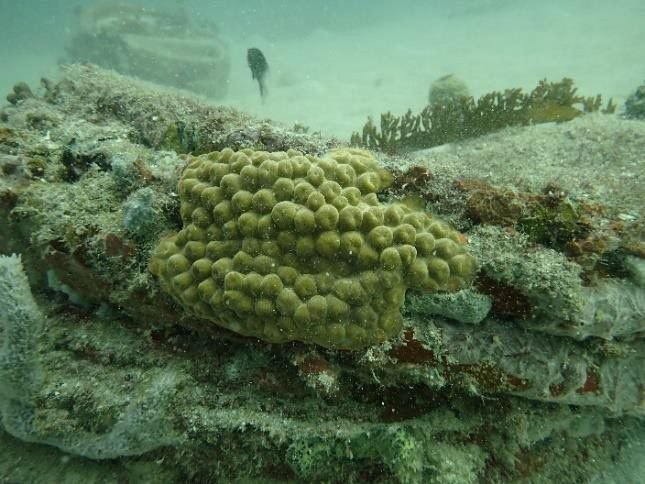
The David Gilliam team’s report details a batch of 514 colonies. It sent 79 to the University of Miami and lost 26 at its nursery due to Hurricane Nicole in November 2022. A month after transplantation, the 167 examined remained alive.
The DEP concedes that this approach is slower. Still, it believes relocating the corals “offsets the drawbacks.” Today, 44% of reef-building corals are threatened, and Florida is already replenishing colonies with Ken Nedimyer’s coral trees.
A 2023 Law and $78 Million Just for the Sand
A 2023 Florida law required the DEP to implement the plan. Its goal is to remove all visible tires from the reef and plant corals where the damage was greatest.
It estimates $78 million for the sand, $19 million for the reef, and $40 million for replanting. It envisions 14 years of work and between $6 million and $13 million per year.
In fiscal year 2023-2024, the state allocated $2.5 million. The plan asks for each year between 2.4 and 5.2 times that amount, depending on the Legislature’s vote.
No One Has Counted the Sunken Tires or the Lost Coral
No one knows how many tires sank. Records are missing, so the 1–2 million figure is an estimate. The total damage is not known either. The inspections, the plan acknowledges, “cannot account for the full history of impacts.” And the 14 acres from the early years measure space occupied, not coral lost.
The 2026–2033 figures are projections. Reaching 945,804 tires by 2033 would require removing about 51,000 per year, roughly double the 2025 pace.
Official data are on the DEP’s Osborne Reef project page, updated October 1, 2026.
Next to a sunken barge, Matt’s Barge, contractor photos illustrate the change. In 2017 there were hundreds of tires on the sand. By 2023, the seabed was clean.
Photo: Industrial Divers Corporation / Florida DEP
