
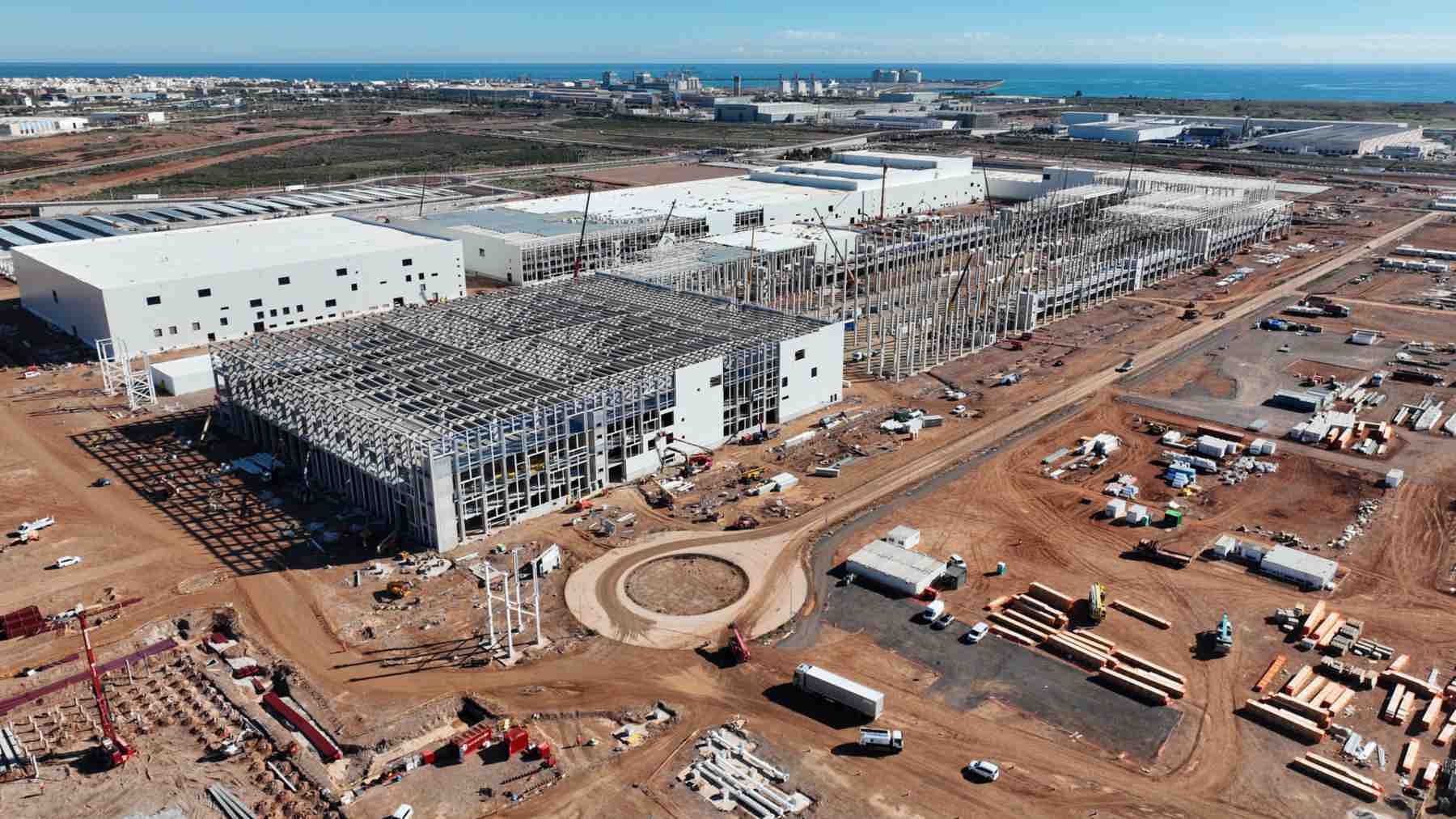
The European Commission selected on October 19, 2026, 77 clean-tech projects from 23 countries to allocate 3.4 billion euros from the EU Innovation Fund, and Spain accounts for eight of them, a little over 10% of the total, ranging from PowerCo’s battery gigafactory in Sagunto (Valencia) to an e-methanol plant at a wastewater treatment plant in Seville. Excluding projects that involve multiple countries, only France, with 15, has more, and the Netherlands ties with Spain.
One ton of CO2 per second
The Innovation Fund is financed from the revenues of the EU Emissions Trading System (ETS), the market where factories, power plants and airlines purchase a permit for every tonne of CO2 they emit.
“These projects show that European innovators are turning climate ambition into industrial leadership,” said Wopke Hoekstra, the Commissioner for Climate, Energy and Growth.
According to the Commission, the 77 projects will avoid the equivalent of about 290 million tonnes of greenhouse gases during their first decade of operation. That amounts, roughly, to one tonne of CO2 per second for ten years.
Demand greatly exceeded the available funds. The call attracted 358 applications requesting 17.5 billion euros, while the initial budget stood at 2.9 billion euros—roughly six times the money available.
27 GWh of batteries per year in Sagunto
In the project dossier, the Commission describes PowerCo’s Sagunto gigafactory as a net-zero-emission industrial plant capable of producing up to 27 GWh per year of lithium-iron-phosphate (LFP) prismatic cells for electric cars. LFPs are batteries that use iron and phosphate instead of nickel and cobalt.
PowerCo’s factory, the battery subsidiary of the Volkswagen Group, will feature eight fully electrified production lines powered by renewable electricity. As of November 2025, according to an official company note, around 1,400 people were working on the site and 11 industrial buildings had already been erected.
Two cement plants that will capture their CO2
Cement stands as one of the hardest industries to decarbonize, because much of its CO2 is released from limestone during heating. Two of the three large-scale Spanish projects tackle precisely that challenge.
The first is Mosusol-netCO2, from Cementos Molins, which, according to the dossier, will capture about 97% of the emissions from clinker production at its Sant Vicenç dels Horts plant (Barcelona) and will transport the CO2 through a 100-kilometer pipe to a geological storage site in Tarragona. The Commission estimates it will prevent up to 1.1 million tonnes of CO2 per year. Molins aims to make that factory carbon-neutral by 2031, in line with the agreement signed with Enagás in February 2025.
The second project is ECO2FLY, which will capture CO2 from Holcim’s plant in Villaluenga de la Sagra (Toledo) and convert part of it into eSAF, a synthetic jet fuel for aircraft produced from renewable hydrogen and CO2. The remainder will be transported by train to a geological storage facility in Spain, and the dossier foresees the project covering about 50% of Spain’s eSAF demand in 2032.
In July, the project signed a memorandum with Volotea for 6.5 million litres in 2032 and 32 million litres per year from 2035, according to the 21 July 2026 statement. Its director, Javier Esteban, said the signing “validates our eSAF production model,” a fuel that reduces more than 75% of net emissions and, unlike bio-based aviation fuels, depends less on scarce feedstocks.
Methanol at El Musel and at a Seville wastewater plant
At the port of El Musel, in Gijón, Musel GreenMet will simultaneously produce e-methanol and biomethanol as part of the Asturias Hydrogen Valley. It is the only mid-scale Spanish project on the list and obtained its environmental permit in Gijón in September.
In Seville, the VICTORIA pilot, run by ICODOS, will install a plant at the Copero wastewater plant that will combine biogenic CO2 from the wastewater with hydrogen from a 10-megawatt electrolyzer to generate about 3,800 tonnes of e-methanol per year, primarily intended for maritime transport.
Plastics, ship waste and sodium carbonate
The third large-scale Spanish project is CIRCUS by Greenertis Tarragona, which will convert mixed plastic waste into pyrolysis oil to manufacture new polymers and will avoid around 1.5 million tonnes of CO2 in its first ten years, according to the dossier.
CATREF, by XFuel, will convert oily ship residues in Catalonia into recycled marine diesel, with an anticipated 92.18% reduction in emissions and offtake agreements for about 84,000 tonnes per year. The eighth project is ELSA, from Solvay Chemicals, a pilot to produce sodium carbonate, the base for glass, using electrodialysis, renewable electricity and biogenic CO2.
Beyond Spain, the list includes for the first time a small modular nuclear reactor in Pierrelatte (France) and an air-direct CO2 capture plant in Øygarden (Norway).
What remains for the money to arrive
Being on the list does not yet mean receiving funding. Project promoters must now negotiate grant agreements with the European Climate, Infrastructure and Environment Executive Agency (CINEA), and the Commission will announce the outcome of this phase in the first quarter of 2027.
The published documents do not detail how much funding each project will receive, only the total by category. And several are still in the planning stage: ECO2FLY, for instance, anticipates commercial start in 2032.
Another 84 projects passed the assessment and were left without funding, though they will receive the STEP quality label to seek funding from other sources. The next call is due in early December 2026, with 1 billion euros for clean-tech manufacturing. In a previous round of the Innovation Fund, Spanish projects were among the chosen ones.
The full list and the country-by-country breakdown are published in the European Commission press release IP/26/2187, issued on 19 October 2026, and in its annexes with the profiles of the 77 projects and the questions-and-answers about the call.
Photo: PowerCo
