
The gas bill is going to change. It will have to state where the gas comes from, what portion is renewable, and what environmental impact it has. This is set out in a royal decree from the Council of Ministers, according to information released this Friday by MITECO.
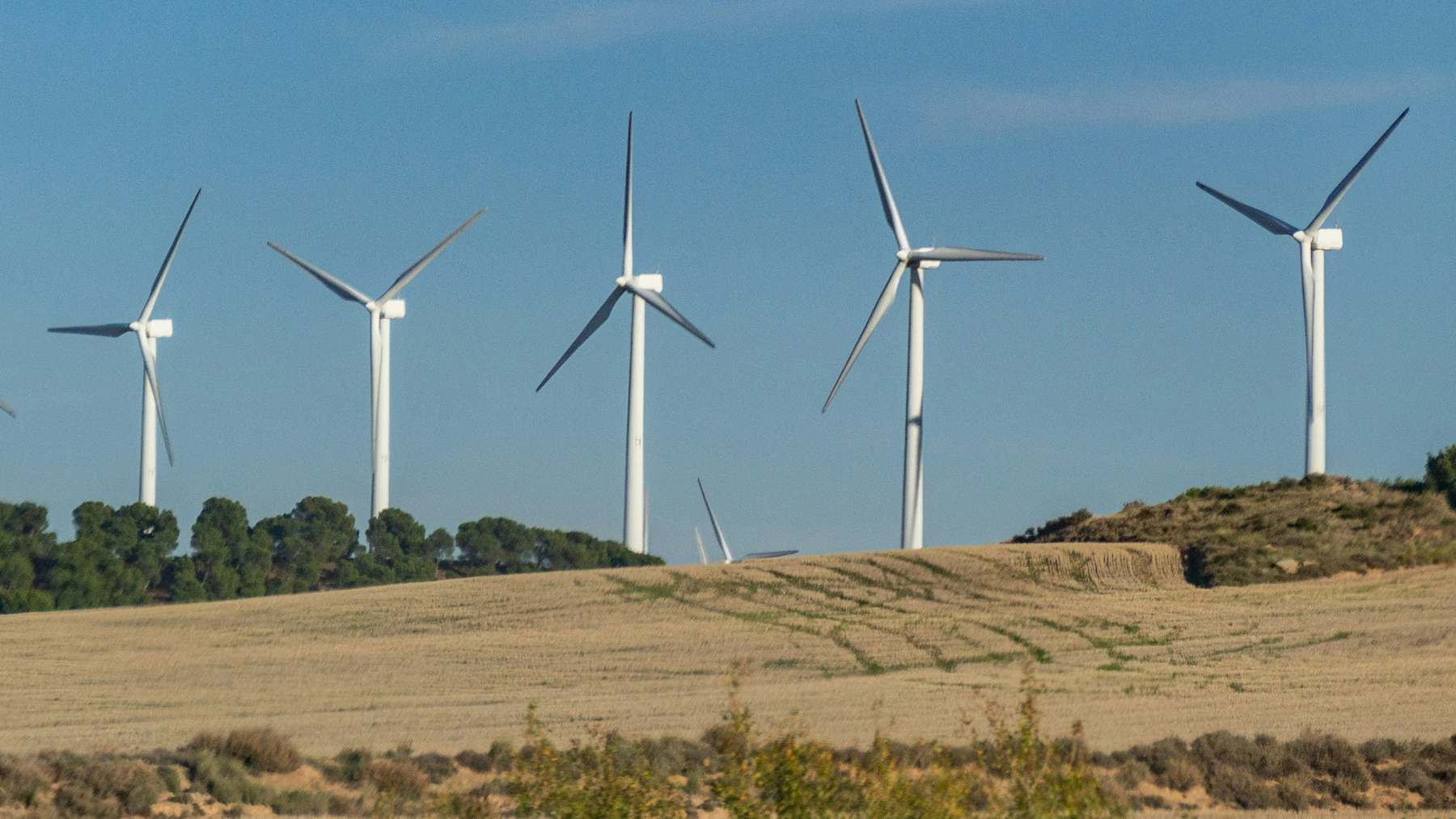
The bill will also include a QR code linking to the CNMC’s energy offers comparator. The same rule also facilitates wind repowering of old parks, i.e., replacing their turbines with more powerful ones.
What the bill will say
According to the MITECO note, the decree obliges informing the origin of the gas supplied. It also requires the percentage of renewable gas and its environmental impact. It is the same as what already applies to electricity and power of renewable origin.
In addition to the origin, the bill will include a QR code that will lead to the CNMC’s energy offers comparator. It will be accompanied by the data necessary for the comparison to be personalized.
The July draft cited among those data the postal code and the annual consumption. Today’s note does not detail which ones. It will be the CNMC that sets the format, the parameters, and the technical characteristics of that access.
And when will these bills arrive? The MITECO note does not provide a date for entry into force nor says from when the invoices will change. From the same Council, the arrival of ETS2, the emissions market for home and car fuels, was also announced—another change that touches household gas.
More grid for aging wind farms
The decree creates a procedure to free up and allocate grid access capacity at nodes that were reserved for auctions. It can be requested by wind farms aged over 15 years that repower, up to 25% more capacity than they currently have. In the July draft, this allocation took into account the age and environmental sensitivity of each installation.
Thus, by replacing their old machines, those parks will be able to request more capacity to feed energy into the grid. Galicia had already proposed speeding up wind repowering in its territory, with more margin for renewed parks.
Fewer Turbines, Bigger Ones
What does it mean in practice to replace the wind turbines at a park? An example is the REPOTEN 2 aid program, which does not depend on this decree. Through it, in July the IDAE awarded 612 million euros to 173 projects of wind farms and hydroelectric plants up to 50 MW.
The 81 wind projects in that call will replace nearly 3,000 old wind turbines, with an average capacity of about 790 kilowatts. In their place there will be fewer than 500 new machines, each averaging around 5 megawatts.
According to MITECO, the environmental advantage lies in occupying less surface area and reducing the landscape impact. They also lower the risk of bird collisions, a well-known issue with wind turbines and bird mortality.
The distribution reached all communities except the Balearic Islands. Galicia added 40 projects, followed by Castile and León with 32, Castile-La Mancha with 19, Andalusia with 17, and Aragon with 15. In total, these projects will add 2,433 MW of wind power and 1,091 MW of hydroelectric, and more than half include storage.
Pumped storage and solar thermal
The decree also addresses energy storage, key to exploiting sun and wind when there is no demand. Reversible hydroelectric plants will be able to incorporate power electronics improvements. This type of installation already receives public support, such as the 265 million for reversible pumping in Spain.
Solar thermal plants, on their part, will be able to expand their solar field and incorporate thermal storage. This will allow them to store heat during the day and produce electricity when the sun has already set.
The regulation also frees up grid capacity for self-consumption linked to factories, hydrogen production, and renewable gases. The objective, according to MITECO, is for industry to choose electricity over fossil alternatives.
More agile grids
In the networks, the decree proposes eliminating in some cases a requirement. The promoter would no longer have to prove to the CNMC its technical, legal, and economic solvency. This will be the case when that solvency is already guaranteed by other supervisory mechanisms.
It also facilitates dynamic line rating systems, known as DLR. With sensors and equipment that measure environmental conditions, they allow an existing line to carry considerably more electricity. That extra capacity helps integrate more renewables and to connect new demands.
Most of these measures come from Royal Decree-Law 7/2026, of the Comprehensive Plan for Response to the Middle East Crisis. The new text amends four royal decrees in the electricity sector and one ministerial order.
Image: Ministry for Ecological Transition and the Demographic Challenge
