
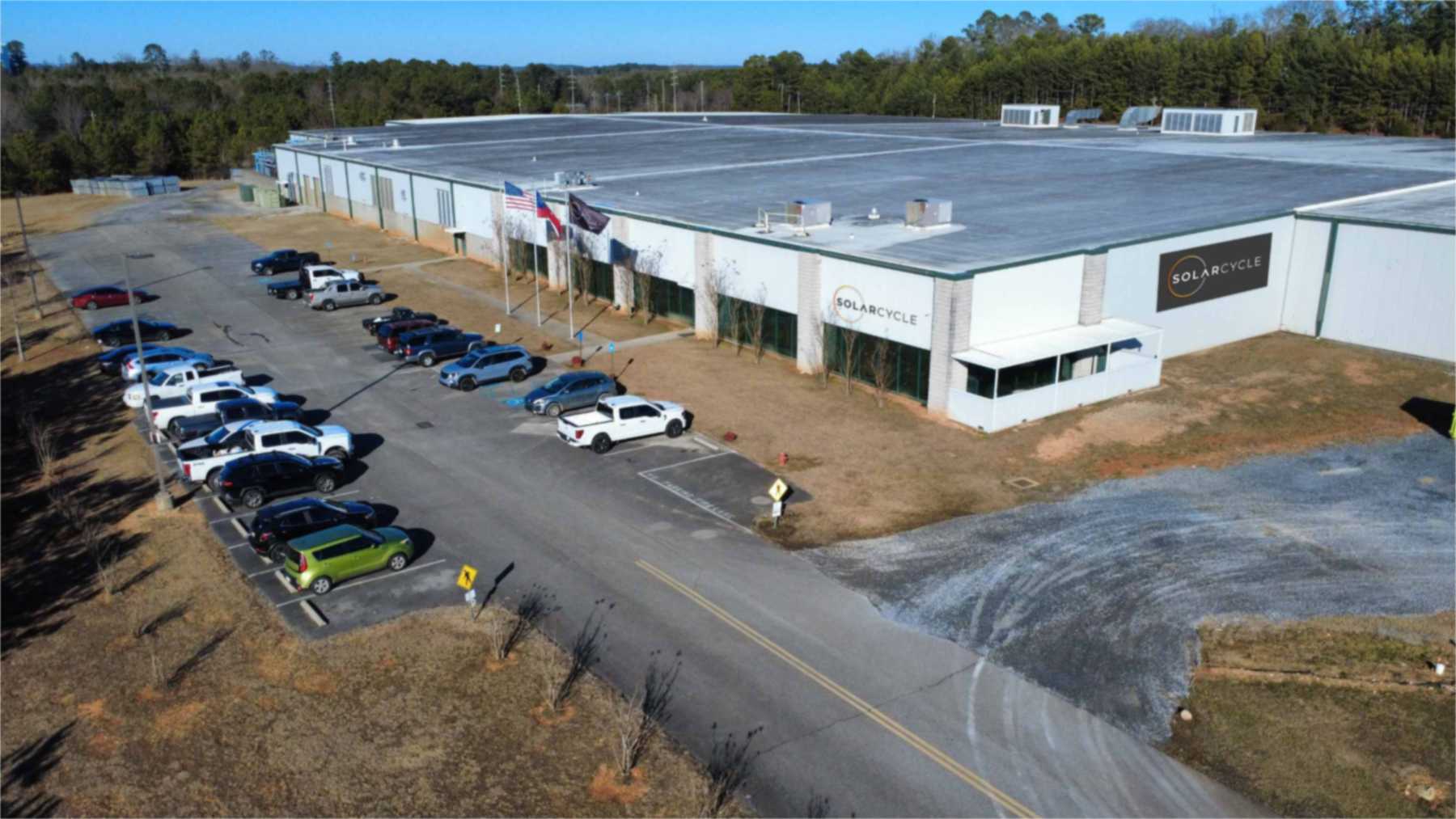
Removed solar panels still contain glass, aluminum, and recoverable metals. SOLARCYCLE announced on January 29, 2026 the start of operations of its Cedartown plant in Georgia, where it claims to recover 96% of the value of a panel’s materials. The challenge is to ensure that doing so proves economically attractive.
The gap between the two options is substantial. A report from the United States National Renewable Energy Laboratory (NREL), published in 2021, gathered estimates of between $15 and $45 per module for recycling, compared with disposal fees of less than $1 per module at non-hazardous waste landfills and around $5 per module at hazardous waste landfills. These are historical references based on limited information, and should not be confused with a current budget for decommissioning, transportation, and treatment. In other words, recycling a panel could cost at least 15 times more than sending it to a non-hazardous waste landfill.
The figures for solar panel recycling
| Item | Value |
|---|---|
| Value recovered by SOLARCYCLE | 96 % |
| Cost to recycle a module (NREL, 2021) | Between $15 and $45 |
| Non-hazardous waste landfill | Less than $1 per module |
| Hazardous waste landfill | Less than $5 per module |
| Simulated destination 2020-2050 (NREL) | 80% landfill and 10% recycling |
| Glass weight in a panel | Around 75% |
| Cedartown target by end of 2026 | 1 million modules per year (about 2,700 per day) |
| First planned production of solar glass | 2028 |
Recycling a panel cost between $15 and $45
What happens when recovering materials costs more than letting them go? A model from NREL published in 2021 calculated that, under its initial conditions, roughly 80% of modules retired between 2020 and 2050 would end up in landfills and 10% would be recycled.
Those percentages describe a simulation, not a tally of the fate of American panels in 2026. Their usefulness lies in showing how costs and the decisions of owners, installers, and recyclers can shape the outcome.
“A solution can be technically viable, but if there are no incentives for consumers to adopt it, it won’t work,” explained the researcher Julien Walzberg. The same study suggested that lowering processing costs and increasing the volume recycled could help to shift that dynamic.
Glass accounts for about 75% of a panel’s weight
According to the United States Environmental Protection Agency (EPA), glass makes up approximately 75% of the weight of a crystalline silicon panel. It also contains an aluminum frame, silicon cells, polymers, and small quantities of metals such as silver and copper.
The protective layers shielding the panel from rain and temperature fluctuations complicate later disassembly. Separating the glass, the cells, and the metals requires mechanical, thermal, or chemical processes, depending on the technology employed.
Therein lies an important distinction for understanding the business. Reclaiming the frame is relatively straightforward, but extracting the materials from the cells demands more effort. The value recovered depends on which materials are obtained and the quality with which they exit the process.
One million panels per year at Cedartown
The Cedartown facility was processing thousands of panels per week when it was announced. SOLARCYCLE set a target of reaching a pace of one million modules per year by the end of 2026. One million modules per year equates to around 2,700 panels per day.
The 96% figure refers to the economic value of the materials recovered. The company also asserts that its process avoids sending waste to landfills, although its announcement does not provide a per-panel recycling cost.
The project includes a future solar glass plant adjacent to the recycling center, with first production planned for 2028 according to the January announcement. The industrial logic is to give a use for the recovered glass and to incorporate it into new panels. The timetable remains a forecast.
Who pays for the recycling of panels in Spain
For homeowners with rooftop panels, the question of who takes care of them when they stop being useful also arises. In Spain, Royal Decree 110/2015 includes photovoltaic panels in the management of electrical and electronic equipment waste and imposes obligations on their producers.
Producer responsibility includes financing the management under the terms of the regulation. Therefore, when planning a replacement, it is prudent to ask the installer to specify who will remove the modules and to which authorized waste manager they will be delivered. It is a matter that deserves to be clarified along with the budget.
Prologis and Southern Power, the first major clients
In March 2026, SOLARCYCLE announced an agreement to recycle the panels removed from Prologis’s U.S. portfolio. According to the company, having a predictable volume allows for better organization of installations and investment in technology to reduce costs.
There is also a concrete case with Southern Power. In a July communication, the company reported that, by April 2026, it had contracted with SOLARCYCLE to recycle more than 800 modules from three facilities, and expected to add between 2,000 and 3,000 damaged panels before year-end.
The next step will be to verify whether a stable supply of modules can consistently reduce treatment costs. The official program communication was published on July 2, 2026 on the Southern Company website.
Image: SOLARCYCLE