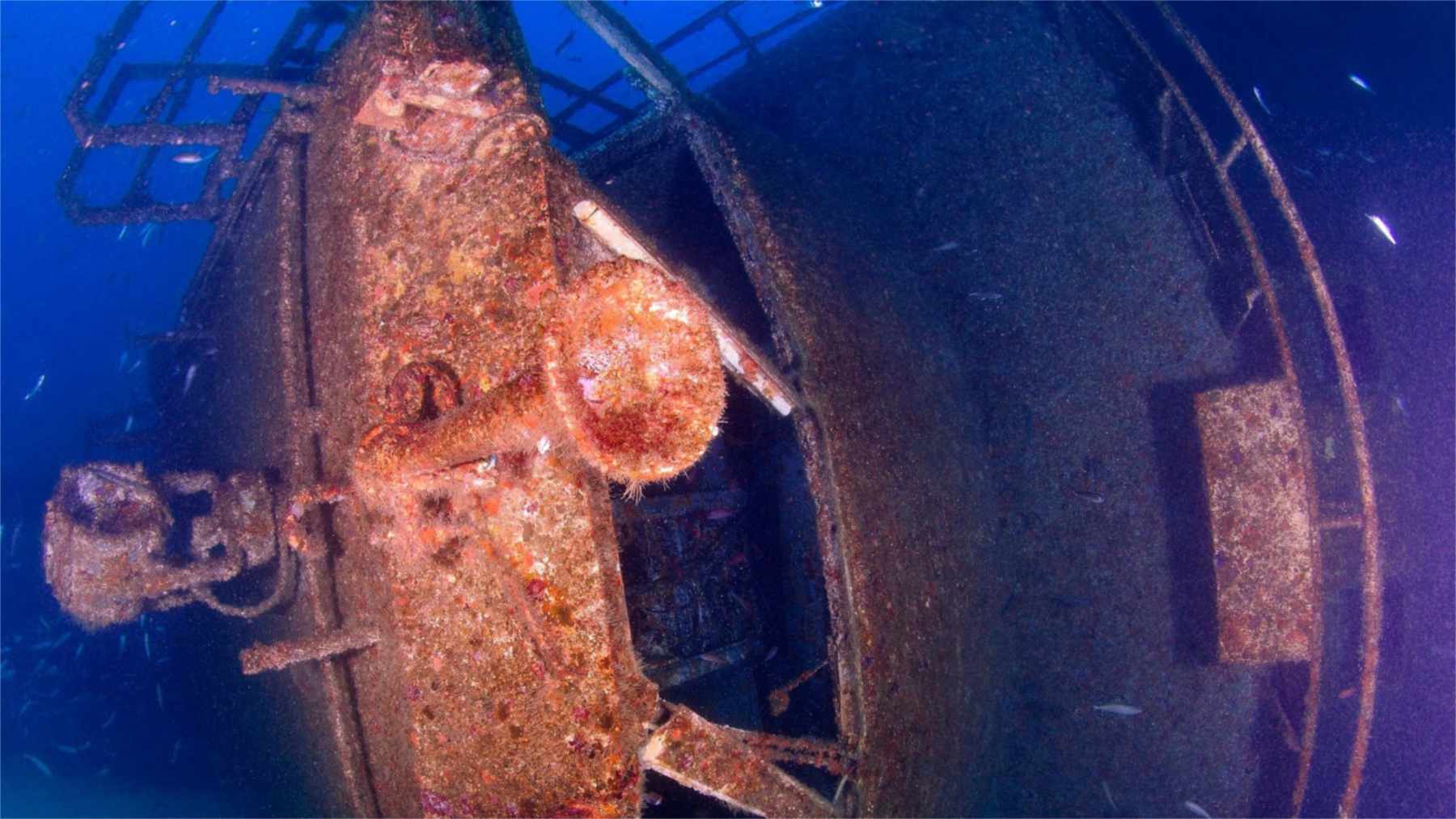
A ship that ends up at the bottom of the sea can have a second life, provided it is prepared and placed in the right spot. Off Gibraltar, more than 30 vessels deliberately sunk have been used to create artificial reefs that provide surfaces and hiding places for marine life.
The story began in the 1970s, with Eric Shaw among its driving forces, and records document a rise in the number of species present in the studied area. But there is an important nuance to understanding the outcome. The most widely cited figures come from historical observations, and keeping these refuges alive requires much more than sinking ships.
The figures for Gibraltar’s artificial reefs
| Item | Figure |
|---|---|
| Start of the program | 1975 (early steps by Eric Shaw in 1973) |
| Intentionally sunk ships | More than 30 |
| Last entry in the 2025 plan | Sun Swale, a tugboat of about 30 m (2015) |
| Vertebrate species (1972 to 1994) | From 12 to 54 (4.5 times more) |
| Invertebrate species (1972 to 1994) | From 22 to 55 (2.5 times more) |
| Taxa in the Ark (2021) | 74 |
From 1973 to more than 30 ships sunk
A The Guardian feature places the early steps of Eric Shaw in 1973. The Government of Gibraltar dates the start of the artificial reef program to 1975, a reference that also appears in Shaw’s 1996 article published in Almoraima.
The vessels were incorporated over decades. The 25-year Environmental Plan, dated 2025, records more than 30 intentional sinkings and notes Sun Swale, a tugboat of about 30 metres submerged in 2015, as the most recent addition mentioned in the document.
Gaps and hulls where life takes hold
What does a fish find among a ship’s wreckage? Its cavities offer hiding places, while other organisms can attach to the hull and grow on it. That combination adds refuges that are scarce on a sandy bottom without structures.
Shaw described how hard materials had favored the arrival of organisms that live attached to a surface and of animals that move along the bottom or between waters. Some inhabitants also provide food or shelter for others.
That does not turn sand into a space without value. The researcher himself pointed out the importance of choosing sites where the installation would not harm existing ecosystems, because adding a habitat can be counterproductive if it destroys another along the way.
From 12 to 54 vertebrate species between 1972 and 1994
The comparison published by Shaw collects records from 1972 and 1994. In that period, observed vertebrate species rose from 12 to 54, while invertebrate species increased from 22 to 55. A report prepared for the Government of Gibraltar in December 2012 reaffirmed those results. In other words, vertebrate species multiplied by 4.5 and invertebrate species by 2.5.
They are counts of species, not numbers of animals. They speak of a more varied community in the studied area, but these tallies do not allow us to conclude that the fish population multiplied in the same proportion or that the entire marine environment had recovered.
No fuels or oils before sinking the Sun Swale
The Sun Swale case reveals the work behind it. According to the Government of Gibraltar’s environmental documentation, fuels and lubricants were removed before sinking, as well as items that could detach, float, or contaminate.
The vessel was also inspected to identify hazardous materials and electronic equipment was removed. The preparation included changes to reduce risks for divers, while the sinking was conducted under the supervision of port and environmental authorities. The prior cleanup is an essential part of the project.
74 taxa in the reef known as the Ark
A master’s research by Lucinda Rosheuvel, shared by the University of Gibraltar, studied another one of these reefs, known as “the Ark.” Through photographs and videos gathered during dives, the study recorded 74 taxa in 2021 (groups used to classify living beings, which may correspond to species or other categories).
That result should not be added to or directly compared with Shaw’s historical counts, because it pertains to a different location and a different study. The research points out that the orientation and the complexity of the structure influence its functioning, and it warns of problems that inappropriate materials or insufficient monitoring can cause.
Abandoned nets and uncontrolled diving
Remnants of nets can also become a threat. The 2012 report described their manual removal from the reef to prevent ghost fishing, which occurs when abandoned gear continues trapping animals. The document also highlighted problems associated with uncontrolled diving.
Therefore, the value of these structures is also measured by what happens years after they are placed. Observing which organisms settle, detecting damage, and maintaining surveillance allows assessing whether the refuge continues to fulfill its function.
The 2025 environmental plan records the government’s commitment to continuing the program with suitably equipped vessels or materials. This forecast has been published in the Government of Gibraltar’s 25-year Environmental Plan.
Image: Shaun Yeo / Underwater Gibraltar