
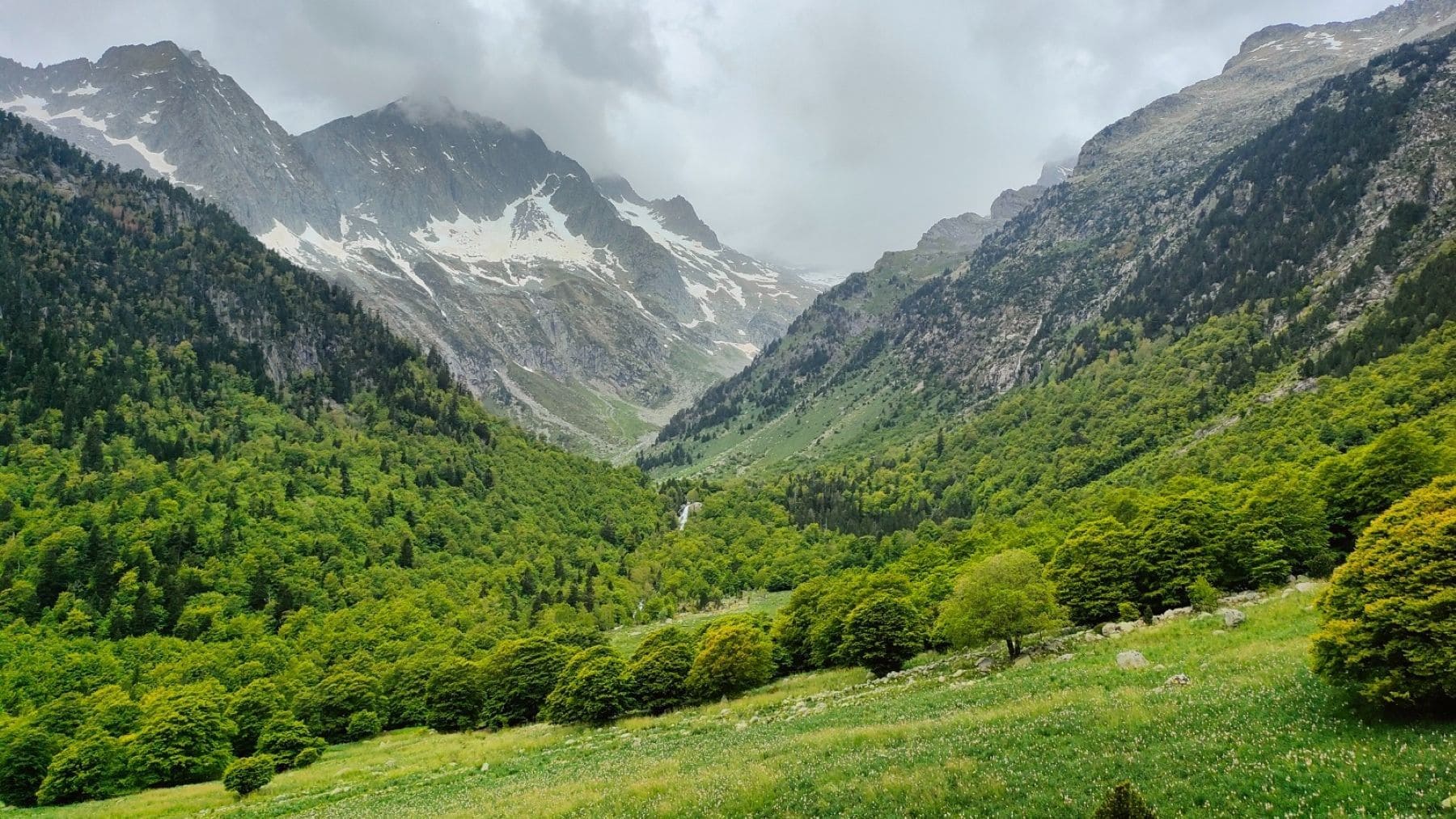
The expansion of Aigüestortes will add lakes, glaciers, and habitats of threatened species to the park and will extend its peripheral protection; the proposal still must be enacted into law by the Cortes Generales (the Spanish Parliament).
The expansion of Aigüestortes advances with a proposal to incorporate 2,259.10 hectares into the national park and extend its peripheral protection zone. The Council of Ministers has endorsed the initiative, which was prepared by MITECO and the Generalitat, aiming to bolster the conservation of glacial lakes, alpine meadows, and the distribution areas of the brown bear, the capercaillie, and the bearded vulture.
The new park lands will come from the current protected periphery and are located in La Torre de Capdella and Sort. They highlight the Serra del Reil at the head of the Vall Fosca and the Mainera lake complex. These areas are predominantly above 2,300 meters, providing continuity to high mountain habitats.
The expansion proposal for Aigüestortes also contemplates adding surface to the peripheral protection of Aigüestortes in areas such as Besiberri, Caregue, Bedollar, and around Redon Lake. It has the backing of the affected municipalities, but the expansion is not final yet: the agreement allows the process to continue and must culminate in a law of the Cortes Generales.
The Aigüestortes expansion receives government approval
The Council of Ministers has approved the expansion proposal of the Aigüestortes i Estany de Sant Maurici National Park, jointly prepared by the Ministry for Ecological Transition and the Demographic Challenge and the Government of Catalonia.
The initiative will increase the surface area of the national park and its peripheral protection zone (ZPP), reinforcing the representativeness of Pyrenean ecosystems and improving the connectivity and ecological functioning of the protected space.
The proposal contemplates the incorporation of 2,259.10 hectares into the Aigüestortes National Park, which represents a 16.25% increase relative to its current area. These lands come from the current ZPP and are located in the municipalities of La Torre de Capdella, in Pallars Jussà, and Sort, in Pallars Sobirà.
Likewise, it proposes adding 3,577.43 hectares of new surface to the ZPP, spread across the municipalities of La Torre de Capdella, Vilaller, Rialp, Espot, and Vielha e Mijaran. The proposal also includes a modification of its boundaries in Espot, excluding 201.63 hectares partially occupied by the ski station.
Taken together, the area of the Aigüestortes National Park and its peripheral protection zone will reach 43,572.78 hectares, up from the current 39,995.35, representing an increase of 8.94%. The initiative also brings the municipality of Rialp within the park’s territorial scope.
More high-mountain ecosystems protected
The expansion of Aigüestortes will enable the inclusion of spaces of great natural and scenic value, characterized by alpine meadows, supra-forest shrublands, rocky outcrops, and plant formations typical of the highest elevations.
Predominantly located above 2,300 meters, these environments exhibit a high degree of naturalness and constitute habitats of particular interest for numerous plant and animal species.
Among the main contributions are the headwaters of Vall Fosca, in La Torre de Capdella, and the Serra del Rei sector in Sort. These lands include high-mountain crests and reliefs, as well as the Mainera lake complex and other glacial-origin lakes, enriching the representation of one of the park’s most characteristic natural features.
The expansion of Aigüestortes strengthens in particular the representation of natural systems such as supra-forest shrublands, high-mountain pastures, woody steppes and screes, as well as the unique systems of glacial and periglacial origin and the formations and reliefs of mountain and high-mountain areas. It also adds new bodies of water, peatlands, and wetlands, increasing the protected area of these habitats with ecological importance.
The proposal will also contribute to improving the protection of distribution areas for endangered and protected species, including the capercaillie, the brown bear, the bearded vulture, the boreal owl, and the rock ptarmigan, as well as habitats of interest for mountain flora species.
A commitment to connectivity and protection
Expanding the peripheral protection zone will help complete and strengthen the park’s boundary in several sectors. Among the new incorporations are the Besiberri valley in Vilaller; the Caregue and Bedollar sectors in Rialp; the headwaters of the Noguera Ribagorçana River and the surroundings of Redon Lake in Vielha e Mijaran; and Solaneta d’Espot in the Espot municipality.
These territories bring new habitats and elements of conservation interest, such as stands of yew, stands of birch, and riparian vegetation, in addition to zones where the brown bear and the capercaillie are distributed. The inclusion of Solaneta d’Espot will also reinforce protection of a bearded vulture breeding area.
The initiative is not only an increase in protected area but also an improvement in the territorial and ecological coherence of the entire space. The addition of new lands will strengthen habitat continuity, facilitate species movements, and contribute to maintaining the essential ecological processes, increasing the park’s capacity to face threats such as climate change.
The proposed lands are publicly owned and feature natural characteristics compatible with the conservation objectives of the national park. The proposal has the backing of the affected municipalities, the managing body of the protected space, and the Government of Catalonia.
Conservation of the Spaces
The Aigüestortes i Estany de Sant Maurici National Park was declared in 1955 and reclassified by Law 7/1988, of March 30. In 1996, its last expansion occurred, allowing the incorporation of new lands and raising its area to 14,119 hectares.
The proposal approved today responds to the will to advance the conservation of this space and improve its representativeness within the Network of National Parks, incorporating natural systems and environmental values that complement the existing ones.
The Council of Ministers’ agreement constitutes a preliminary step to continue the processing of the expansion, which must be materialized through a law of the Cortes Generales, in accordance with Law 30/2014, of December 3, on National Parks.
In this process, the National Parks Autonomous Agency (OAPN) together with the Government of Catalonia participated to advance the definition of the final expansion proposal, contributing their technical experience and knowledge of how the Network operates. This institutional collaboration has recent precedents, such as the work carried out with the Community of Madrid for the expansion of the Sierra de Guadarrama National Park, and is part of the OAPN’s role in supporting coordination, cooperation, and consolidation of the Network of National Parks.
Thus, the initiative strengthens public administrations’ commitment to conserving the Pyrenean natural heritage and to the ongoing improvement of the Network of National Parks, promoting biodiversity protection and the maintenance of ecological processes for the benefit of present and future generations.
A Necessary Expansion in Two Stages
The territorial key lies in recognizing that there are two movements: the 2,259.10 hectares that will become part of the national park and which amount to 22.59 square kilometers, but they already belong to its peripheral protection zone.
Their inclusion will reinforce the conservation status of those lands, while the entry of outer spaces will expand the protected domain. The proposal thus combines a larger territorial extent with a broader core national park, 30 years after the last expansion, carried out in 1996.
