
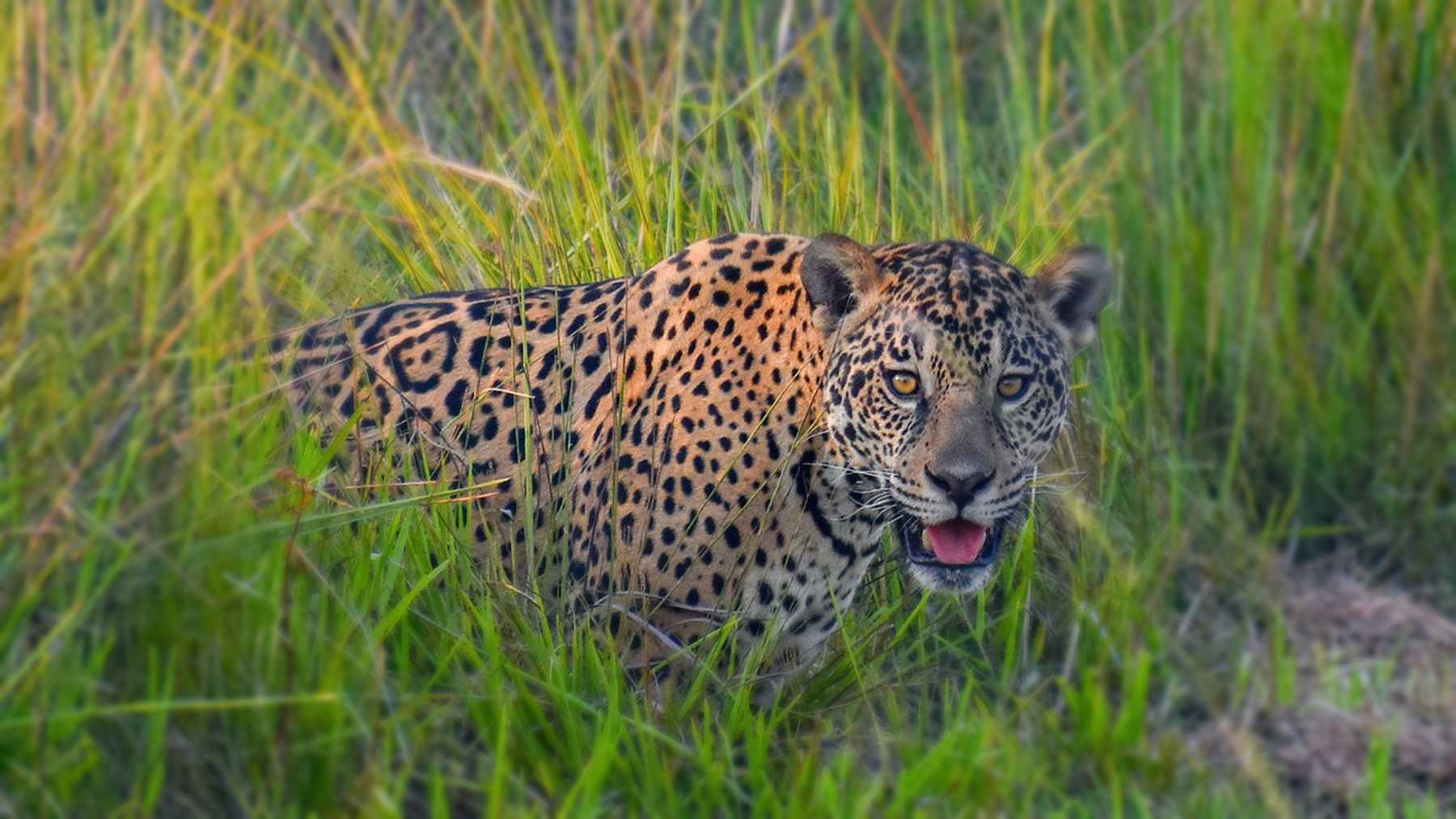
Argentina’s National Parks and the Rewilding Argentina Foundation have renewed their ten-year partnership in the Iberá Marshlands, in Corrientes. The National Parks Administration (APN) announced the renewal on October 16, 2026. The park now hosts more than 50 jaguars, a species that had been extinct in the province since 1953.
The agreement confirms and enlarges the work for the jaguar and the giant otter. Both predators had disappeared from these wetlands. It also sets commitments on nature-based tourism, research, and engagement with neighboring communities.
Coria, Álvarez y Tompkins en la firma del convenio
It is a framework cooperation agreement to restore natural environments and wildlife in Iberá National Park and Reserve. It also covers the public use of the area, according to the National Parks official note of October 16, 2026.
At the ceremony were the Deputy Chief of the Interior Cabinet, Gustavo Coria, and the APN president, Sergio Álvarez. On the private side attended Kristine McDivitt Tompkins, president of Tompkins Conservation. That organization gave rise to Rewilding Argentina.
For Álvarez, the balance of the last decade is “more than positive.”
He highlighted above all the jaguar reintroduction. He also recalled that the feline is endangered, is a National Natural Monument, and is the largest in the Americas.
158.000 hectáreas donadas al Estado en 2018
The relationship between the two parties goes back a long way. Rewilding Argentina purchased land in the area and donated it to the state. From those lands Iberá National Park was born in 2018, spanning 158,000 hectares. This national park, together with Iberá Provincial Park, forms what is known as the Gran Parque Iberá. Between the two, they total more than 756,000 hectares of wetlands, surrounded by Atlantic Forest, Chaco Forest, and grasslands. The national park accounts for a little over one-fifth of that total.
The foundation works there on reintroducing ten native species, from the giant anteater to the scarlet macaw. It also develops access portals and tourism services within the protected area.
Mariua, Karaí y Porá, la familia que abrió el camino
The jaguar reintroduction project began in 2012 with the construction of the Jaguar Reintroduction Center on San Alonso Island. There, individuals rescued in Brazil, such as the female Mariua, saved from poachers, were gathered.
Mariua bore two cubs in September 2020, Karaí and Porá. In January 2021 the family left the corrals. They were the first jaguars free in Iberá in about 70 years, according to Rewilding Argentina’s chronicle of that release.
Almost six years later, the APN speaks of “a healthy growing population” of more than 50 animals. Before reaching that figure, the first jaguars to reproduce in the wild in Iberá had arrived.
The jaguar is the main terrestrial predator of Iberá.
Rewilding Argentina regards it as a keystone species: when top predators are missing, natural environments degrade, the foundation explains. Another tool for studying these small populations is the jaguar’s new genetic map.
Nima y Coco, la pareja de nutrias gigantes liberada en 2025
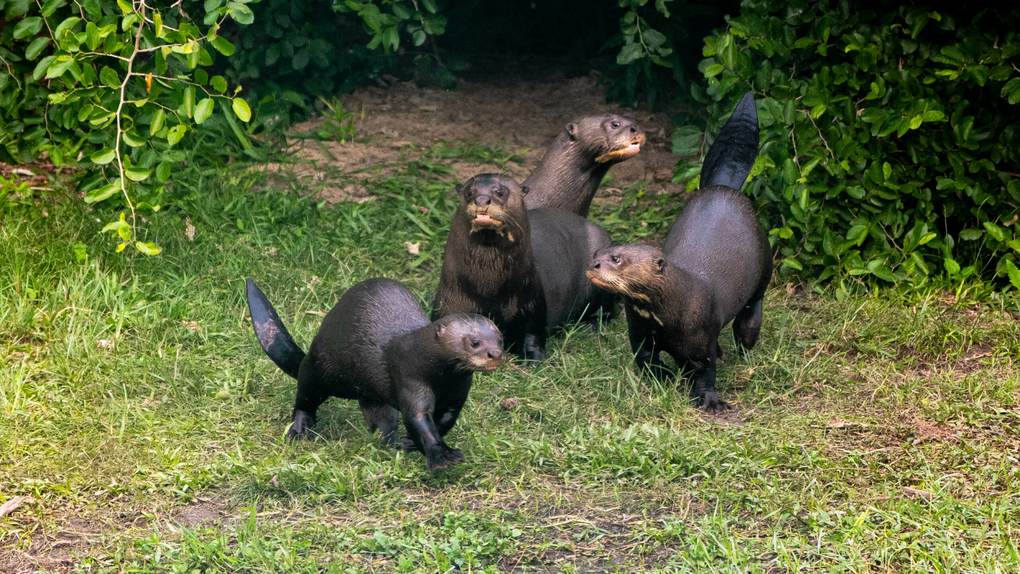
The agreement explicitly cites the giant otter (Pteronura brasiliensis). It is the largest otter in the world. It can measure up to 1.8 meters and weigh up to 33 kilograms.
In Argentina, the last family groups were seen in 1986. In 2025, Rewilding Argentina released into Gran Parque Iberá a four-member family: Nima, a female donated by Madrid Zoo, and her mate Coco, from Givskud Zoo (Denmark). With them came their two cubs, born in Iberá in November 2024.
Sebastián Di Martino heads Rewilding Argentina’s Conservation program. He explained at the time that the species is “the main aquatic predator of these wetlands.” It feeds almost exclusively on fish, which helps keep rivers and lagoons healthy. There are more details on the giant otter reintroduction in Argentina.
Guillermo Díaz Cornejo, now the APN Chief of Staff, also participated in the signing. In 2025, when he was a member of the APN board, he spoke of “the first time an effort is made to bring back a mammal species extinct in Argentina.”
De diez localidades turísticas a la cuenca del Paraná
The new agreement is not limited to wildlife. It includes tourism at the various entry portals and collaboration with neighboring communities. According to Rewilding Argentina, wildlife watching already serves as a major source of income for nearby towns. In 2019, the foundation counted ten localities with access to the Gran Parque Iberá.
Iberá is also the model the foundation aims to scale up. With partners in Brazil, Bolivia, and Paraguay it also promotes the Jaguar Rivers initiative, which seeks to reconnect the Paraná basin.
No budget or numerical targets in the official note
The official note does not publish the full text of the agreement. It also does not detail budget, numerical targets, nor the distribution of roles between the APN and the foundation.
It does not break down how many of the more than 50 jaguars were born in the wild or how many have been released from the enclosures. And it does not provide the current number of giant otters in the wetlands or their survival after release.
Beyond Iberá, the situation remains delicate. In 2021, Rewilding Argentina estimated that across the country there were between 200 and 300 jaguars surviving. The species had lost more than 95% of its distribution range. The more than 50 in Iberá represent roughly one-sixth to one-quarter of that national estimate, though the two figures come from different years.
The main source is the National Parks note published on Argentina.gob.ar on October 16, 2026. The otter data and the first jaguar releases come from Rewilding Argentina’s chronicles. According to the APN, the agreement will govern for the next ten years one of the country’s leading conservation projects.
Photo: Lucas Preliasco / Rewilding Argentina Foundation
