
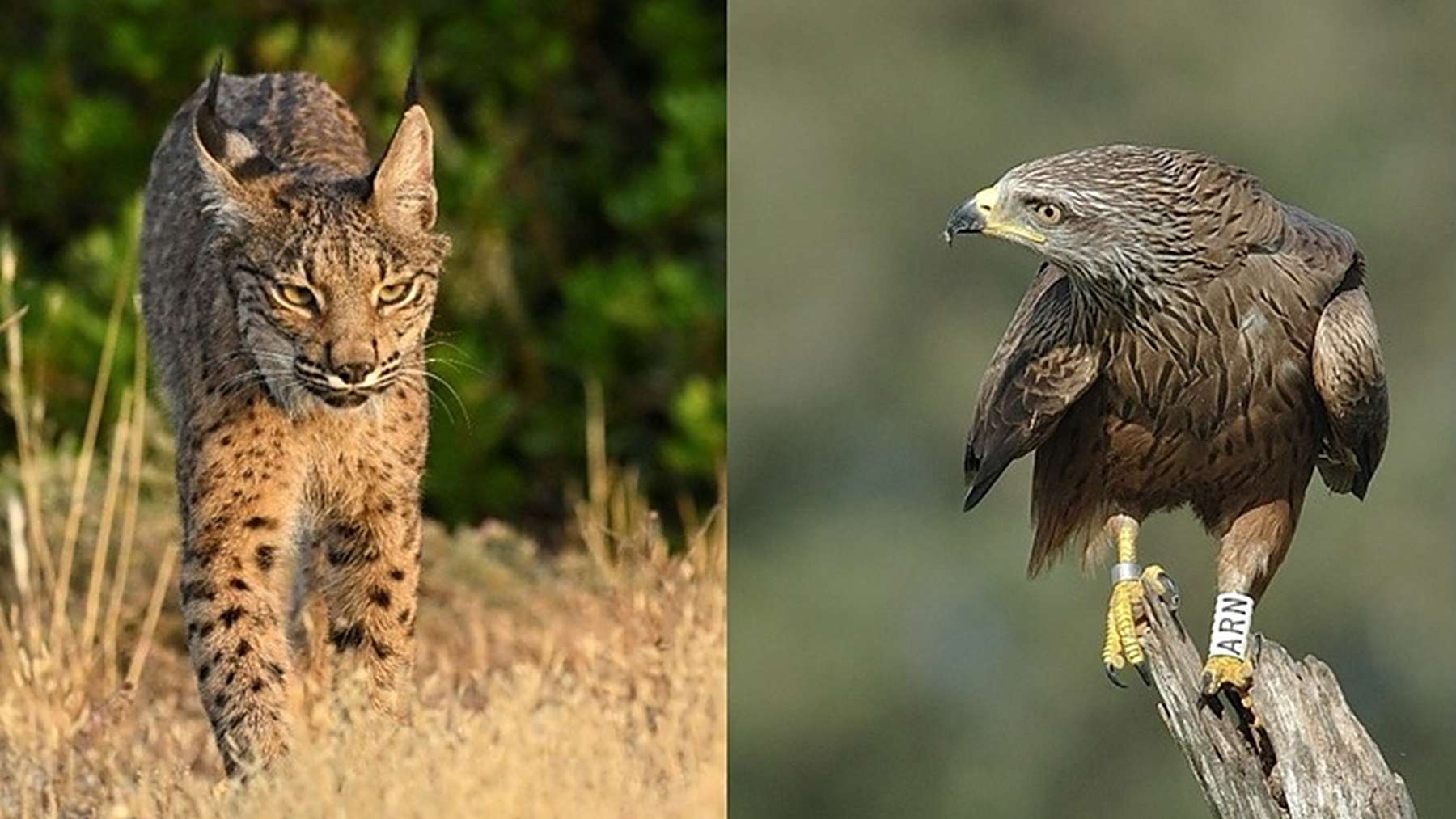
The Iberian lynx has begun preying on the black kite’s nestlings in Doñana, a raptor with which it had lived in peace. In 2018 it wiped out nearly half of its fledglings in the studied area. This is reported by a study from the Doñana Biological Station (EBD-CSIC) published on October 21 in Nature.
What changed? A disease collapsed the rabbits since 2013 and droughts emptied the marshes of ducks. The feline had no choice but to search for food about 12 meters above the ground.
1,624 Nests in Three Decades
Fabrizio Sergio’s team, a researcher at the EBD-CSIC and the first author, has been monitoring the two species since 1993. They work in a 10-square-kilometer sector of the park, where they inspected 1,624 black kite nests up to 2023. In that area there live between four and six adult lynxes and from 105 to 223 pairs of black kites, depending on the year.
The relationship remained tranquil for almost twenty years, with very few attacks. “Between 1993 and 2012, the lynxes had barely depredated 1% of the black kite nests,” explains Sergio. In numbers, 13 nests out of 904.
The two shared largely the same prey, rabbits, and there was enough for both. The black kite, a migratory raptor whose journeys have been tracked with GPS transmitters, hunts by day. The lynx hunts at night and at dusk.
A Virus That Emerged From a Farm
In 2013 a new variant of the rabbit hemorrhagic disease appeared. According to the study, it originated from a breeding farm in France and spread across the peninsula. In the Doñana area, rabbits fell by more than 70%.
For the lynx, that was a heavy blow, since rabbits accounted for 70–90% of its diet there. When they are scarce, it turns to the marsh’s aquatic birds, especially ducks. But what happens when the marsh itself runs dry?
Less Than One Rabbit Per Hectare
Nests were only attacked during the dry years. Moreover, there had to be fewer than one rabbit per hectare—the minimum the lynx needs to sustain itself. In the wet years, even if rabbits were scarce, it barely touched a nest.
Sergio explains that in those droughts the lynxes “are forced to feed on whatever they can find, even when it requires climbing 12 meters to reach a black kite nest.” And they do it well. With weights of 9 to 13 kilograms, the Iberian lynx is an excellent climber.
Each day, they patrol an average of about 8 kilometers of their territory. That is why no nest was safe, neither due to its height nor the parents’ experience.
Rabbit Remains Under the Nest
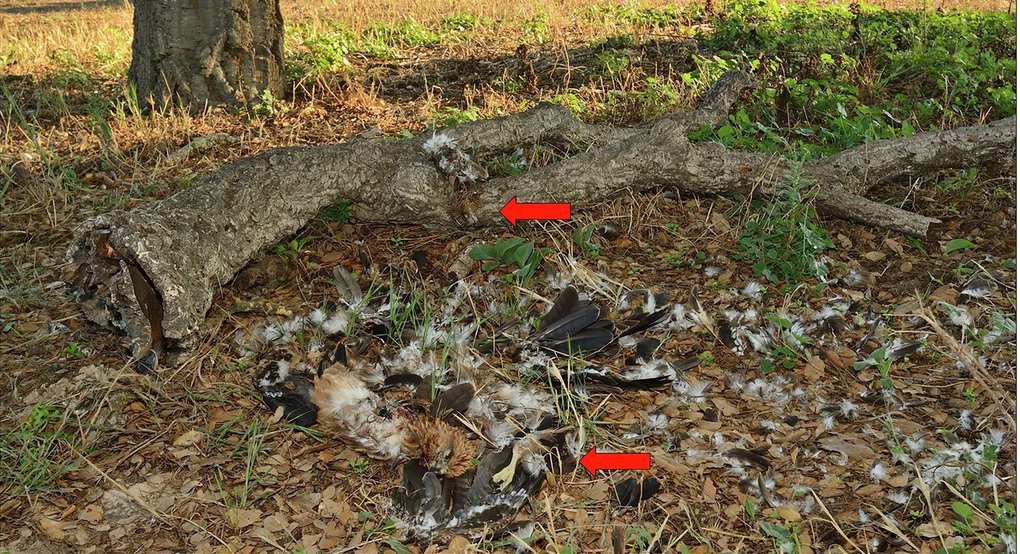
The most striking evidence appeared on the ground, beneath the trees. Under the attacked nests there were more than three times as many rabbit remains as under the others. Inside the nest, by contrast, there were no differences.
For the authors, the most likely explanation is that the feline removed a competitor from the scene. Something similar happens with domestic cats that kill lynxes. “In human terms, we could say that those black kites that dared to take food from the lynxes ended up paying a very high price,” sums up Sergio.
The impact on the black kites is evident in the figures. A fledged chick almost never dies, since they survive more than 97%. Yet in 2018 the lynx took almost half of the volantones (up to 46%, according to the article).
Black Kites on the Run, Little Owls on the Rise
The pairs that lost the brood were four times more likely to move to another territory the following year. Across their lifetime, they raised 27.7% fewer offspring because they could not compensate for the losses.
The attacked territories had triple the odds of remaining empty the next year. The remains of the volantones stayed visible for more than a month. And young black kites choose where to settle by looking at how others fared the previous year.
What benefited was the little owl, a small insect-eating bird that is preyed upon by the black kites. With fewer raptors above, its population grew. A domino effect, and in just two or three years.
A Missing Experiment to Confirm This
The team itself acknowledges that the idea of a removed competitor still needs experiments to confirm it. There is another explanation, that the lynx saw in those remains a signal of a nest with more food. But it fits less well, because those nests did not have more chicks.
To protect these predators, scientists call for rabbit recovery and ensuring that the Guadalquivir marshes are flooded. In the article they even propose giving extra food to the lynxes in drought years to curb attacks. The lynx, by the way, now totals 885 individuals in Sierra Morena, its largest core.
Sergio closes with a warning about science itself. “More and more, these long-term studies are being undermined, which will seriously weaken scientific progress in this field,” he warns. The study’s press release has been published on the CSIC website.
Photo: Fabrizio Sergio / EBD-CSIC
