
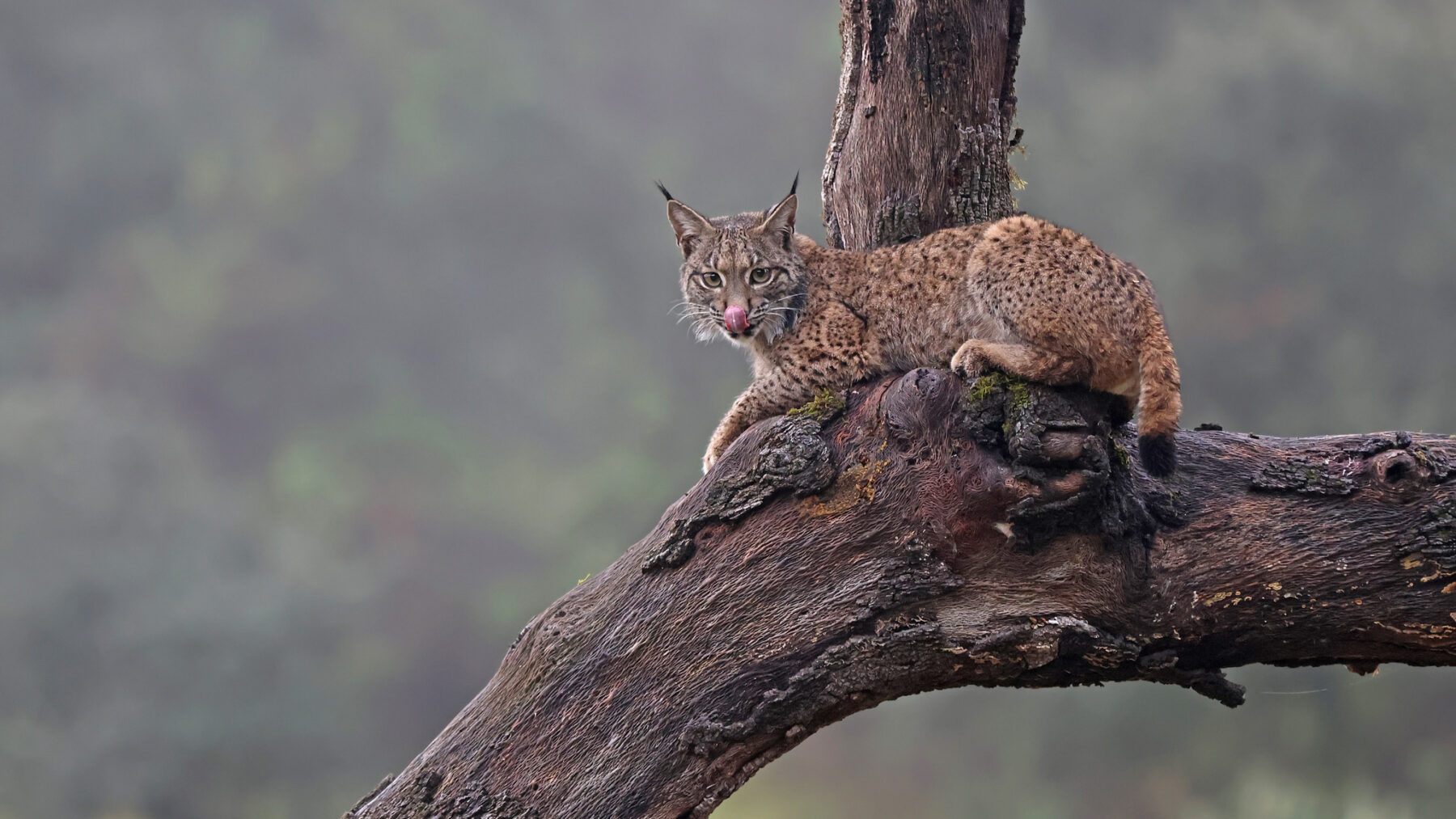
Spain and Portugal have 2,663 Iberian lynxes, according to the 2025 census report published by the Ministry for the Ecological Transition (MITECO) on June 5, 2026: 2,269 in Spain (85.2%) and 394 in Portugal. In 2002 there were fewer than 100, scattered across two isolated cores in Andalusia, Doñana and Andújar-Cardeña. This recovery led the International Union for Conservation of Nature (IUCN) to downgrade its threat level from “Endangered” to “Vulnerable” in 2024, although the Spanish legal catalogue still lists the species as endangered.
MITECO cautions in its press release that the figure is a minimum: it is increasingly difficult to record and identify every individual (they are distinguished by the pattern of their spots, which is not repeated among individuals). Of the total, 952 are cubs born in 2025. The population grew by 10.9% over the 2,401 lynxes recorded in 2024 and has nearly doubled since 2021, when there were 1,365.
What the Iberian Lynx Looks Like
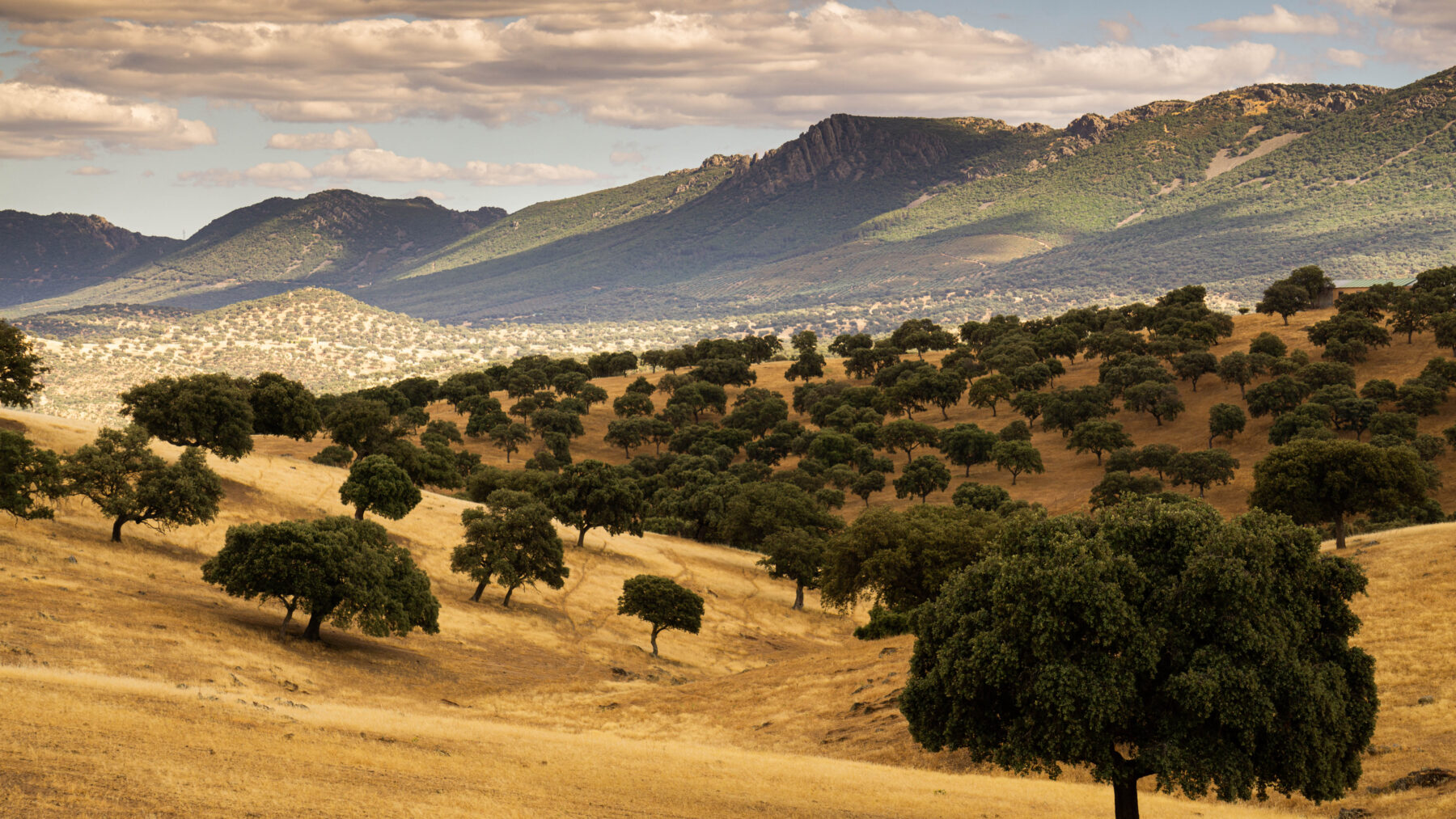
It is a medium-sized feline, with long legs and a short tail, with black-tipped ears, long whiskers, and a brownish coat speckled with black spots. Males weigh on average about 13 kilograms and females around 10, according to the Iberian lynx entry by National Parks. It is predominantly nocturnal and crepuscular, and lives in the Mediterranean scrub, between 400 and 1,300 meters above sea level (in Doñana, at sea level).
The mating season arrives in January and February and, after about 70 days of gestation, one to four cubs are born (the normal is two). Unlike Iberian animals that hibernate, the lynx remains active in winter, which is exactly when it mates. Each individual occupies a territory of 4 to 20 km², depending on its sex and the rabbit abundance in the area.
That wild rabbit is almost the lynx’s sole food, accounting for between 70% and 97% of its biomass, according to the MITECO Strategy for the Iberian lynx conservation. Thus, the lynx–rabbit predator–prey relationship is so close that rabbit epidemics curb the lynx’s growth.
A striking exception in the coat is the so-called Jaén white lynx. It is Satureja, a female born in 2021 and monitored by the Junta de Andalucía’s recovery program, which photographer Ángel Hidalgo filmed in October 2025 without its brownish-orange hue, though with the black spots (ECOticias reported the sighting with the first images). “It is not albinism nor leucism,” clarified Javier Salcedo, head of the recovery plan, according to Periódico de Ibiza: the change affects the skin’s melanin and its cause is not confirmed. In April 2026 she was photographed again while shedding and returning to tones closer to the usual, healthy appearance, and accompanied by a cub, according to El Español. The same outlet notes a precedent: another female, named Inés, also lost color and regained it after shedding.
Where It Lives: The Map of Its 26 Core Populations
The 2025 census finds lynxes in 26 population cores, and in 18 of them there was offspring (17 in Spain and one in Portugal).
| Territorio | Linces en 2025 | Principales núcleos (ejemplares) |
|---|---|---|
| Castilla-La Mancha | 1.051 | Montes de Toledo (527), Sierra Morena Oriental de Ciudad Real (356), Sierra Morena Occidental (105-113) |
| Andalucía | 885 | Sierra Morena Oriental, en Jaén y Córdoba (613), Doñana-Aljarafe (133), áreas de conexión de Sierra Morena (61), Campiña del Guadalquivir (44) |
| Portugal | 394 | Vale do Guadiana (394) |
| Extremadura | 302 | Matachel, en Badajoz (178-179), Valdecañas-Ibores (52), Ortiga (49) |
| Región de Murcia | 19 | Tierras Altas de Lorca (19) |
| Castilla y León | 11 | Cerrato palentino (11) |
| Comunidad de Madrid | 1 | Un macho solitario |
Fuente: informe del censo de lince ibérico 2025 (MITECO). Algunos núcleos llevan horquilla, tal como figuran en el informe.
Sierra Morena is the backbone of the species: between Andalusia and Castilla-La Mancha it totals 1,145 lynxes, according to the MITECO press release, a figure already included in the totals for those two regions. The nucleus that has gained the most individuals since 2021 is Montes de Toledo, which rose from 221 to 527 in 2025, according to LIFE LynxConnect.
The Guadiana nucleus is Portuguese: Vale do Guadiana holds all of the country’s population, with 394 lynxes and 129 cubs. Castile and León enters the census for the first time, Murcia now has 19 individuals and in Madrid a solitary male has been counted. Aragón carried out its first presuelta (an adaptation enclosure prior to release) on 17 March 2026 in the Huerva basin, according to the Government of Aragón, and it does not appear in the 2025 census.
Of the national parks where it lives, such as Doñana, only Doñana has a core with breeding, which the census counts together with the Aljarafe of Seville. Monfragüe has 3 individuals and Cabañeros 2, with no breeding in either, and the census treats Cabañeros as a stopover point between cores.
The one that does not live in Spain is the boreal or European lynx (Lynx lynx), another species, which used to inhabit Cantabria, the Basque Country and the Pyrenees. The last reliable records on the Spanish side of the Pyrenees date from the early 20th century, and according to the MITECO fact sheet on the European lynx the species could be considered extinct in the country. The Iberian lynx (Lynx pardinus) is exclusive to the peninsula.
How Many Iberian Lynxes Remain: From Under 100 to 2,663
| Año | Linces | Hembras reproductoras | Cachorros |
|---|---|---|---|
| 2002 | Menos de 100 | 31 | Sin dato |
| 2020 | 1.111 | 239 | 414 |
| 2021 | 1.365 | 277 | 500 |
| 2022 | 1.668 | 326 | 562 |
| 2023 | 2.021 | 406 | 722 |
| 2024 | 2.401 | 470 | 844 |
| 2025 | 2.663 | 542 | 952 |
Fuente: MITECO (informe del censo 2025, nota del censo 2020 y Estrategia de conservación) y proyecto LIFE LynxConnect.
The population first surpassed one thousand in 2020 and 2,000 individuals in 2023. The conservation objective is focused mainly on reproductive females, which numbered 542 in 2025 (72 more than in 2024), with an average of 1.75 cubs per territorial female: 2.1 in Castilla-La Mancha and 1.5 in Andalucía.
Vulnerable According to the IUCN, Endangered Under Spanish Law
Whether it remains or not depends on the list consulted, and two labels coexist:
- IUCN Red List: Vulnerable, since June 20, 2024. Until then it appeared as “Endangered.”
- Spanish Catalogue of Threatened Species: Endangered. It is the category with legal effects (Royal Decree 139/2011) and this is how it is reflected in the MITECO Strategy. The order that updated the catalogue in May 2025, Order TED/452/2025, does not mention the lynx.
The jump in 2024 was from “Endangered,” and not from “Critically Endangered,” as has been published: it moved to “Critically Endangered” in 2002, with about a hundred individuals, and left in 2015, according to the MITECO Strategy. The IUCN relied on the fact that mature individuals rose from 62 in 2001 to 648 in 2022 and that the area occupied grew from 449 km² in 2005 to at least 3,320 km². In his note, Francisco Javier Salcedo Ortiz, coordinator of the LIFE Lynx-Connect project, described the case as the greatest recovery of a felid species achieved thanks to conservation.
How It Was Saved from the Edge of Extinction
In the first half of the 20th century, populations north of the Central System, the Iberian System and the Mediterranean arc disappeared, and since 1950 the lynx was cornered in the southwest quadrant of the peninsula. The MITECO Strategy attributes this to persecution, roads, habitat loss and fragmentation, and the decline of the rabbit, which suffered from myxomatosis (since 1950), rabbit hemorrhagic disease (since the late 1980s) and its GI.2 variant (since 2011), with mortalities of up to 90%.
Recovery involved more than 50 public and private institutions, with an investment of more than 100 million euros, according to the Strategy. There were four major EU LIFE projects, the most recent one being LynxConnect (2020-2025). Captive breeding relied on four dedicated centers, El Acebuche (Huelva), La Olivilla (Jaén), Silves (Portugal) and Zarza de Granadilla (Cáceres), plus the Zoobotánico of Jerez, and the first litter was born in 2005. The IUCN counts more than 400 lynxes reintroduced since 2010, and between 2021 and 2025 releases ranged from 29 to 40 per year, according to LIFE LynxConnect.
The rest of the work was carried out in the field. According to the Strategy, with 2021 data: agreements with more than 300 estates, improvements in more than 266,000 hectares, 200,000 rabbits released to reinforce prey populations, and at least 54 exchanges of individuals between nuclei.
What Still Threatens the Iberian Lynx
Road accidents are its primary cause of death. Of the 273 lynx deaths recorded in 2025, 212 (77.7%) were road kills on roads and tracks, according to the census report; 13 were due to disease (feline leukemia or parvovirus), 9 to shooting or illegal persecution, 4 to drowning in irrigation basins, and in 32 cases the cause is unknown. Castilla-La Mancha, with 86 road kills, and Andalucía, with 80, account for the majority.
The rabbit remains the bottleneck. The Strategy states that hemorrhagic disease “continues to control” their populations and limits the lynx’s growth, and the IUCN, which classifies the European rabbit as “Endangered,” adds risks such as domestic cat diseases, poaching and climate change. Doñana-Aljarafe recalls that progress is not guaranteed: it rose from 94 lynxes in 2021 to 133 in 2024 and in 2025 remains at 133.
The goal to give the species a favorable conservation status is to reach by 2040 750 reproductive females, or 1,500 mature individuals, in connected populations. With the 542 females counted in 2025, 208 remain.
