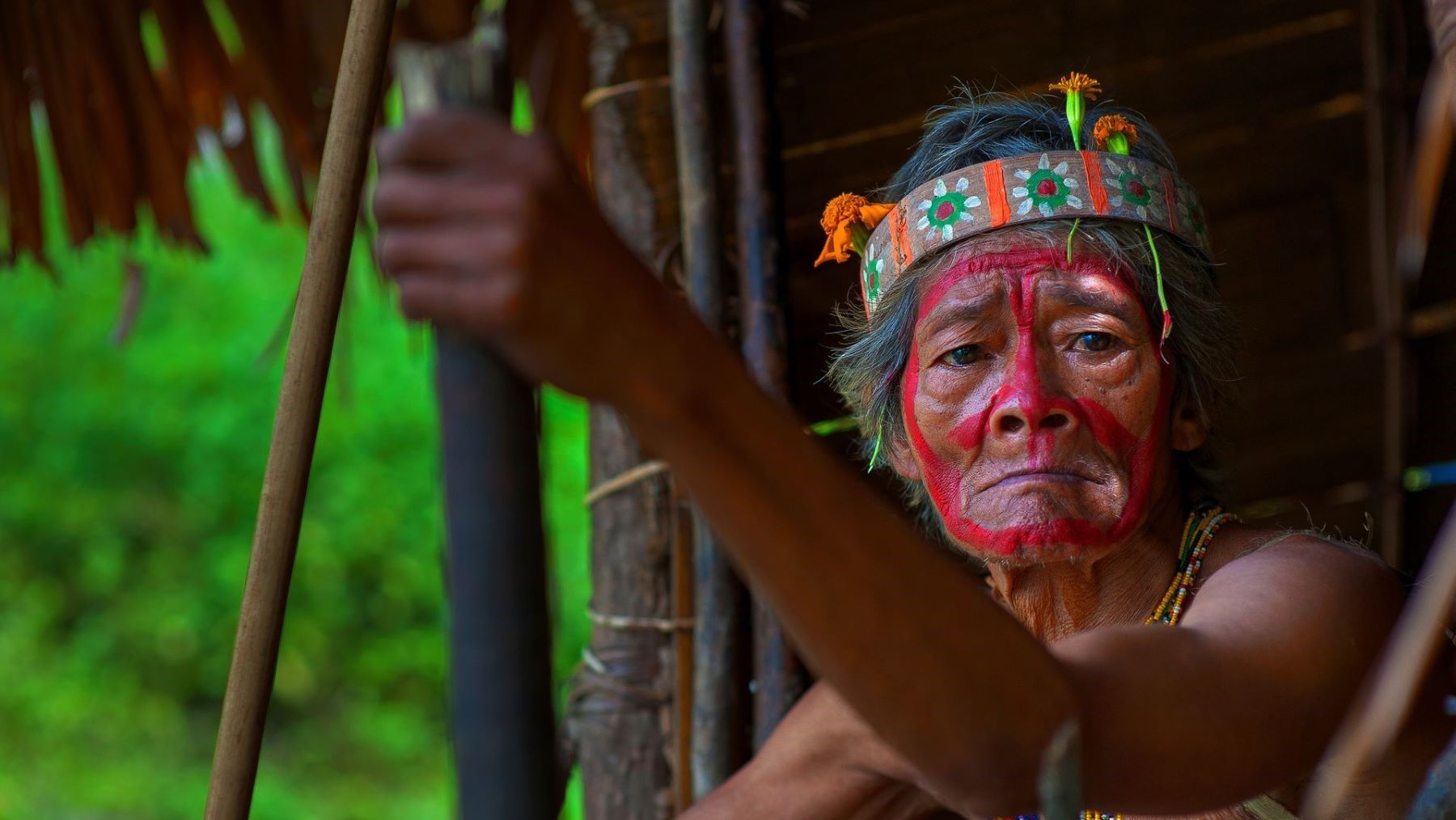
Indigenous representatives from 16 countries denounce conservation projects and carbon credits as green colonialism, arguing that they restrict their territorial rights.
Nairobi, the capital of Kenya, has been chosen as the venue for a gathering of more than 60 representatives from 26 Indigenous peoples spread across 16 countries. The “green colonialism” has been the focus of the meeting and debate, and they demand the return of ancestral lands seized without their consent for projects that transform their territories.
The leading figures of Indigenous communities from Africa, Asia and Latin America affirmed that true environmental conservation is part of their ancestral traditions. They also criticized projects such as REDD+ and the interference of major international organizations in limiting their hunting and fishing activities, practices they have relied on for thousands of years to survive.
Green Colonialism
More than 60 representatives from 26 Indigenous peoples across 16 countries denounced this Friday in Nairobi, the capital of Kenya, that the “green colonialism” hides camouflage conservation projects and carbon offset schemes, which in reality serve to expropriate their lands, and they demanded “the return of ancestral lands” transformed into nature parks and reserves.
The representatives, coming from Africa, Asia and the American continent, participated from September 21 to 25 in the gathering “Our Land, Our Nature” (OLON, in English), presented by the organizers as the first global Indigenous meeting to “decolonize” biodiversity conservation.
“True conservation is part of our traditional systems,” they stated in a declaration dubbed the “Nairobi Indigenous Pronouncement” and presented at a press conference in the Kenyan capital.
“Ecosystems do not belong to us; it is we who belong to them,” they added as they called for the return of their ancestral lands and the self-determination of their communities.
They denounced that their territories are being transformed without their consent into national parks, reserves or projects linked to carbon and biodiversity credits.
For this reason they not only reject carbon and biodiversity credits, but also REDD+ projects (Reducing Emissions from Deforestation and Forest Degradation), geoengineering and the so-called fortress conservation (which excludes human communities from protected areas).
The connections between Latin America, Africa and Asia
“Our territories are not wastelands, they are not sacrifice areas, they are living territories, managed by us,” affirmed Luis Canelos, president of the Kichwa nation of Pastaza in the Ecuadorian Amazon.
Canelos highlighted that learning from the experiences of other continents allows communities to “prepare themselves” against conservation initiatives that, in his view, may curtail their rights and their own forms of governance.
From Argentina, Jorgelina Duarte, of the Tamanduá community of the Mbya Guaraní people of Misiones, underscored the importance of building alliances to address common problems faced by Indigenous peoples worldwide.
“Despite all the oppression, the colonialism and the imperialism that still exist in our countries, we continue to resist,” declared Jorgelina.
Duarte noted that the experiences of African and Asian communities are particularly useful for Latin America in the face of the expansion of carbon-credit projects.
“They come to tell us stories that they already lived through while we are just beginning the fight against those big companies in our territories,” she stressed.
For her part, Marisol García Apagüeño, of the Túpac Amaru community of the Kichwa people in the Peruvian Amazon, denounced that the creation of a protected natural area in her territory has hindered land-title concessions and restricted traditional activities.
“We cannot hunt, we cannot walk freely, we cannot fish and we cannot even connect with our deities.” “We depend one hundred percent on the land. We are the forest,” she added.
The declaration is a critique of several organizations such as the World Wide Fund for Nature (WWF), the Wildlife Conservation Society (WCS), the International Union for Conservation of Nature (IUCN) and the United Nations Educational, Scientific and Cultural Organization (UNESCO), among others, and it demands respect for territorial rights and transparency about their carbon and biodiversity agreements.
Meanwhile, it calls on governments to legally recognize the communities and their lands, to annul imposed projects without consent, to release those detained for defending their territories, and to repair historical injustices.