
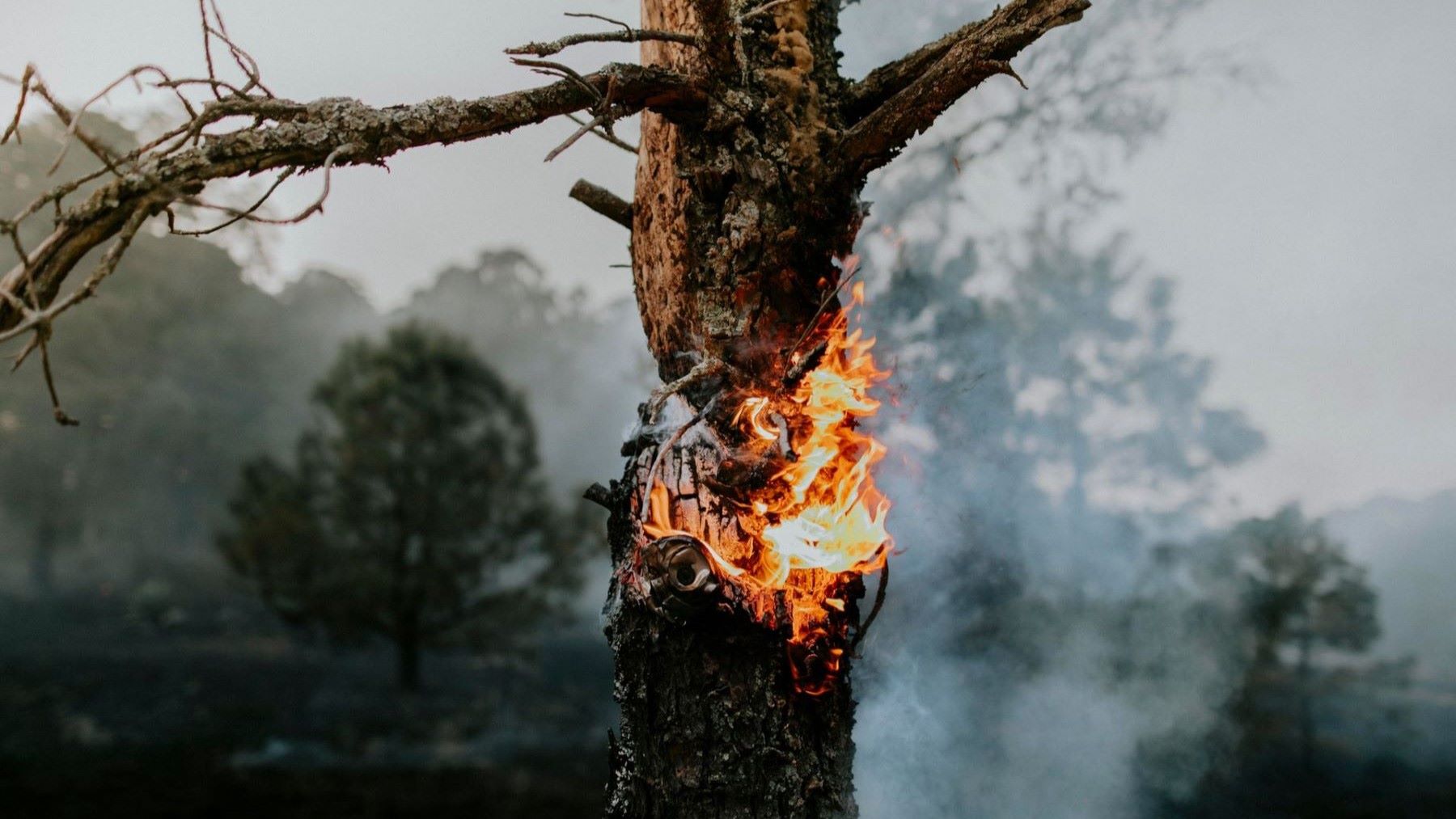
The fires in Indonesia are wreaking havoc across the region, with nearly two million hectares burned in 2026, according to Nusantara Atlas’s satellite estimates. Now, the smoke from these fires has crossed borders and is impacting the air quality of neighboring nations.
The platform places the affected area at 1,916,588 hectares, pending a more up-to-date official tally. A major factor has been the fuel provided by the expansive palm oil plantations across the country; the dense smoke produced has ended up affecting almost all of Southeast Asia.
But underground lies an even more serious issue: peatlands continue to burn, even after the surface flames have been extinguished. This can spark new outbreaks and complicate firefighting efforts.
The fires in Indonesia
The number of hectares scorched this year by forest fires in Indonesia is approaching two million hectares, amid a wave of blazes across several regions of the country that has sparked public outcry and environmentalists’ criticisms of the government in the epicenter of the global palm oil industry.
The fires have razed 1,916,588 hectares so far in 2026, in the provinces of the island of Borneo (Kalimantan, in Indonesian), whose land is largely devoted to the palm oil sector — of which Indonesia is, along with Malaysia, the world’s largest producer — making them among the hardest hit, according to Nusantara Atlas.
The agency, which monitors the progression of the blazes through satellite imagery analysis, estimates that the burned area has grown substantially in the last two months, in the absence of official figures on the magnitude of the disaster.
The number of active hotspots recorded this year by Nusantara Atlas reaches 1.14 million, higher than the 885,037 logged in 2019, regarded as the worst year for burned hectares, with more than 2.6 million.
According to authorities, 95.85% of the fires occur on palm oil plantations and, without naming names, the government reported dozens of corporations sanctioned, closed, or under investigation for their alleged involvement in the fires.
The blazes have produced a toxic haze that has reached neighboring countries such as Malaysia, Brunei, Singapore, the Philippines, or Vietnam, and cities like Kuala Lumpur or Singapore have recently topped IQAir’s ranking of the world’s most polluted urban air cities.
According to Greenpeace, roughly 40 million people have breathed that polluted air, and cases of respiratory illnesses have surged in Indonesia, prompting several organizations to pressure the government of Southeast Asia’s largest economy to declare the problem a national disaster.
On Sunday, emergency crews dropped 2.4 tonnes of dry ice from aircraft in an attempt to improve air quality and help extinguish the fires.
These fires typically take place in peatlands—wetlands that are drained for palm oil cultivation—and they continue to burn underground when ignited, making surface water insufficient for extinguishing them, a situation worsened by the drought linked to the El Niño climate phenomenon.
