
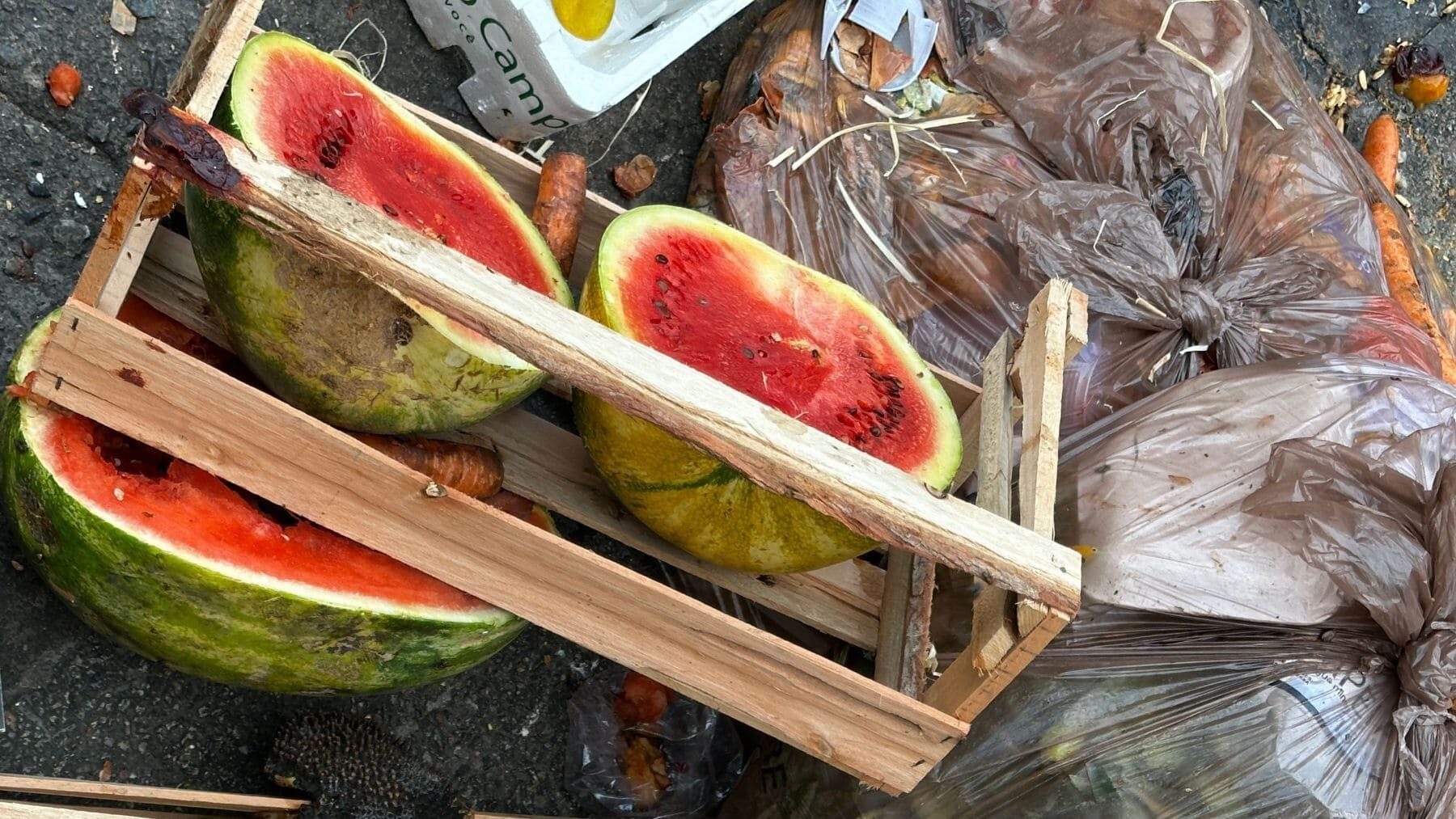
On the International Day of Awareness of Food Loss and Waste 2026, the UN urges tackling food waste to ensure that the global food system remains sustainable.
Discarding items that are still safe for consumption means unnecessarily wasting the food and the resources used to produce it. Losses are linked to transport and storage, while waste occurs in homes and in hospitality and retail outlets. A good example is differentiating between the expiry date and the best-before date, which helps ensure that many safe products are not thrown away.
The tonnes of food that end up in landfills generate enormous amounts of methane, which is a potent greenhouse gas and a major driver of global warming. Reducing this practice also lowers air pollution while improving household finances and helping to combat hunger among the most vulnerable communities.
Through innovative technological solutions, the circular economy aims to convert food leftovers into other products such as fertilisers, animal feed, or biogas. Digital platforms and environmental education are promoting the donation of surplus and encouraging more responsible consumption, something particularly highlighted on the International Day of Awareness of Food Loss and Waste 2026.
International Day of Awareness of Food Loss and Waste 2026: an urgent call to make the most of every food
On 29 September each year, the International Day of Awareness of Food Loss and Waste 2026 is observed, an initiative proclaimed by the United Nations General Assembly to bring attention to one of the biggest challenges of the global food system.
While millions do not have guaranteed access to adequate food, enormous amounts of edible products are discarded every day. This reality has consequences that go far beyond food.
Wasting food means wasting water, energy, fertile soil, economic resources and human labor, in addition to increasing greenhouse gas emissions. Reducing this kind of loss is an international priority if we want to move toward a model that is more just, efficient and sustainable.
International Day of Awareness of Food Loss and Waste 2026: two problems that are not the same
Although they are often used as synonyms, the food loss and the food waste are two different situations that require very specific solutions. This is the main focus that the International Day of Awareness of Food Loss and Waste 2026 should have.
Food loss occurs during the early stages of the food chain, from agricultural production to storage, transport or distribution. Factors such as the lack of infrastructure, logistical problems, extreme weather events or deficiencies in preservation lead to many foods never reaching the consumer.
On the other hand, food waste occurs mainly in supermarkets, restaurants, shops and homes, when, due to poor purchasing planning, confusion between the expiry date and the best-before date, and inadequate leftover management (due to negligence or lack of knowledge), products that are perfectly safe for consumption end up in the trash and then to landfills.
A global drama with dire environmental and social consequences
The FAO (Food and Agriculture Organization of the United Nations) estimates that approximately one third of the world’s food produced each year is lost or wasted. According to the UN’s Food Waste Index Report for 2024, in 2022 alone 1.05 billion tonnes of food were wasted, and 60% of them originated from households.
The impact of these figures is especially troubling on the International Day of Awareness of Food Loss and Waste 2026, especially considering that around 783 million people suffer from hunger and a large portion of the world’s population lives in food insecurity. Making better use of available foods would help improve access to food and reduce inequalities.
Beyond social impact, food waste poses a major environmental problem. And that is one of the reasons why the International Day of Awareness of Food Loss and Waste 2026 exists.
Foods that end up in landfills require enormous amounts of resources (water, land, energy, labor, etc.) to end up as methane, a greenhouse gas far more potent than CO2 in worsening global warming.
Reducing waste helps curb climate change
Experts estimate that food waste accounts for between 8% and 10% of global greenhouse gas emissions, a figure that far exceeds the emissions from some of the best-known industrial sectors. These are data that should be considered on the International Day of Awareness of Food Loss and Waste 2026.
For this reason, reducing loss and waste of food stands out within the Sustainable Development Goal 12, focused on promoting responsible production and consumption patterns.
The SDG 12.3 states that before 2030 the world must halve food waste, both at the retail level and in households. It also calls for reducing losses that occur in manufacturing and distribution.
International institutions agree that reaching this goal will reduce pressure on natural resources, lower pollutant emissions and strengthen food security in a context of population growth and the advance of climate change. A joint effort will someday render the celebration of the International Day of Awareness of Food Loss and Waste 2026 unnecessary.
What can we do on the International Day of Awareness of Food Loss and Waste 2026 and the rest of the year?
On the International Day of Awareness of Food Loss and Waste 2026 there is a sustained emphasis that tackling this problem requires action across the entire food chain, from the field to the table. International bodies strive to ensure that this is fulfilled.
In homes, every small action can make a big difference. Plan grocery shopping, check the pantry before heading to the store, freeze portions that won’t be consumed immediately, store foods properly and make the most of leftovers—these simple, applicable measures help significantly reduce the amount of food that ends up in the trash.
It is also essential to understand the difference between the best-before date and the expiry date. While the former relates primarily to quality, the latter is linked to food safety. Knowing the difference prevents many foods from being discarded unnecessarily.
The circular economy and innovation offer new solutions
There are unavoidable food surpluses, but there are alternatives that allow us to use them before they become waste. Food donation is one of the most effective tools to reduce waste while supporting people in vulnerable situations.
The circular economy is of great importance on the International Day of Awareness of Food Loss and Waste 2026 because it opens up new opportunities. Organic leftovers can be transformed into compost, natural fertilizers, but also into animal feed or in biogas, a renewable energy source.
Mobile apps that connect businesses with consumers enable selling surplus at lower prices. There are also platforms that facilitate food donation and there are smart sensors to monitor the freshness of products. These innovations help reduce losses at various points along the food chain.
Education will be key to changing our consumption habits
Why does the International Day of Awareness of Food Loss and Waste 2026 exist? Because experts agree that reducing food waste does not depend solely on new laws or technological advances.
It is also essential to foster greater food education from an early age and promote more responsible consumption habits. Hence the importance of celebrating the International Day of Awareness of Food Loss and Waste 2026.
Schools, businesses, universities, and public administrations develop campaigns that aim to raise awareness among the population about the value of food, the effort and resources required to produce it, and the environmental impact of wasting it.