
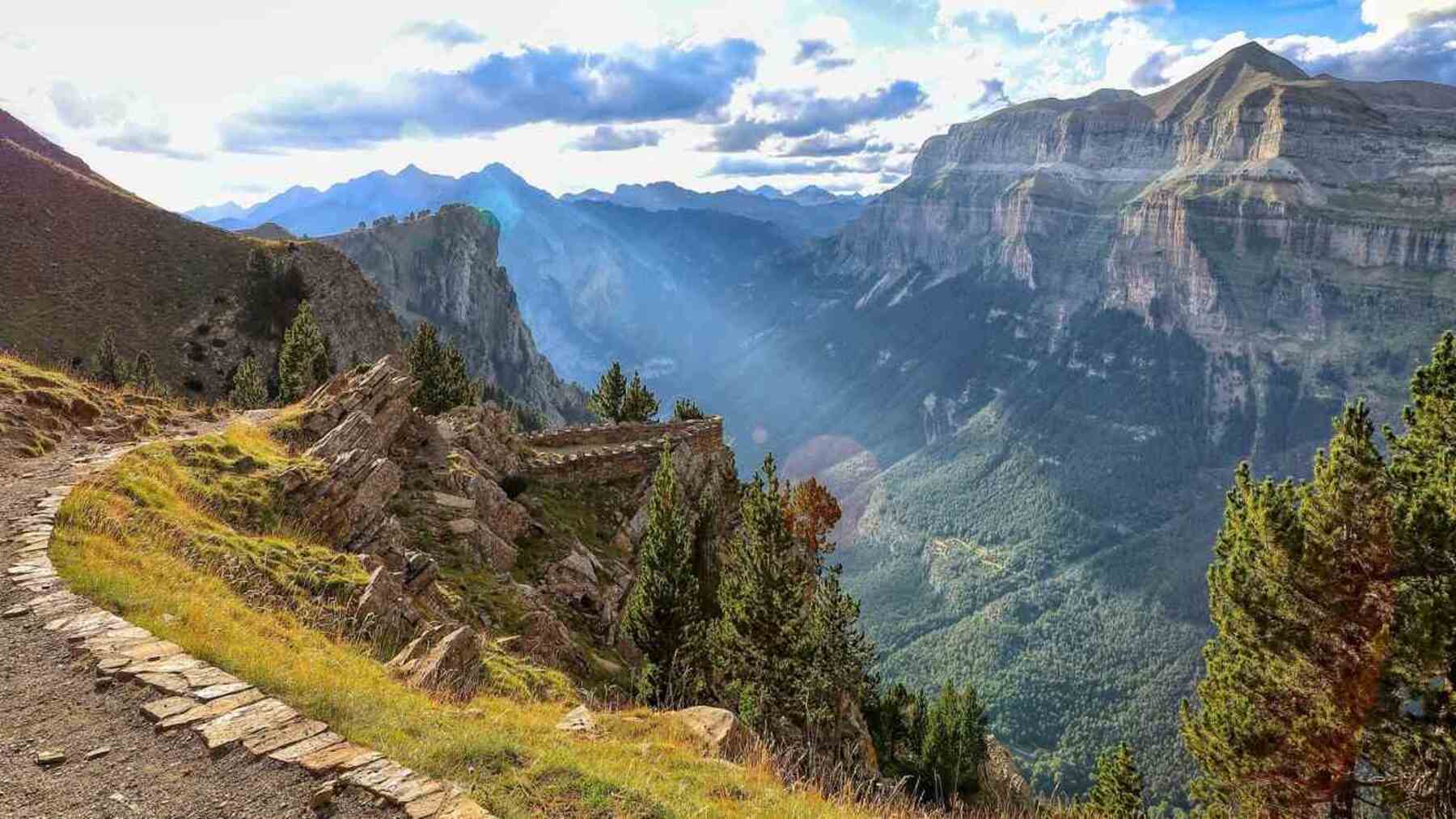
When we talk about geodiversity, we should not have to travel to far-off places; nearby we can find examples in soils, rocks, rivers, or the landscapes that surround us. Today, October 6, International Day of Geodiversity 2026 is a call to reflect and pause to get to know the story told by our immediate surroundings.
The theme of this edition, «Geodiversity On Our Doorstep» («Geodiversity at the Doorstep»), shifts the focus to things that are not usually visible at a glance—such as a river, a coastline, a hillside, or even the ground we walk on. All of this constitutes geological heritage that explains how the territory has been formed. And with this global initiative the aim is to celebrate and recognize this natural diversity without the need to travel to a volcano or an extraordinary landscape.
A day proclaimed by UNESCO in 2021 and that concentrates on rocks, minerals, fossils, soils, and the processes that transform the Earth. Therefore, as we will explain in this article, understanding them offers us more natural resources, the ability to anticipate risks, and protection for the spaces where biodiversity thrives.
What is celebrated on the International Day of Geodiversity 2026?
The IUGS (International Union of Geological Sciences), together with more than 100 organizations, had already advocated for the establishment of this date. Its objective was to help raise global awareness of the enormous importance of geodiversity. Both for the preservation and care of the environment, and for nearly all human activities.
Geodiversity or geological diversity is a neologism that refers to the non-living part of the planet. This includes what lies on the surface as well as what is found inside the Earth.
Geodiversity encompasses minerals, rocks, fossils, soils, sediments and geographic features. It also includes the Earth’s topography and hydrological characteristics (seas, rivers, lakes, etc.). The term “geodiversity” also includes all those processes that create and modify the aforementioned features.
There is a need for a better understanding of geodiversity and its auxiliary sciences. Therefore, teaching it is essential to address the most urgent environmental challenges. Such as the management of natural resources, the mitigation of climate change, and sustainable development.
What is geodiversity good for?
Geodiversity or geological diversity is a neologism that refers to the non-living part of the planet. This encompasses both what lies on the surface and what is within the interior of the planet.
Rocks, minerals and geological processes play a major role in regulating natural processes. A river flows or dries up largely thanks to the geological makeup of its bed. Sediments and stones are the primary elements involved in filtering waters. And they are the ones that safeguard the health of aquifers.
The formation of soil directly depends on the natural alteration experienced by minerals and rocks. These processes are essential for the agricultural exploitation of substrates. Therefore it is vital to keep soils protected in order to prevent erosion.
The diversity of geological resources and their distribution also influences the well-being of human beings. Since ancient times rocks and minerals have been put to countless uses. Knowing them, extracting them and working them has been fundamental for the economic, social and cultural development of humankind.
The sciences have focused on investigating geomorphological and geological processes. These studies are highly relevant when it comes to preventing natural disasters—such as volcanic eruptions, earthquakes, landslides, tsunamis, etc.—and they are also significant for managing the consequences of these events, planning land use, pursuing sustainable urbanization, and much more.