
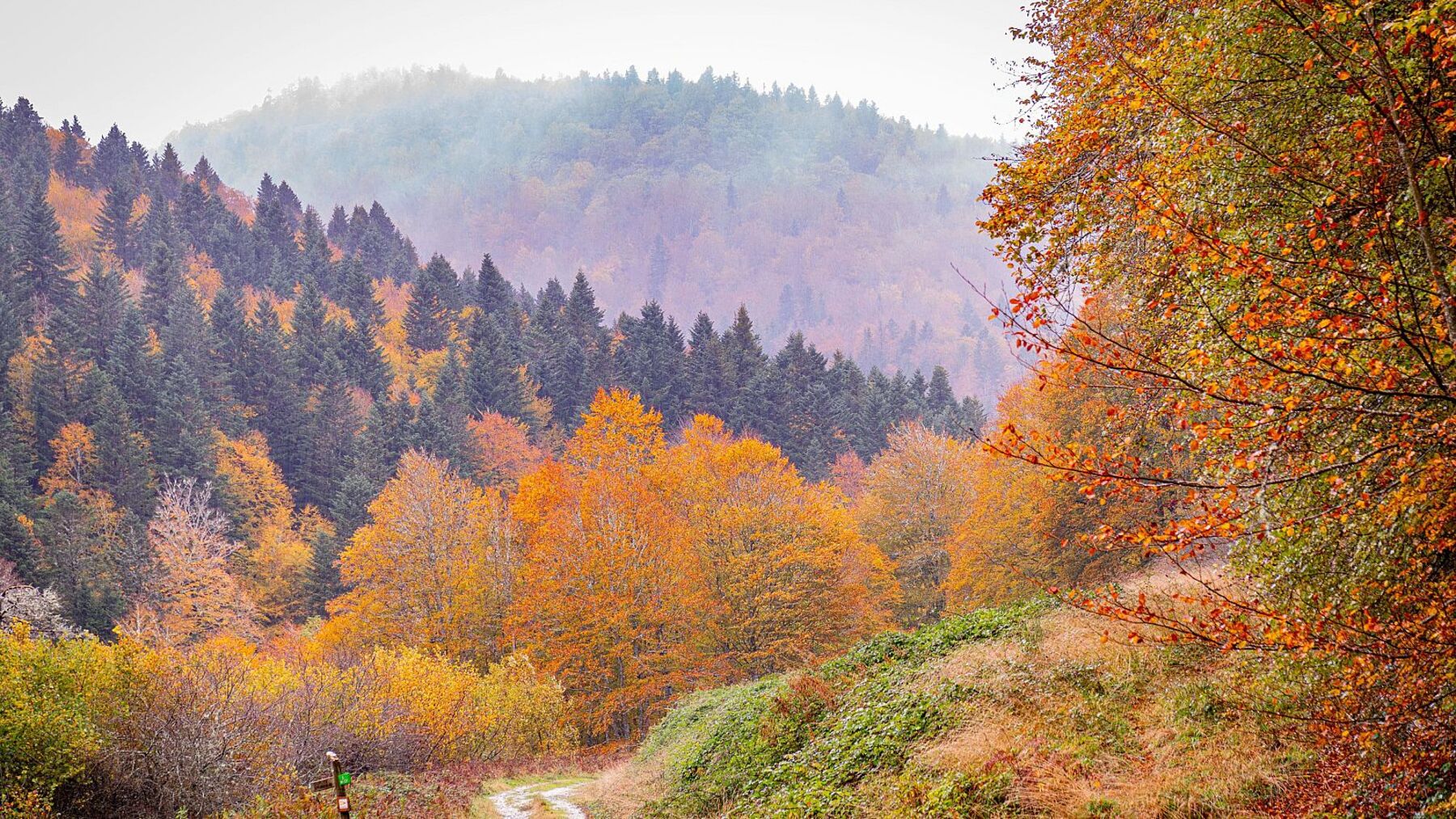
Spain celebrates the International Day of Biosphere Reserves, on November 3, as an opportunity to recognize the value of these spaces in biodiversity conservation and sustainable development.
The country counts 55 Biosphere Reserves recognized by UNESCO, distributed across 16 of the 17 autonomous communities, which places Spain at the forefront worldwide of this network.
These territories represent a model of coexistence between nature and human activity. Their aim is not only to protect ecosystems, landscapes and species, but also to foster economic activities compatible with the surroundings, preserve cultural heritage and improve the quality of life of their inhabitants.
Among these spaces stand out places such as Urdaibai, Doñana, Sierra Nevada, Menorca, La Palma, Picos de Europa or the recent Biosphere Reserve of Irati. Four of the Spanish reserves have cross-border status: three share territory with Portugal and one with Morocco.
The day, proclaimed by UNESCO in 2021, reminds us that conserving biodiversity also means promoting research, environmental education and local economies. The 55 Spanish reserves thus show that protecting nature and keeping territories alive are goals that can move forward hand in hand.
The International Day of Biosphere Reserves
Today November 3, 2025 is the International Day of Biosphere Reserves 2025. These areas form a global network of sites where biodiversity conservation is pursued for the benefit of local communities, and in Spain there are currently 55, across 16 autonomous communities.
This is an important date for people to understand the challenges of safeguarding biodiversity, the richness of the biosphere, the threats it faces, its essential function, its organization, its distribution, its missions and its role in the sustainable development process.
Biosphere Reserves are sites designated by UNESCO as part of its program “Man and the Biosphere”, better known as Mab, whose aim is to promote sustainable territorial development projects that reconcile the social and economic development of populations, the conservation of biological diversity, and, more generally, environmental protection.
Scientific research, monitoring, training, education and awareness contribute to achieving the planned objectives. Therefore, this global and cross-cutting action program contributes to the implementation of the 2030 Sustainable Development Goals endorsed by the United Nations.
Functions and zones of biosphere reserves
Biosphere reserves involve local communities and all stakeholders in planning and management. They integrate three main functions:
- Conservation of biodiversity and cultural diversity.
- Sustainable economic development at the sociocultural and environmental level.
- Logistical support, development support through research, monitoring, education and training.
These three functions are carried out in the three main zones of biosphere reserves.
- Core Zone: it is a strictly protected area that contributes to the conservation of landscapes, ecosystems, species and genetic variation.
- Buffer Zones: surround or border the core zones and are used for activities compatible with good ecological practices that can enhance scientific research, monitoring, training and education.
- Transition Zone: is where communities promote economically and socially and ecologically sustainable activities.
Biosphere reserves are ‘learning places for sustainable development’. They serve to test interdisciplinary approaches that allow understanding and managing the changes and the interactions between social and ecological systems, including the prevention of conflicts and biodiversity management. They are places that offer local solutions to global challenges.
Networks of the Biosphere in Spain (RERB)
Biosphere reserves involve local communities and all stakeholders in planning and management.
The set of Spanish biosphere reserves designated by UNESCO constitutes the RERB (Red Española de Reservas de la Biosfera) which for 2024 totaled 55 protected areas spread across the national territory.
Of the 17 autonomous communities, 16 host at least one Biosphere network (the only one without any is Murcia). Additionally, four of them are cross-border, of which 3 are shared with Portugal and there is an intercontinental one with Morocco.
List of the Spanish biosphere reserves by designation date
- Sierra de Grazalema (Andalusia), 1977
- Ordesa-Viñamala (Aragon), 1977
- Montseny (Catalonia), 1978
- Doñana (Andalusia), 1980
- La Mancha Húmeda (Castilla-La Mancha), 1980
- La Palma (Canary Islands), 1983
- Sierra de Cazorla, Segura y las Villas (Andalusia), 1983
- Marismas del Odiel (Andalusia), 1983 (expanded in 2017)
- Urdaibai (Basque Country), 1984
- Sierra Nevada (Andalusia), 1986
- Cuencas Altas de los ríos Manzanares, Lozoya y Guadarrama (Madrid), 1992
- Lanzarote (Canary Islands), 1993
- Menorca (Balearic Islands), 1993
- Sierra de las Nieves (Andalusia), 1995
- Cabo de Gata-Níjar (Andalusia), 1977
- Isla de El Hierro (Canary Islands), 2000
- Somiedo (Asturias), 2000
- Muniellos (Asturias), 2000
- Las Bárdenas Reales (Navarra), 2000
- Redes (Asturias), 2001
- Terra do Miño (Galicia), 2002
- Dehesas de Sierra Morena (Andalusia), 2002
- Valle de Laciana (Castile and León), 2003
- Picos de Europa (Asturias-Cantabria-Castile y León), 2003
- Monfragüe (Extremadura), 2003
- Valles de Leza, Jubera, Cidacos y Alhama (La Rioja), 2003
- Babia (Castile and León), 2004
- Gran Canaria (Canary Islands), 2005
- Allariz (Galicia), 2005
- Sierra del Rincón (Madrid), 2005
- Alto Bernesga (Castile and León), 2005
- Los Argüellos (Castile and León), 2005
- Valleys of Omaña and Luna (Castile and León), 2005
- Os Ancares Lucenses y Montes de Cervantes, Navia y Becerreá (Galicia), 2006
- Ancares Leoneses (Castile and León), 2006
- Sierras de Béjar y Francia (Castile and León), 2006
- Intercontinental del Mediterráneo (Andalusia, Spain/Morocco), 2006
- Río Eo, Oscos y Terras de Burón (Asturias-Galicia), 2007
- Fuerteventura (Canary Islands), 2009
- Transfronteriza Gêres-Xurés (Galicia, Spain/Portugal), 2009
- La Gomera (Canary Islands), 2012
- Las Ubiñas-La Mesa (Asturias), 2012
- Mariñas Coruñesas e Terras do Mandeo (Galicia), 2013
- Terres de l´Ebre (Catalonia), 2013
- Real Sitio de San Idelfonso-El Espinar (Castile and León), 2013
- Macizo de Anaga (Canary Islands), 2015
- Meseta Ibérica (Castile and León, Spain/Portugal), 2015
- Tajo-Tejo internacional (Extremadura/Portugal), 2016
- Ponga (Asturias), 2018
- Alto Turia (Castilla-La Mancha, Valencian Community), 2019
- La Siberia (Extremadura), 2019
- Valle del Cabriel (Valencian Community, Castilla-La Mancha, Aragón), 2019
- Ribeira Sacra e Serras do Oribio e Courel (Galicia), 2021
- Val d’Aran (Catalonia), 2024
- Irati (Navarra), 2024
Designation as a biosphere reserve is accompanied by a monitoring process that allows evaluating its evolution: every ten years its functions, zoning and the participation of the local population are reviewed. UNESCO regards this process as an opportunity to examine results, detect difficulties and improve management. That review turns international recognition into an ongoing task: conserving ecosystems, assessing which initiatives work, and adjusting decisions so that their benefits also reach those who inhabit the territory.
