
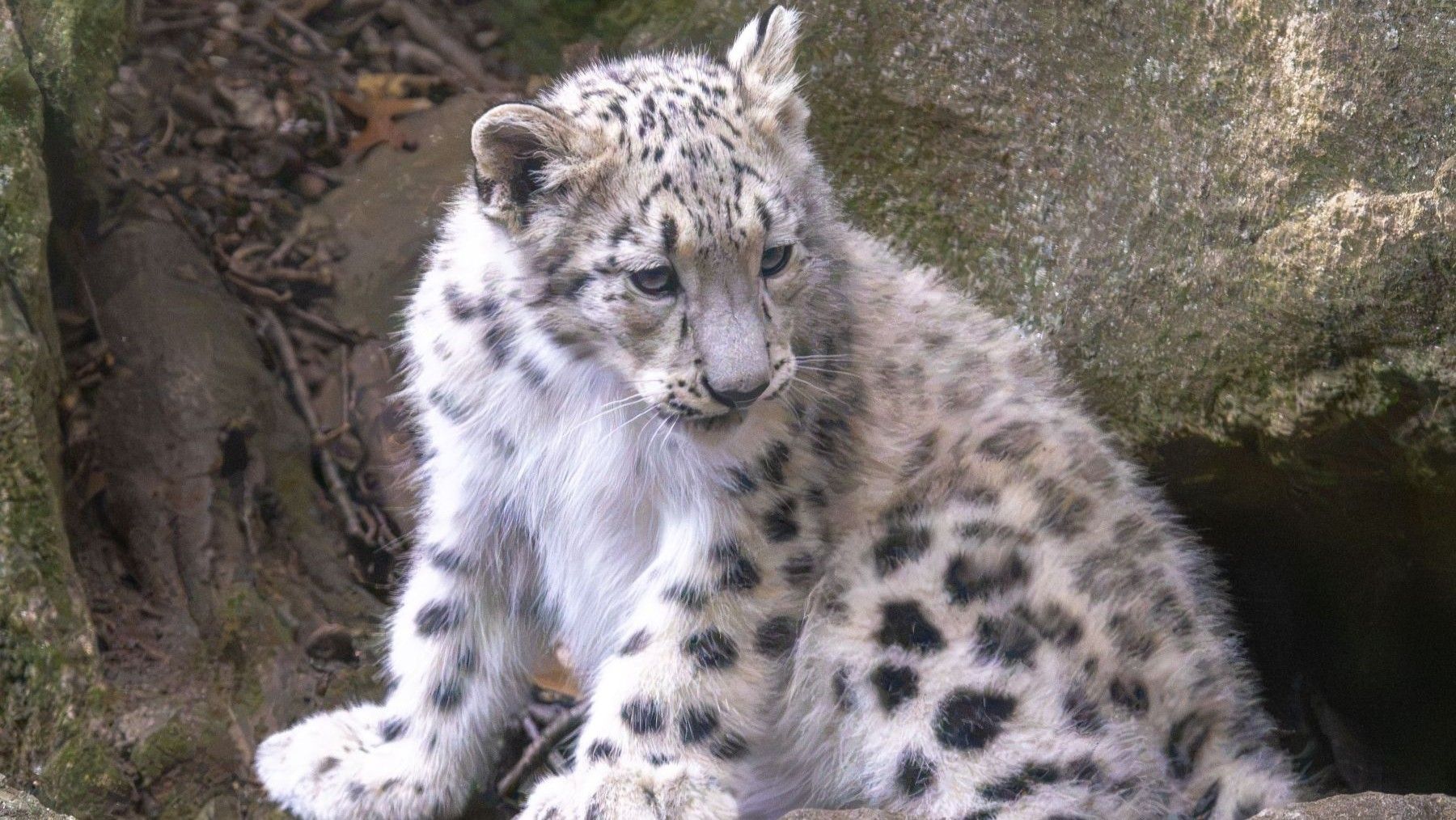
October 23 is the International Snow Leopard Day, which focuses on this elusive mountain-dwelling feline in Asia that is threatened by poaching, the depletion of its prey, and conflicts with livestock.
The snow leopard is a feline capable of nearly “disappearing” among the snows and the sheer cliffs where it lives, yet it falls prey to poaching that is reducing the number of individuals left across Asia, which is the only continent where it dwells. That endemism is one of the reasons why the International Snow Leopard Day has been established.
The idea behind the International Snow Leopard Day, celebrated every October 23, is not only to ensure that this animal, which the IUCN has classified as vulnerable, stops being hunted, but also to conserve healthy and connected habitats, without which it is irremediably doomed to disappear.
The snow leopard, whose scientific name is Panthera uncia, is known in the 12 Asian countries in which it lives (the largest populations are spread across China, Pakistan, Nepal or Mongolia) as the ‘ghost of the snows’, due to its solitary nature.
The International Snow Leopard Day seeks to raise awareness about this animal, the pressures it faces, and aims to promote a meeting among locals who defend their livestock, so that they look for mitigating measures and learn to live alongside this majestic creature, rather than kill it.
Why is International Snow Leopard Day Important?
Every October 23, the snow leopard becomes the focal point to raise awareness about its vulnerability to extinction and to underscore the importance of its conservation. The International Snow Leopard Day promotes concrete actions to protect this species and its habitats, fostering cooperation among governments, NGOs and local communities.
The first International Snow Leopard Day was celebrated on October 23, 2014 with the aim of stopping poaching and strengthening the efforts of mountain communities where these felines live, so that they work together to protect wild habitats.
Solitary and Elusive
Scientifically known as Panthera uncia, it is a solitary animal that inhabits the mountain ranges of central and southern Asia, at elevations between 900 and 5,500 meters.
The snow leopard is highly elusive and rarely visible, which is why it is commonly called the “ghost of the mountains.” It prefers rugged, rocky, and uneven terrain, and often seeks shelter near cliff ledges, rich in natural vegetation.
To adapt to the mountainous environment, the snow leopard has developed distinctive features: a very long tail for balance and broad paws that help it move with ease on snow and rock. Moreover, on International Snow Leopard Day, let us remember that its fur provides near-perfect camouflage.
Despite its name, these felines are more closely related to tigers than to leopards. The remaining snow leopard populations are mainly concentrated in China and Mongolia, but they can also be found in Nepal, India, Pakistan, and Russia.
At the Top of the Food Chain
Snow leopards, as apex predators, sit at the top of the food chain and therefore have few natural enemies besides humans. Their presence plays a crucial role in controlling ungulate populations, which are their primary prey, thereby contributing to the overall health of the environment.
Their predatory activity not only influences the dynamics of the species they feed on, but also sustains the stability of the entire ecosystem. Therefore, protecting these magnificent felines is essential to ensure their survival and to preserve the well-being of the mountainous habitats in which they live. And that is one of the goals of the International Snow Leopard Day.
Conservation Status of the Snow Leopard
Snow leopards are listed as endangered on the International Union for Conservation of Nature (IUCN) Red List of Threatened Species. The global snow leopard population is estimated to be between 4,000 and 6,500 individuals and is expected to decline by about 10% by 2040.
The main factor driving the decline in snow leopard populations is human activity, as this majestic and solitary feline is directly affected by poaching—mainly for its skin, but also for its bones used in traditional Chinese medicine—and indirectly by prey loss due to overhunting by humans.
One of the goals of the International Snow Leopard Day is to prevent poaching, carried out by locals to defend their livestock. Habitat has become reduced and fragmented, and ongoing climate change looms as an additional threat to this species.
The Snow Leopard as a Key Biological Indicator
Snow leopards play a valuable ecological role in maintaining biodiversity and ensuring the health of ecosystems. As apex predators, they influence the population dynamics of species further down the food chain.
These felines are indeed considered indicators of the health of mountain ecosystems. Predator-centered conservation is essential to maintain species richness and to ensure both productivity and stability of ecosystems.
That is why it is so important to have the International Snow Leopard Day: to raise awareness of their important role in their habitat and to ensure that, setting aside superstitions, locals understand that there are other methods to protect their livestock and stop hunting them.
