
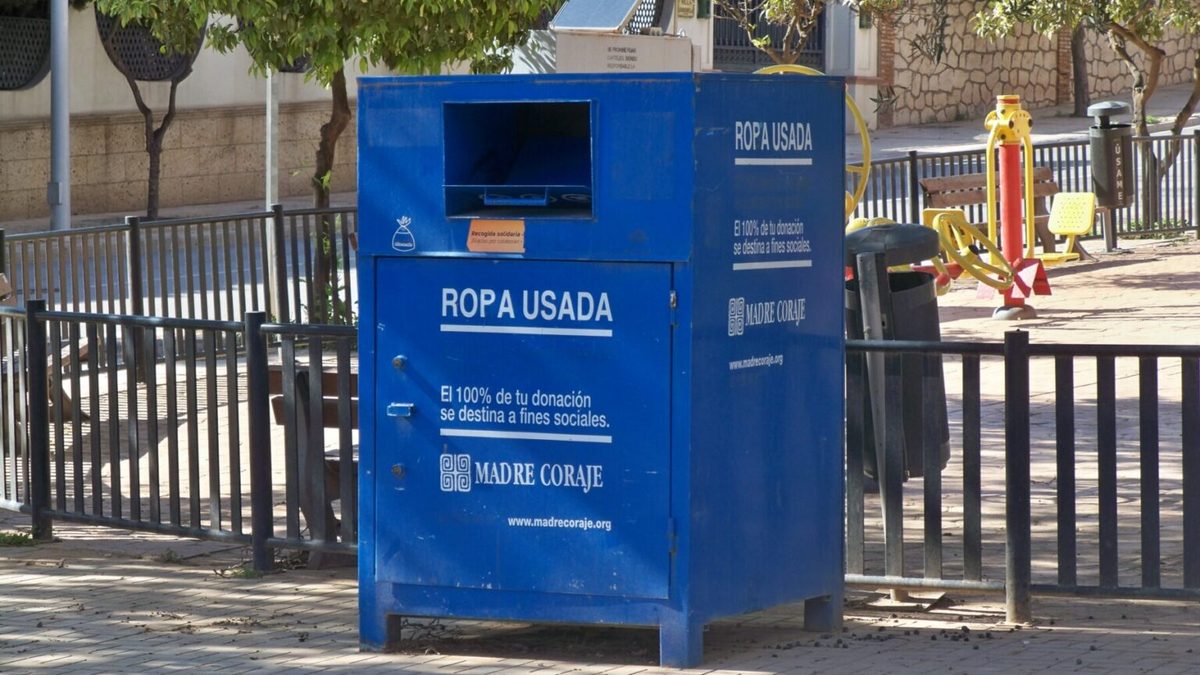
The collection of used clothing carried out by social organizations in their containers has fallen by 7% since 2024, to around 8,000 tons, according to Juan Antonio Pedreño, president of the Spanish Confederation of the Social Economy Enterprises (CEPES). He attributes this decline to many municipalities having withdrawn funding for a service that the law requires them to provide starting in January 2025.
His warning, published by El Periódico on November 20, comes after Cáritas removed its containers in Toledo and Talavera de la Reina at the end of October. Pedreño told that newspaper that those 8,000 tons amount to what a mid-sized Spanish city would discard in two years, and he summed it up this way: “Collecting one kilogram of clothing today costs more than the income it yields.” The figure is CEPES’s estimate, which has not published a report detailing its methodology, although it aligns with the sector’s size, since 8,000 tons represent slightly less than 7% of what was collected in 2024.
That year, however, collection had grown. According to the Moda re- report, the cooperative driven by Cáritas, presented in May (available at this link), in 2024 a total of 118,952 tons of textiles were collected separately, or 2.45 kilograms per inhabitant. They were 18.7% higher than in 2021 and were distributed across nearly 30,000 containers.
The model had been sustained by selling reusable clothing, but the average price of used clothing leaving Spain has fallen from 0.68 to 0.52 euros per kilogram between 2015 and 2024 (HS code 6309 in international trade, according to the same report), while fuel, waste management, and wages are rising. Additionally, 80.5% of what is collected ends up outside the country, according to the balance of the same report.
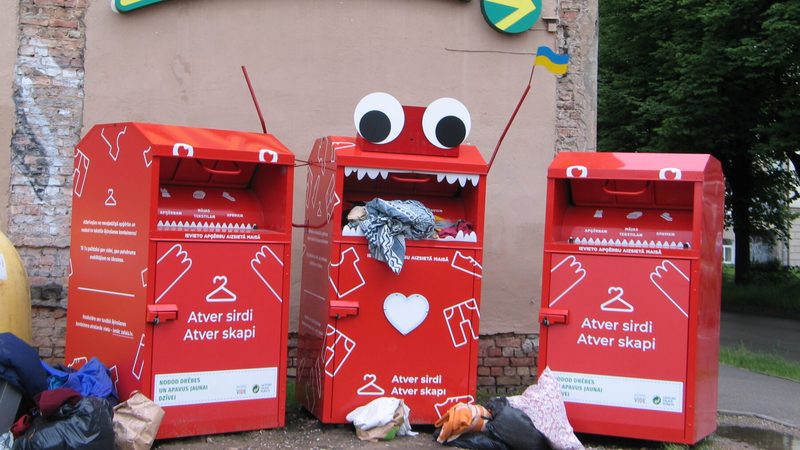
A Municipal Obligation Beginning January 2025
The Law 7/2022 on waste and contaminated soils obliges local entities, in its Article 25, to establish separate collection of “textile waste before December 31, 2024” (this link to the BOE can be consulted). Social entities manage more than 60% of that collection and are asking that someone cover the difference until Extended Producer Responsibility (EPR) takes effect—the system by which brands that place clothing on the market fund its management.
Moda re- had warned in May that, “while the producers’ responsibility system is being developed, it is even more urgent for local administrations to activate contracting and financing mechanisms to prevent shifting an increasing economic burden onto the sector without a stable framework for compensation.” Its general director, Noema Paniagua, went further in the note presenting the report: “We are at a turning point for the sector, and the data clearly show that we need to accelerate the transition toward a truly circular textile model.”
The royal decree that must implement that RAP for clothing and footwear was opened for public information in July 2025 and, according to a spokesperson for the Ministry for Ecological Transition quoted by El Periódico, “is currently before the Council of State.” The CNMC had already questioned in a May report whether it was reasonable to wait until January 1, 2029, for producer financing obligations to begin. Meanwhile, CEPES is urging the Government to provide a “bridging funding” to cover that gap.
What is at stake, besides the tonnage, is employment, as the Moda re- report estimates that the sector’s social entities employ more than 3,700 workers, more than 90% of the total. Pedro Sáez, the general director of the Amiab Social Group, spoke to El Periódico about nearly 4,000 jobs held by people with disabilities or in vulnerable situations at risk.
Each Spanish person generates about 19 kilograms of textile waste per year, according to Moda re-, and only 13% is collected separately. In this way, every container removed from the street pushes a little more of that clothing toward the residual fraction, the gray bin, where the remaining 87% ends up.
