
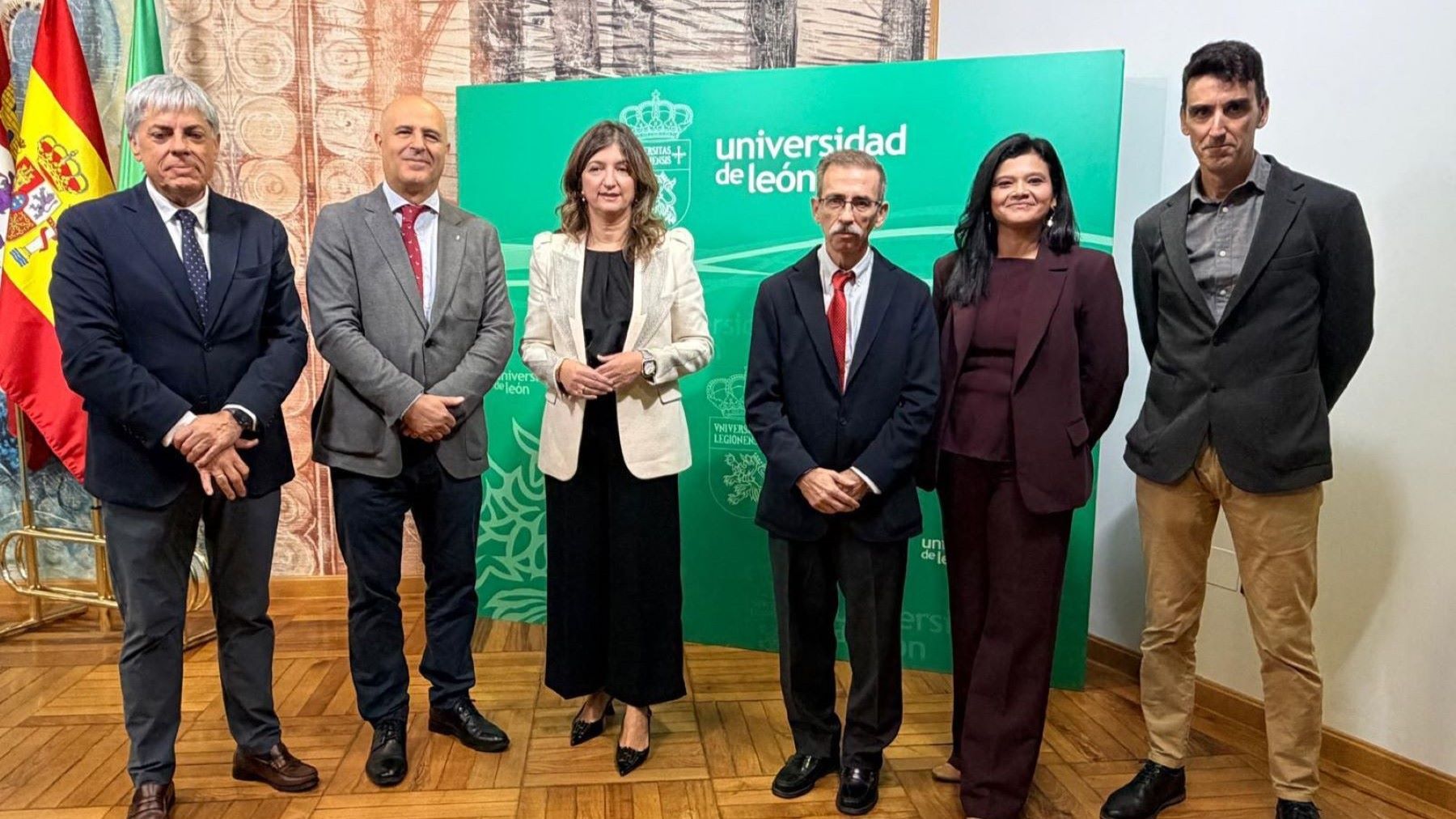
The University of León brings together specialists to analyze a storage technology whose development requires studying geology, managing water resources, and ensuring electrical grid connectivity.
Having electricity available when solar or wind generation declines is one of the major challenges of the energy transition. Reversible plants allow storing energy by pumping water and retrieving it later to generate electricity. The University of León has placed this technology at the heart of INNOVAMIN’26, a session that explores territorial opportunities and the requirements for developing these infrastructures.
The operation of these plants connects two reservoirs located at different elevations. The facility uses electricity to raise water to the higher reservoir and, when generation is needed, returns it to the lower one through turbines. This cycle enables transferring part of the available energy to a later moment.
In León, the galleries, wells, caves, and reservoirs must be tailored to the terrain’s characteristics. Therefore, the conference addresses geotechnics, underground construction, water management, and environmental integration to facilitate these restoration works.
In 2024, the IDAE included a project for a new reversible plant in Torre del Bierzo among the beneficiaries of its first call for pumping subsidies. That support shows the interest in developing energy storage in the province.
The Reversible Hydroelectric Plants
The University of León (ULE) has positioned the province as one of the regions with the greatest potential to drive large-scale energy storage infrastructures through reversible hydroelectric plants, a technology considered strategic to support the growth of renewable energies.
The commitment was showcased at the technical conference INNOVAMIN’26, which brought together, for the first time at the University of León, researchers, professionals, companies, and representatives from various administrations to address the technological, geological, and engineering challenges associated with this type of installations.
The rector of ULE, Nuria González, has argued that the School of Mining Engineering aims to open new lines of research and collaboration in a field with significant development opportunities and growing relevance for the energy future.
During the opening, the vice-councillor for Environment and Energy, Jorge Llorente, stressed that the region has a high capacity for wind, solar, and hydro generation, as well as orographic conditions and water resources that could favor the deployment of such projects.
He explained that it also benefits from a combination of factors that strengthen its possibilities, including accumulated experience in mining and engineering, knowledge in energy and hydraulic disciplines, and the talent fostered by the universities.
In this sense, he explicitly pointed to León as a territory especially well positioned to develop new initiatives linked to energy storage.
The Energy Transition Is the Way Forward
Llorente noted that the deployment of these infrastructures can generate economic activity and employment within the framework of the energy transition, although he warned that it also requires addressing issues related to financing, energy planning, administrative procedures, and the expansion of the electrical grid.
For his part, Augusto Rodríguez, the coordinator of the Geological and Mining Institute of Spain in León, highlighted that building reversible plants entails significant underground infrastructures such as galleries, shafts or caverns, in addition to reservoirs and dams, making it essential to know the geological characteristics of each site with precision.
And Carlos López Jimeno, a professor at the Polytechnic University of Madrid, emphasized the need to coordinate the numerous actors involved in the initiatives, whose energy and territorial scope can exceed the ambit of a single autonomous community, thus calling for close collaboration among administrations and agencies.
Organized by the Spanish National Research Council (CSIC) and the Geological and Mining Institute of Spain (IGME), in collaboration with the School of Mines of the ULE and the Polytechnic University of Madrid, the conference brought together specialists in engineering, geology, energy, geotechnics, and water management to analyze the possibilities of a technology that is gaining prominence in the Spanish energy debate.