
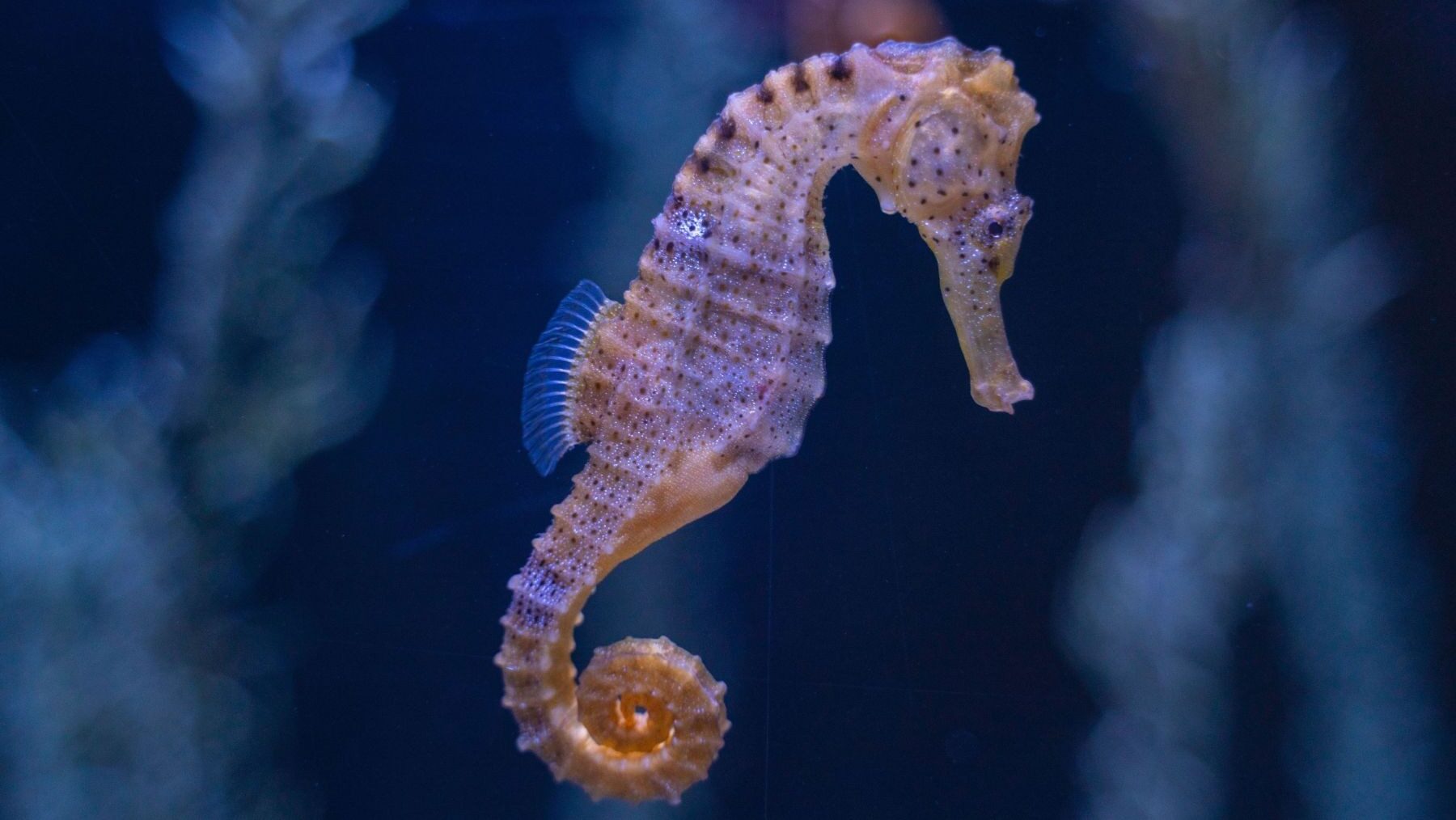
The new category assigned to the seahorse has come into effect today, October 20, and requires the adoption of a conservation plan within a maximum of five years.
The Mar Menor has always had an animal that characterized it and served as its emblem: the long-snouted seahorse. Alongside the degradation of the lagoon, this species has deteriorated and today its vulnerability status has been legally recognized.
The iconic seahorse of the Mar Menor (Hippocampus guttulatus) has entered the Spanish Catalogue of Threatened Species. This is good news for the species because measures must be taken to achieve its recovery.
Yesterday, October 19, the BOE published the Order TED/1096/2026, which begins its validity today and has moved the species from the LESPRE, which implies a ‘special protection’ for threatened species.
Thanks to the same regulation, the sarda and 4 species of bees have been listed as endangered and two syrphid flies as vulnerable. In turn, the number of taxa considered invasive species has been expanded.
The consequence of this new rule is very important, since by law conservation plans for these kinds of species must be drawn up within a maximum period of five years, and that is what will happen with the seahorse: that it must be halted and, where possible, reversed its current state of deterioration.
The law requires saving the seahorse
The long-snouted seahorse (Hippocampus guttulatus), which was the undisputed icon of the Mar Menor, has been included in the category of «vulnerable» of the Spanish Catalogue of Threatened Species, following the entry into force of a ministerial order published this Monday in the Official State Gazette (BOE).
The Order TED/1096/2026, issued on October 6, has modified the national records of protected species and of invasive exotic species in order to adapt them to the latest technical data on biodiversity and scientific knowledge.
The regulation moves the seahorse from the LESPRE, List of Wild Species under Special Protection, to the specific catalogue of threatened species, with a category that recognizes its current vulnerability and that reinforces its consideration for the necessary conservation.
The update also incorporates new threatened species, among them four types of bumblebees and the freshwater fish known as sarda, now cataloged as ‘endangered’, as well as two species of syrphid flies, which have been classified as ‘vulnerable’.
Moreover, the order broadens the list of protected wild species with the aim of introducing new taxa into the Spanish Catalogue of Invasive Alien Species, including two species of ants and several plants.
