
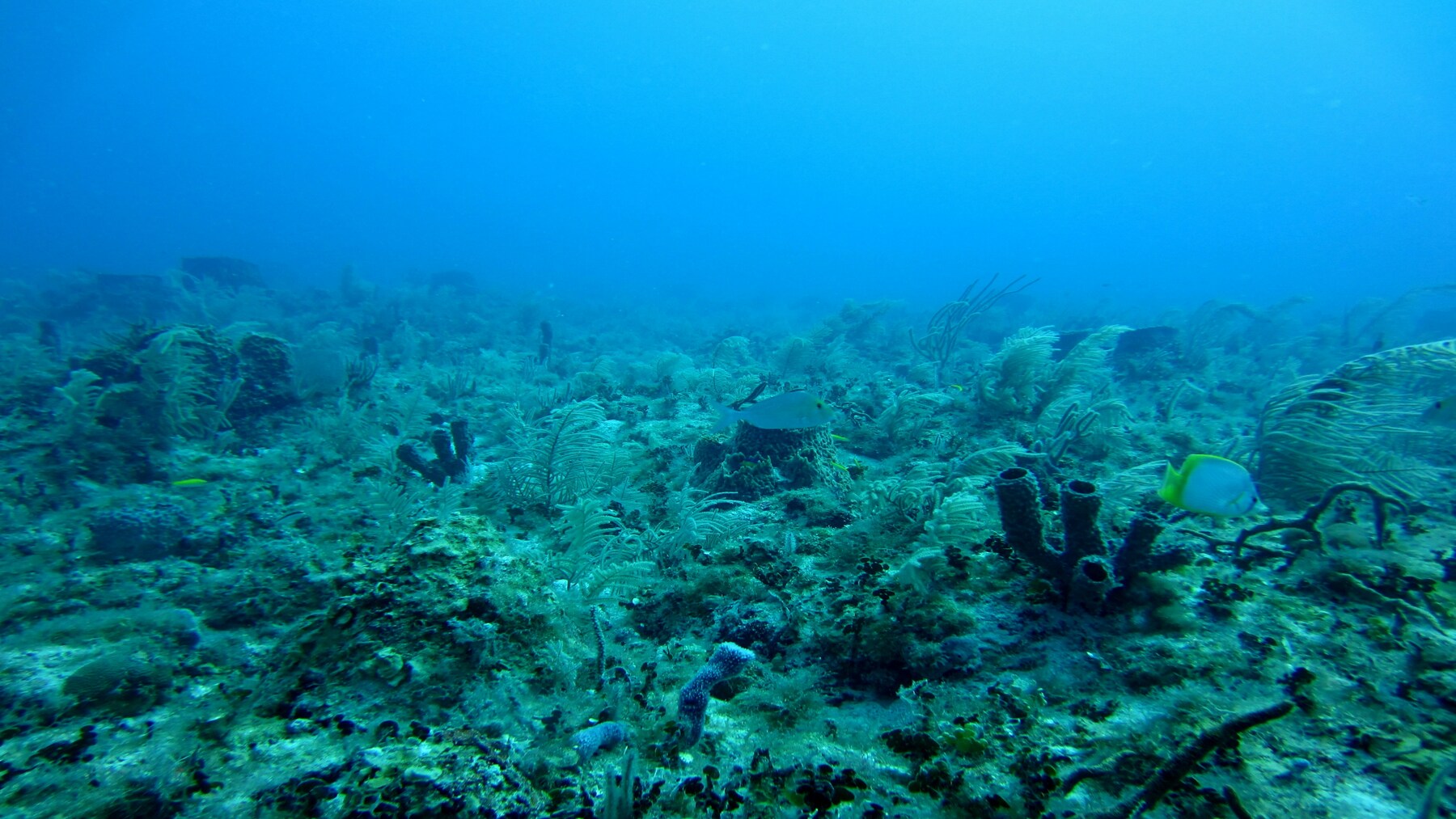
The marine refuges project, announced during the Blue Zone Forum Innovazul 2026 in Cádiz, remains in an early stage, with potential sites still to be selected.
With 45 years of experience and nearly 15,000 dives, San Félix has warned about the deterioration the Mediterranean has suffered over the past decades, due to warming waters and rising CO₂. However, he argues that it is still possible to restore marine wealth through effective protective measures.
Through the Reserva 30 campaign, the explorer seeks to engage institutions and citizens in a new way of managing the oceans. The forthcoming refuges aim to become conservation exemplars that could extend to other parts of the Mediterranean.
Proposal for Marine Refuges in Barcelona and Mallorca
Marine biologist, photographer and underwater explorer Manu San Félix warned this Thursday about the degradation that oceans and seas have been suffering in recent decades, especially the Mediterranean, and about the “carelessness” of human action that is transforming the composition of a vital element for the future of life and the planet.
The warning from the underwater explorer, who has 45 years protecting and researching the underwater world and who has carried out nearly 15,000 dives, has headlined the second day of the Blue Zone Forum Innovazul 2026, a forum organized by the Cádiz Free Zone and that brings together researchers, businesses and institutions linked to innovation and the blue economy in the city of Cádiz.
Planet Water
In his talk, the explorer based in Formentera stressed that the oceans remain a great unknown to society, despite occupying roughly two-thirds of the Earth’s surface.
With such extent, he joked, the United Nations ought to consider changing the planet’s name and, instead of Earth, call it Water.
To illustrate the real proportion of water on Earth, he recalled that the oceanic layer has an average depth of about three kilometers, compared to the approximately 12,000-kilometer diameter of the Earth.
In his view, the lack of awareness about the vast extent of this element makes it difficult to understand the importance of conserving it.
“We are warming, we are transforming its composition, adding CO2, and that is reckless,” San Félix stated in his talk, in which he defended the need to pay more attention to water and the consequences that altering its balance can have for the planet.
He warned of the shortage of freshwater, which leads to the “extremely unjust” situation where around 2,000 million people lack access to this resource.
To illustrate the importance of the oceans for sustaining life, he explained the role of microscopic organisms such as the cyanobacteria Prochlorococcus, responsible for generating a substantial portion of the planet’s oxygen.
“Is then intelligent to change the place where such an important organism lives? Well, no,” he posed.
A Healthy Planet Brings Happiness
With 45 years of experience and nearly 15,000 dives, San Félix has warned about the deterioration the Mediterranean has suffered in recent decades, due to the warming of water and the rise of CO₂. However, he argues that it is still possible to recover the marine wealth through effective protective measures.
The photographer has argued that the protection of Nature should take into account not only the environmental benefits it provides, such as climate regulation, oxygen production or food supply, but also its contribution to human well-being.
“Having a healthy planet, having healthy nature, makes us happy,” he asserted.
San Félix has participated for 18 years in the Pristine Seas conservation project, led by National Geographic, with which he has taken part in about 50 expeditions that have contributed to the protection of nearly six million square kilometers of ocean and the establishment of 31 marine protected areas.
In the Mediterranean, where he carried out his first dives in the early 80s, he has been a direct witness to a degradation especially intense during the last three or four decades.
But he has argued that the recovery of these ecosystems is still possible if appropriate protection measures are adopted and the way the sea is managed is changed.
For this reason he pushes the Reserva 30 campaign, through which he gathers support to promote a new way of protecting the oceans and to boost the commitment of policymakers and institutions.
As part of that strategy, he announced that starting in 2027 he plans to push for new marine refuges in Mallorca and Barcelona, whose locations are still in the process of selection.
The initiative aims to create spaces for the recovery of marine life that can serve as an example to extend a conservation model to other areas of the Mediterranean and the world.
The objective, he explained, is to mobilize millions of people to convince governments of the need to expand marine protection.
The biologist has, from the Blue Zone Forum Innovazul, issued a call to change society’s perception of the planet and to recognize the exceptional value of water.
The proposal sits within an international context with a defined goal: the Kunming-Montreal Global Biodiversity Framework sets out to conserve and manage at least 30% of marine and coastal areas by 2030. Its Target 3 also requires systems that are representative, connected and governed in an equitable manner. Implementing that approach means accompanying the designation of spaces with management, monitoring and participation by the communities linked to the sea, so that protection translates into verifiable conservation outcomes.
