
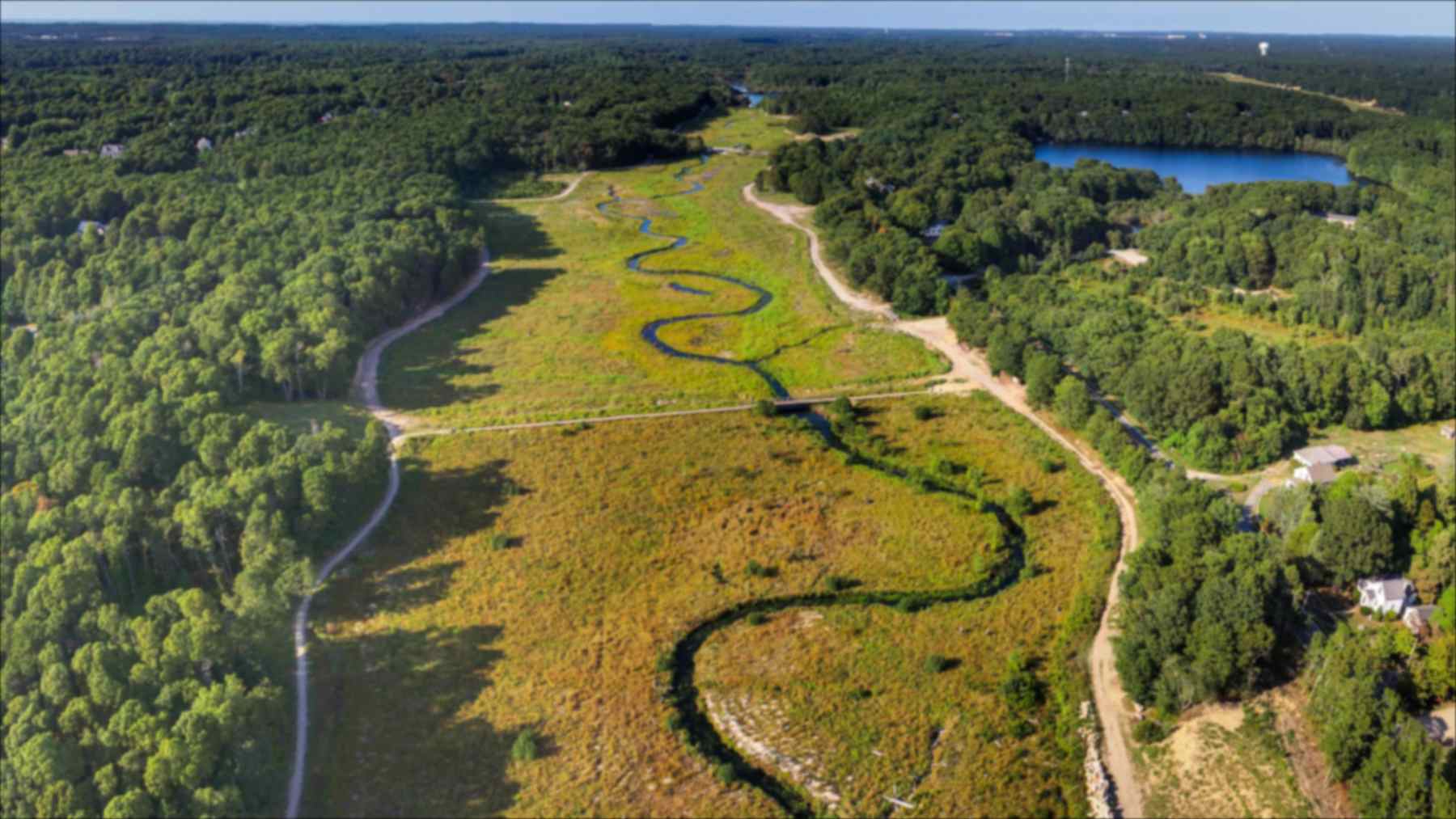
The Coonamessett River in Massachusetts (United States) has recovered 22.7 hectares of wetlands following a restoration that included the removal of two dams. The works on the lower stretch were completed in 2020 and, according to NOAA Fisheries, more than 200 native plant species have returned to a landscape that had previously been dominated by blueberry farming.
The recovery of this small river in Falmouth, on Cape Cod, continued with another intervention completed in 2025. Its story demonstrates how altering the water’s path can transform abandoned agricultural land and restore space for wildlife.
Two Dams Removed
The first phase ended in 2018 with the removal of the Lower Bog Dam. The second phase ended in 2020 and included the removal of the Middle Bog Dam and the restoration of other cultivated lands. Together, these actions added up to 56 acres of wetlands (about 22.7 hectares) as recorded in NOAA’s balance.
Three deteriorated conduits under John Parker Road were also replaced with a wider water crossing. Collectively, the project opened about 3.5 kilometers of river to fish passage and restored around 1.4 kilometers of channel.
Behind these figures lay centuries of modifications. Since the 18th century, dams and other barriers had hindered migrations, while farming had turned wetlands into blueberry fields. Reconnecting the different reaches was a central part of the work.
Water Returns to the Ground
Former farms had left a landscape engineered to manage water. The river had widened and straightened, and sand layers added to favor blueberries covered the original soil. Abandoning the cultivation left these alterations on the land.
How do wetlands come back? A study published in April 2025 in Applied Vegetation Science, which analyzed Coonamessett and two other sets of former operations, points to the recovery of water conditions. The interventions included filling ditches and creating small elevations that allow different degrees of moisture.
Researchers observed that much of the vegetation regenerated on its own, though there were also sowings and plantings of trees and shrubs. In their trials, seeds germinated better in water-saturated soils than in well-drained ones. Plant diversity increased after restoration and remained high for several years of monitoring.
Fish on the Return Path
Among the beneficiaries are two species known in the United States as “river herring” — the alewife and the blueback herring. They spend much of their lives at sea and return to freshwater to reproduce. Therefore they need the passage between the two environments to remain open.
These fish also serve as food for other species, such as cod and striped bass. Facilitating their movements helps sustain interactions among animals living in different habitats. What happens in a small stream can have consequences beyond its banks.
But having an open passage does not by itself guarantee population recovery. NOAA identifies other pressures, such as bycatch, pollution and habitat loss. The success of the works should be accompanied by monitoring to understand how the fish respond.
Eight More Hectares
The subsequent effort focused on the upper reach of the Coonamessett. According to the Massachusetts Division of Ecological Restoration, the works were completed in the summer of 2025 and recovered another 20 acres of former blueberry fields, roughly eight hectares.
The project was designed to remove seven barriers to fish passage and fix exitless ditches where fish could become trapped. It also envisioned a more varied channel, with zones of different depths and speeds. These details change the conditions animals encounter along their journey.
A Wetland for the Community
Neighbors have also gained a place they can walk through and learn about. The restoration was accompanied by trails, boardwalks and panels about the river’s history and surroundings. Some routes provide access for people with reduced mobility.
The Coonamessett River Trust maintains monitoring programs and educational activities linked to the river. This involvement helps bring the wetland restoration closer to students and residents, while continuing to monitor the ecosystem after the works. The work continues as the excavators leave.
Massachusetts included the completion of the upper reach among the milestones in its 2025 restoration balance. The official statement about that balance was published on June 5, 2026 by the Massachusetts Division of Ecological Restoration.
Image: Adam Soule / NOAA Fisheries