
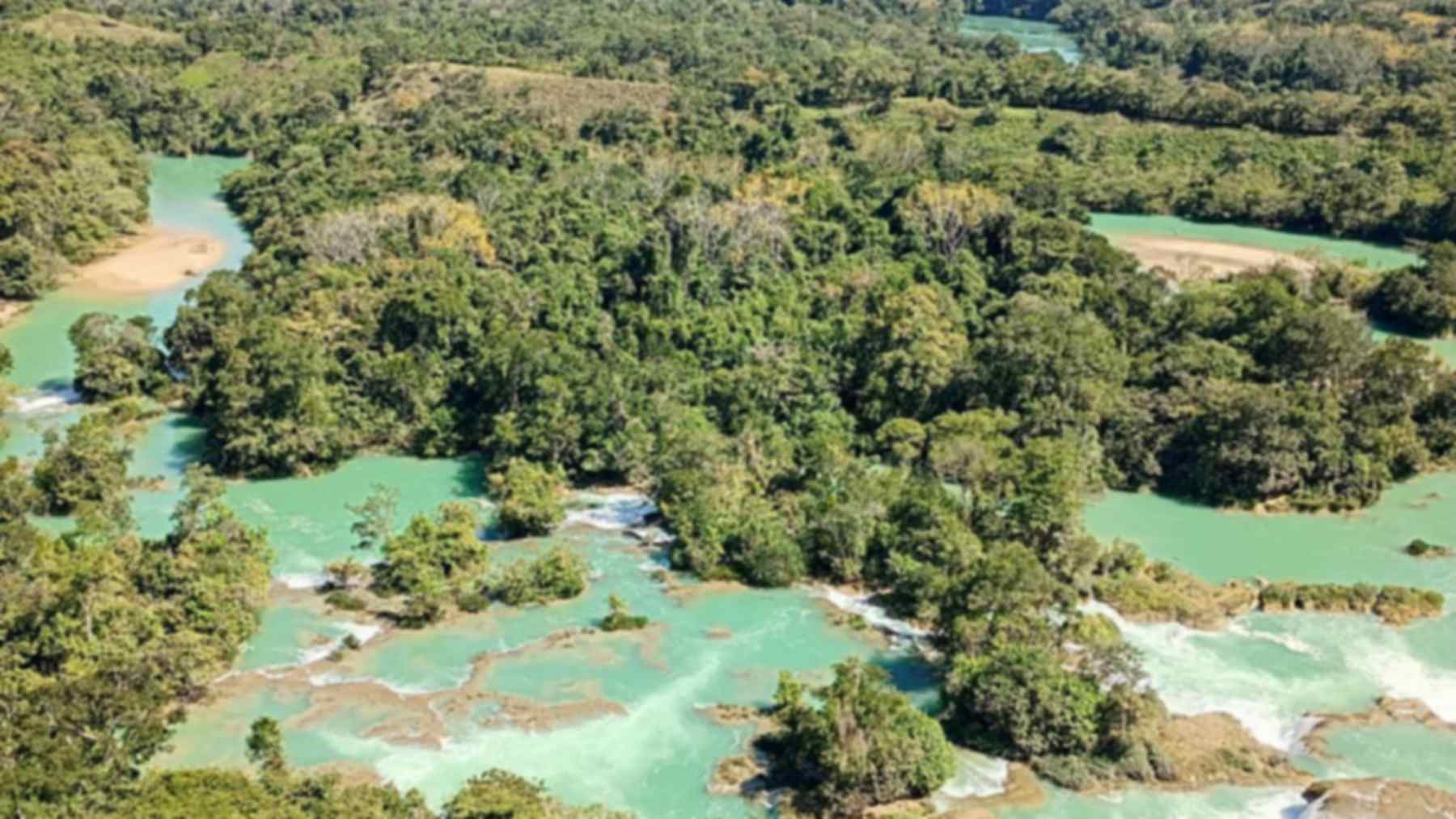
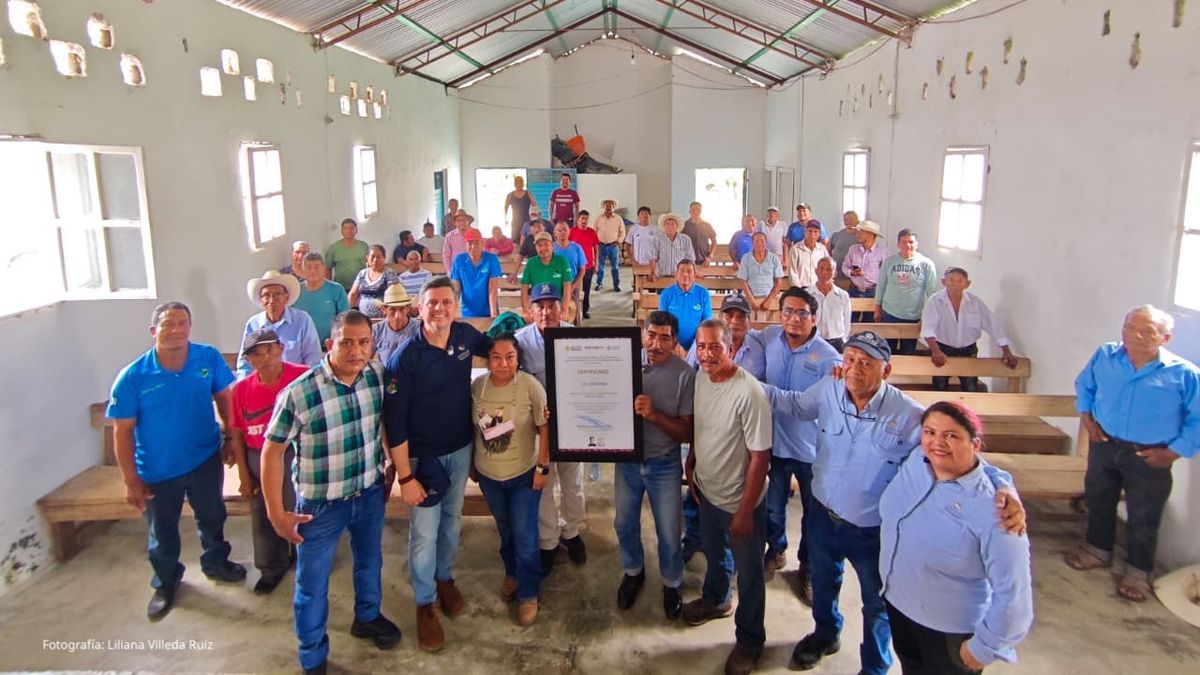
A ejido in Chiapas, in southern Mexico, has just committed 1,398 hectares of jungle for 99 years. It is Las Nubes, in the municipality of Maravilla Tenejapa. It has received from the National Commission for Protected Natural Areas (Conanp) the certificate for the Area Voluntarily Destined for Conservation La Caverna, a jungle in Chiapas that no one forced it to protect.
The curious thing is who makes the move. Las Nubes is famous both inside and outside the country for its turquoise waterfalls along the Santo Domingo River. On its lands, parrots, macaws, and other vividly colored birds fly, and now its neighbors have decided to shield the forest that makes all of this possible.
A leaper on the logo
The new area has its own emblem, and it is not a jaguar or a toucan. Its official logo features the northern red-headed saltator (Ceratopipra mentalis), a small bird with a red head. Conanp presents it as the emblematic bird of the place.
According to the release, La Caverna is also home to the blue-crowned parrot (Amazona farinosa) and the royal flycatcher (Onychorhynchus coronatus). Joining them is the scarlet macaw (Ara macao), one of the most striking birds on the continent. For birdwatchers, the list says a lot.
Below grows a tall evergreen forest, one that does not shed its leaves all year round. There are mahogany, cedar, ramón, chicozapote, guanacaste, tecomate, golden amate, and strangler figs. Palms, epiphytes, and rocky formations are also abundant.
The gateway to Lacandona
In this case, location matters as much as the species. La Caverna sits at the entrance to the Lacandona Jungle, one of Mexico’s great tropical forests. It also borders the communal lands of Gallo Giro, Santa Margarita, Plan de Santo Domingo, and San José.
That is why Conanp speaks of a “key biological corridor.” It helps link the Lacandona Forest’s conservation with the Montes Azules Biosphere Reserve. Animals need forest corridors to move, and an isolated patch of jungle does little.
The certificate, however, has only been granted to Las Nubes ejido, not to its neighbors. What La Caverna does is to bridge forest patches that, without it, would be somewhat looser. It is a small piece within a vast map, but well placed.
Water stored beneath the rock
Because of its geological characteristics, the area plays a priority role in water catchment. According to the agency, it stores water in the aquifers and helps regulate the region’s climate. It is a service that does not appear in the cascades’ photographs, but without it the landscape would be different.
What does that mean for those who live there? The note does not specify, but the water stored beneath the jungle is the same water that the region uses. The very name La Caverna hints at what happens underground, though the note does not detail any specific caves.
Cacao, milpa, and mature acahuales
Protecting the forest does not mean closing the door on people. The designation includes buffer zones with mature acahuales aged between 10 and 15 years. In Mexico, acahuales refer to forest that regrows after a clearance.
Those acahuales act as a hinge with the community’s plots. There is cacao grown under trees, traditional milpas, and low-impact cattle grazing integrated with tree cover. And there is ecotourism, of course, which in Las Nubes is almost a signature feature.
Conanp hopes that this certificate will “dignify the community’s effort” to protect the natural heritage. It also aims to secure food and resources for the local population. Environmental education completes the list.
Turquoise cascades and 400 neighbors
In the ejido live nearly 400 people of tojolabal, chol, and mam origin, according to the official release. Its fame comes from a river that drops in turquoise steps. Conanp describes it as a reference for community-based tourism, in the vein of ecotourism that improves the lives of families in Latin America.
That is the key to the story. Those who live off the visitors who come to see the river have good reasons to protect the surrounding jungle. And 99 years is nearly four generations.
Neither a bird census nor a budget
Nonetheless, Conanp’s note leaves open questions. It does not provide figures on how many birds or how many trees exist within the 1,398 hectares. It also does not say whether the ejido will receive any money or how it will be watched to ensure that no one fells timber inside.
It also remains unclear what would happen if the community changed plans in a few years. What is clear is that the decision came from the ejido itself. For a community that lives off its jungle, that is not a small thing.
All data comes from Conanp’s official statement of October 13, 2026. The agency also published a photo gallery of the certificate handover in Las Nubes.
Photo: Liliana Villeda Ruiz / Conanp
